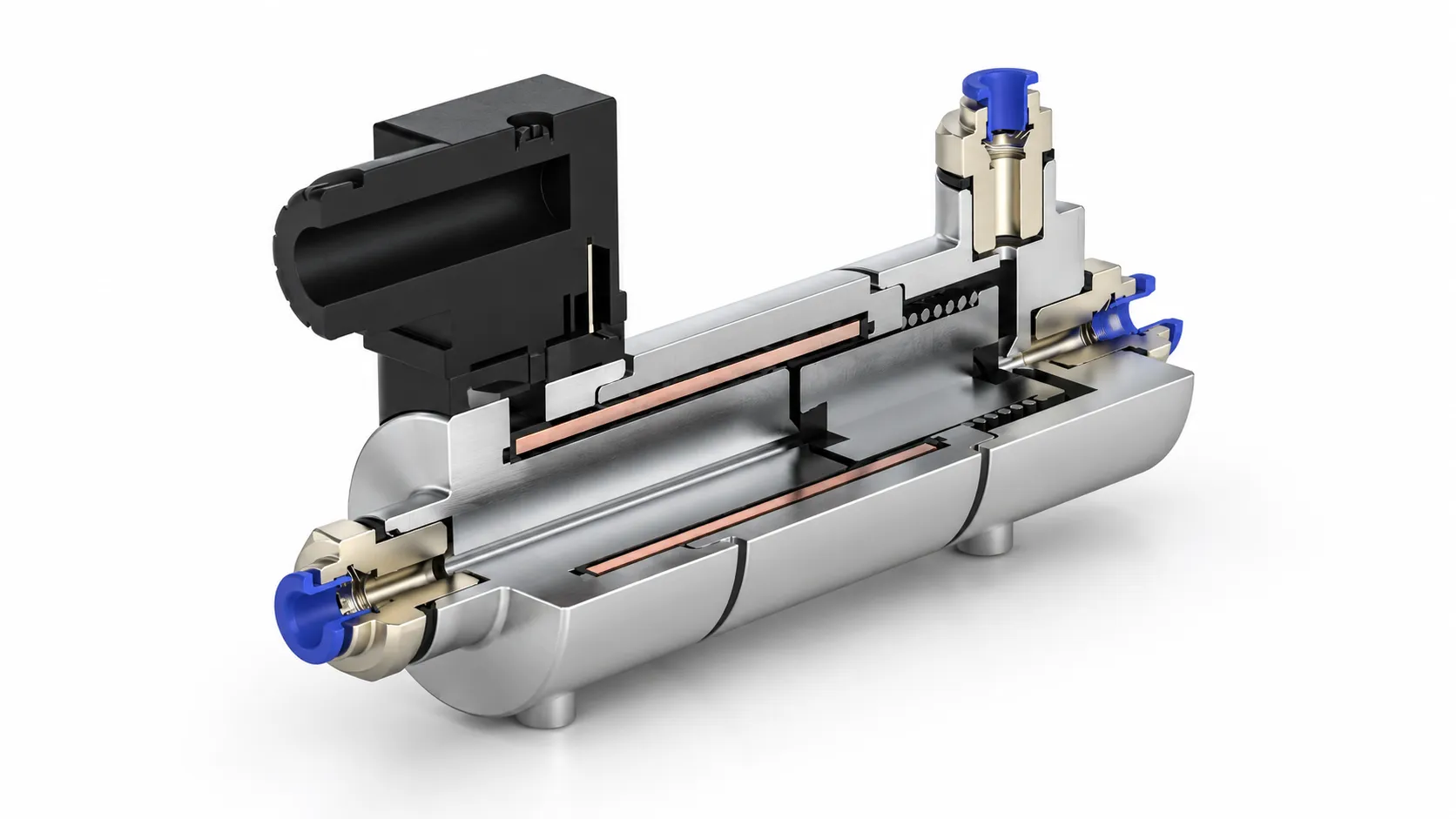
Electromagnetic Pneumatic Valve
The first draft was too weak and ran too hot.
Actuator design, Munich University of Applied Sciences, Winter 2025/26 · 3 months
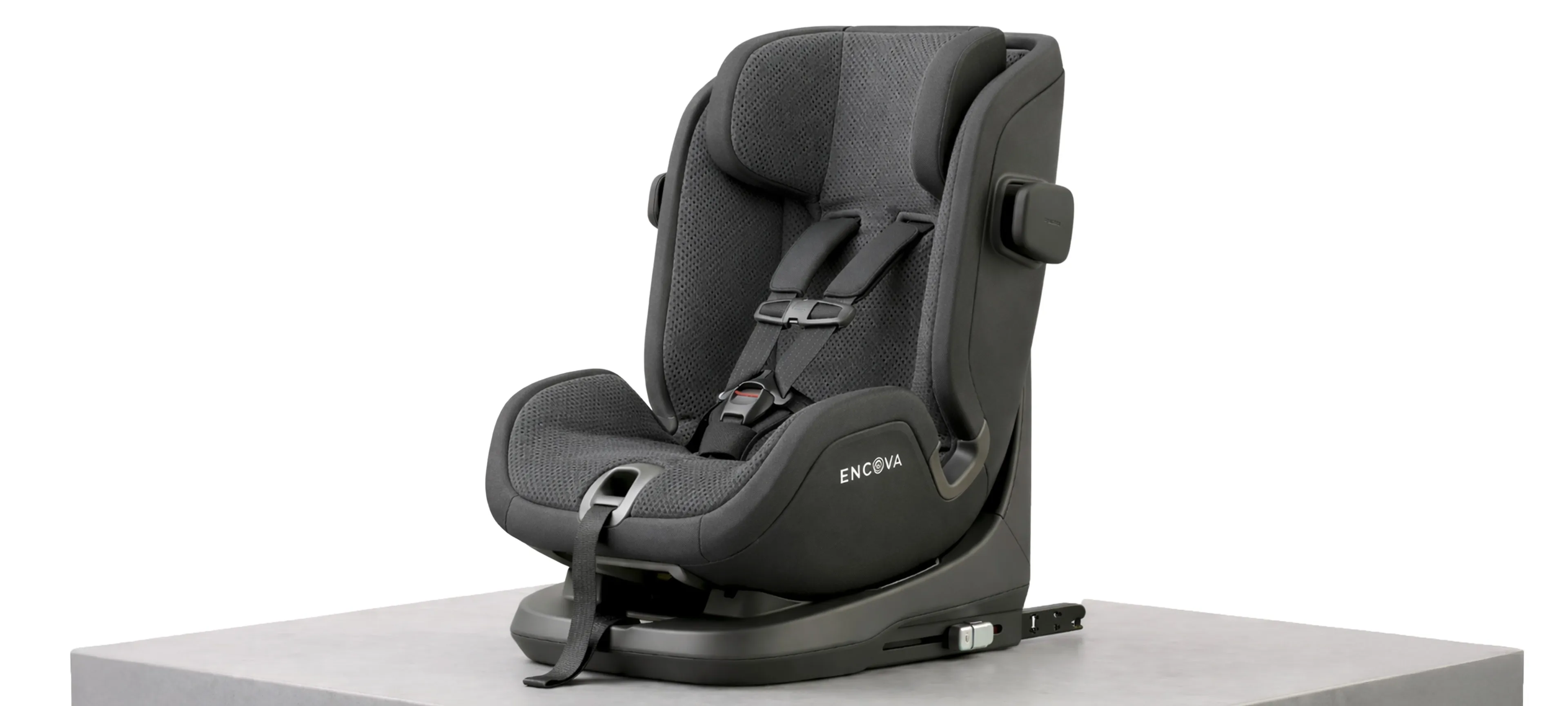
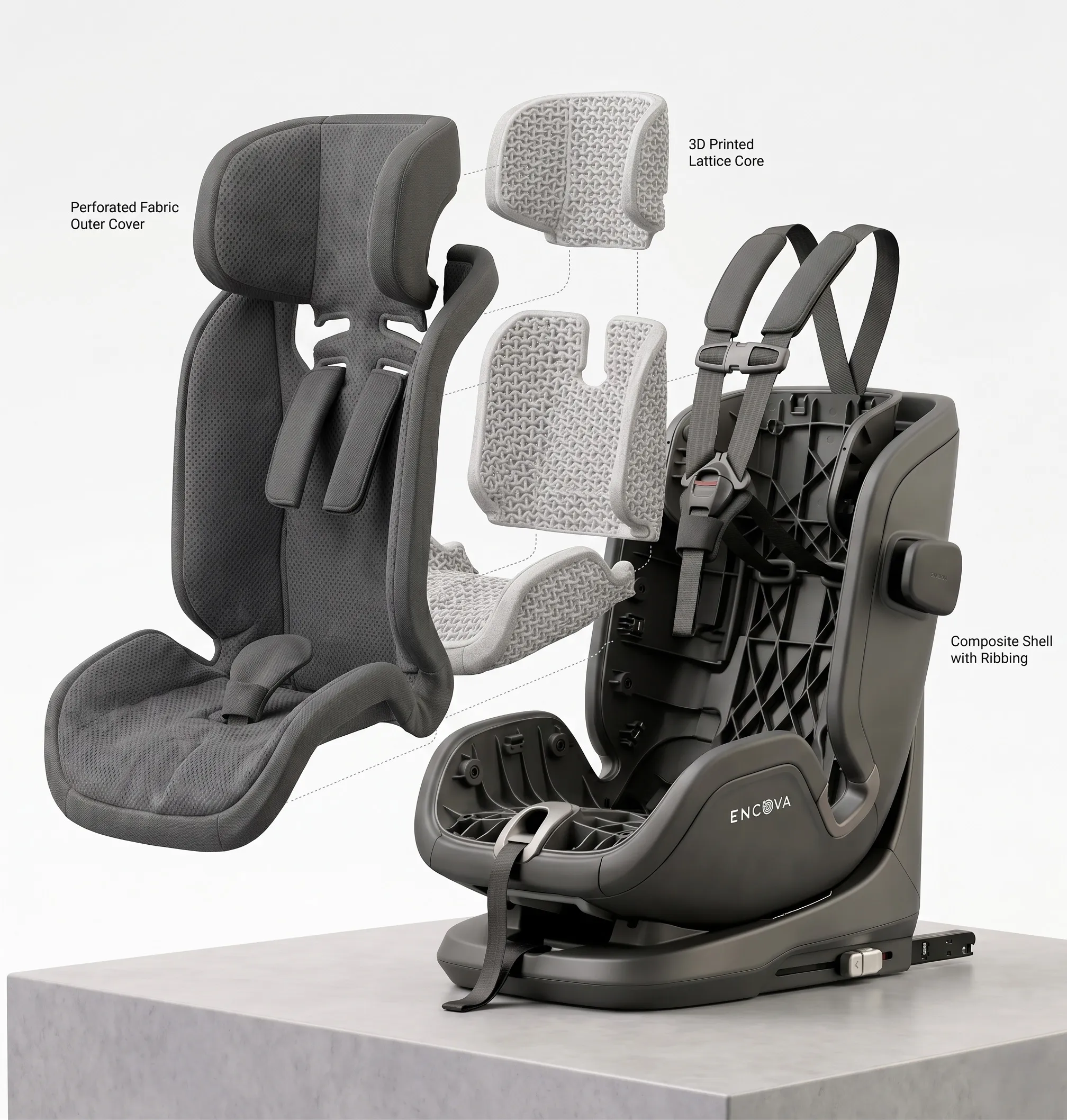
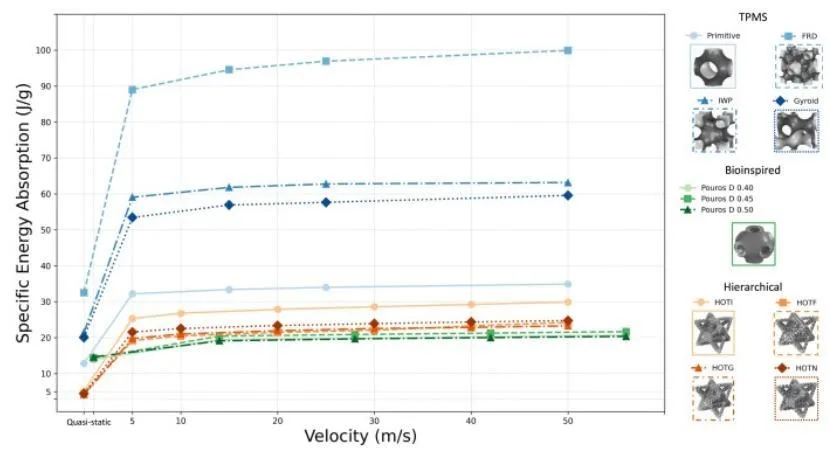
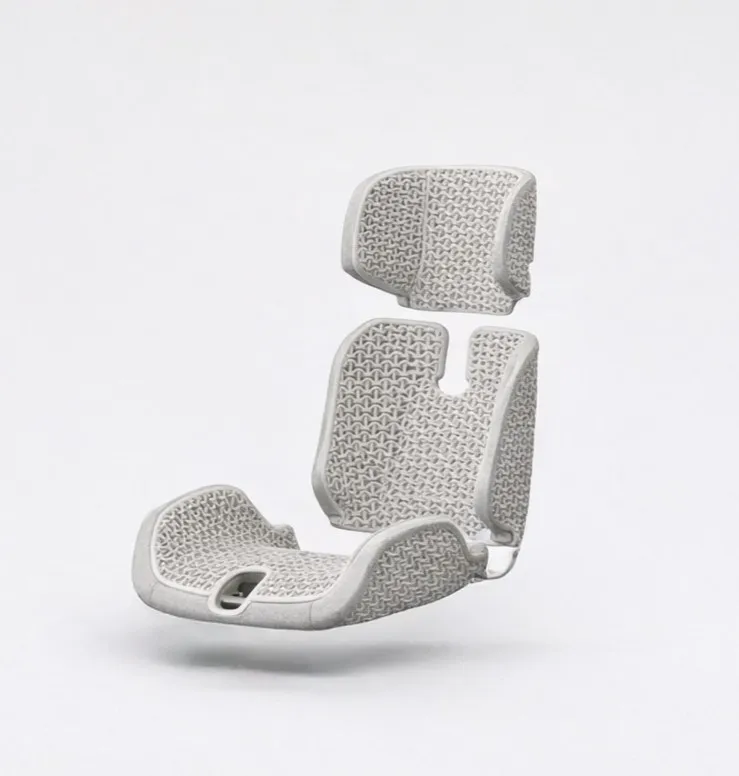
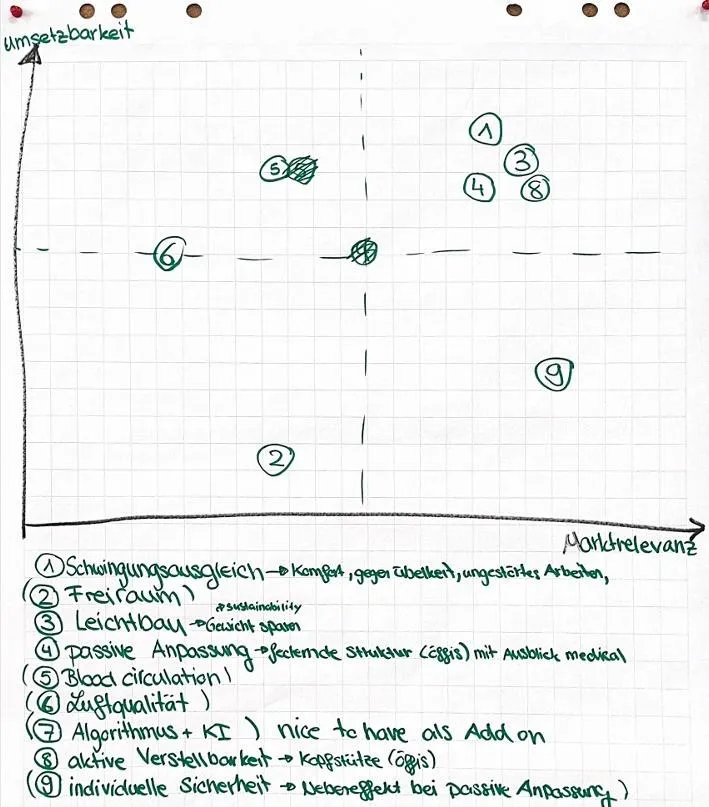
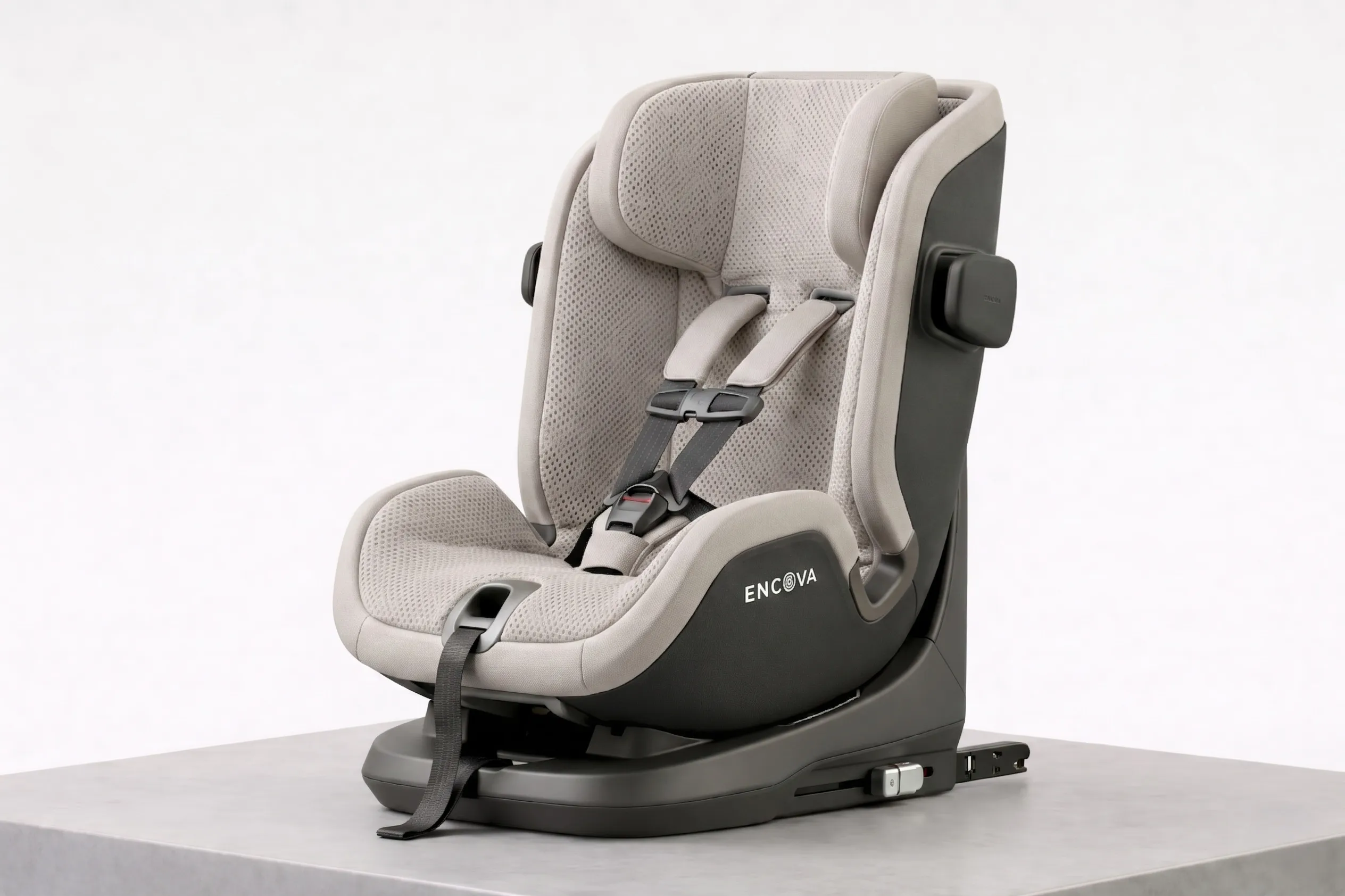
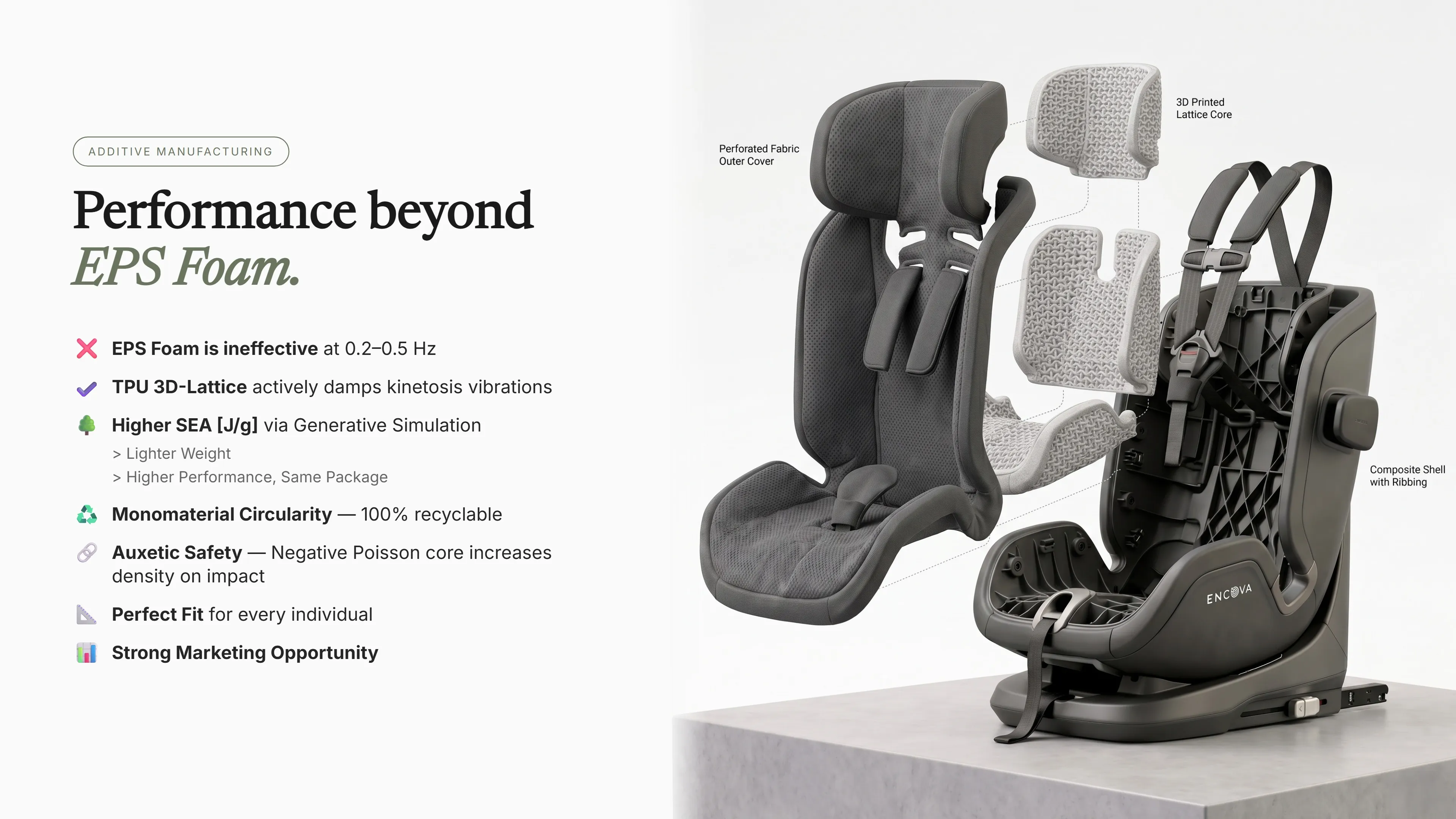
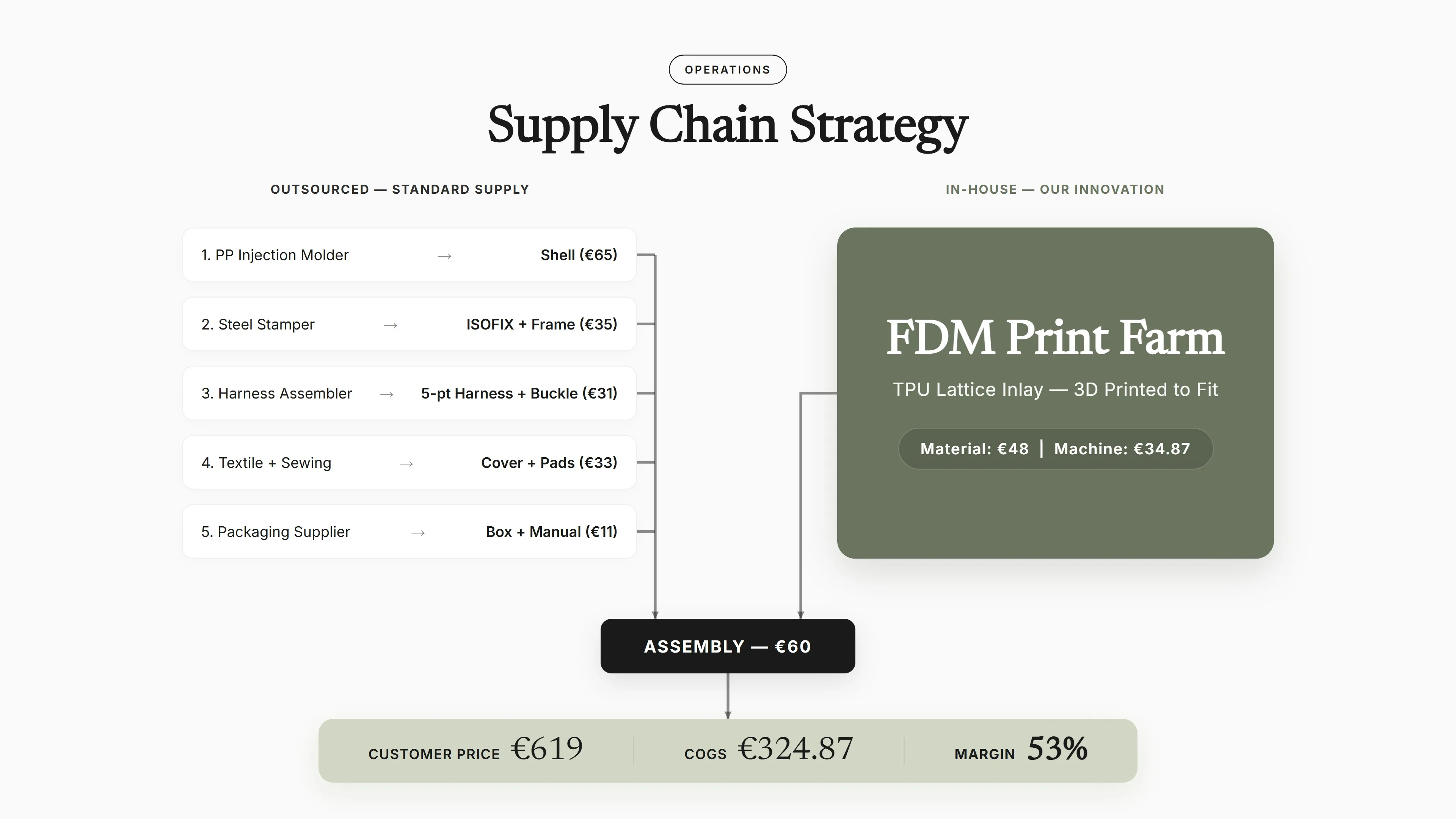
A modular concept for passenger seats, independent of the mode of transport and meant for increasingly autonomous journeys, plus a target group, a business model and a cost plan. That's the whole brief. Hand-in: Sunday at nine, for all sixteen teams at once. The part in a car that gets removed, cleaned and handed on most often, and whose foam is spent after a few years. That became Nido, whose printed lattice actively damps the exact frequency that causes motion sickness, something foam never does. Three layers: washable cover, printed lattice core, ribbed structural shell. The core is a gyroid, which supports itself in any orientation and prints without support structure, while cell size tunes compliance locally. Monomaterial, fully recyclable. There was no time in 48 hours for a rig to measure energy absorption, so the selection rests on published values rather than our own tests. Two specimens were printed, 10 x 10 cm and 5 x 5 cm, because nobody could say up front how much print time the weekend would leave us. Which cell size actually protects best stayed an open question.
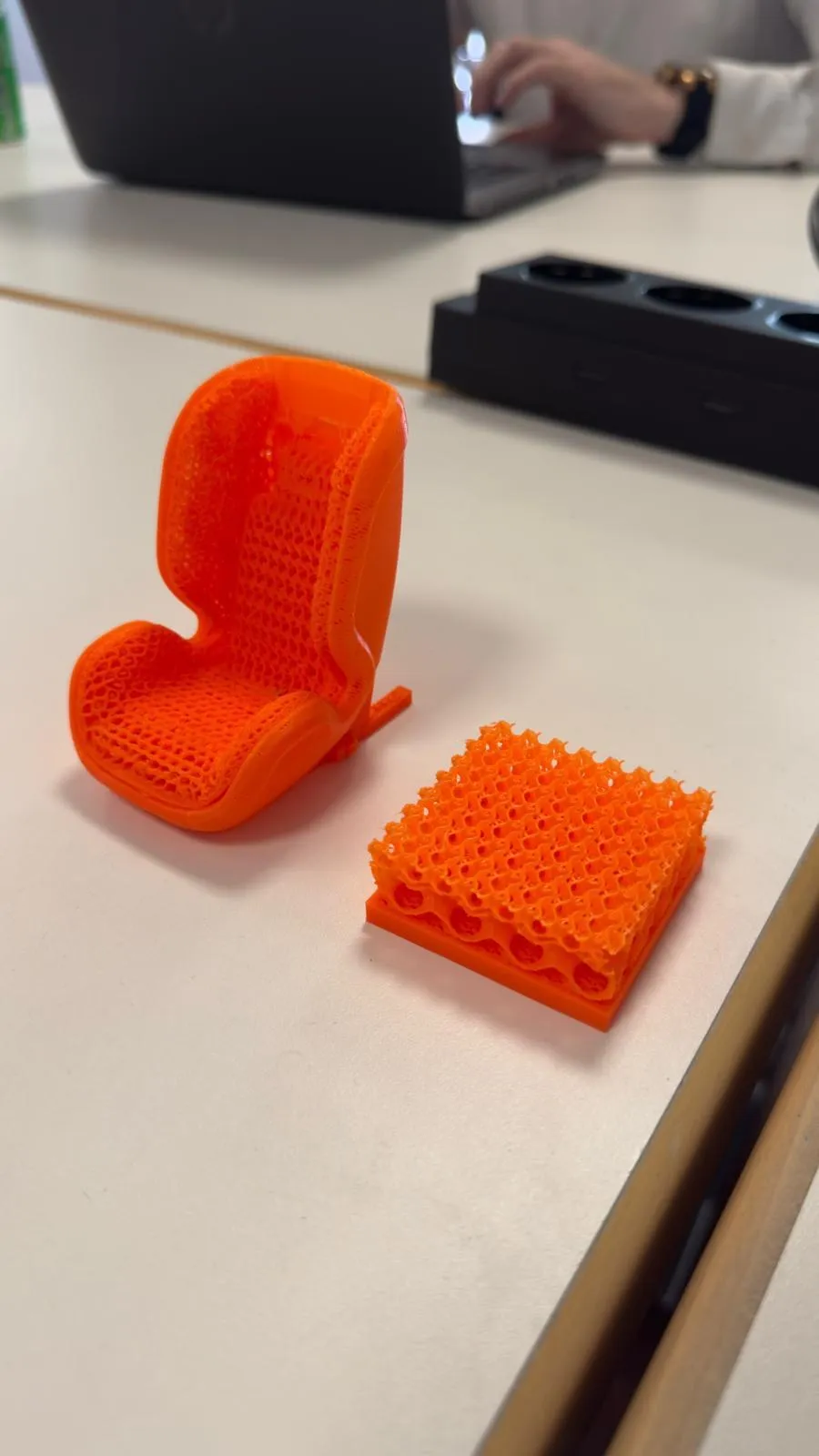
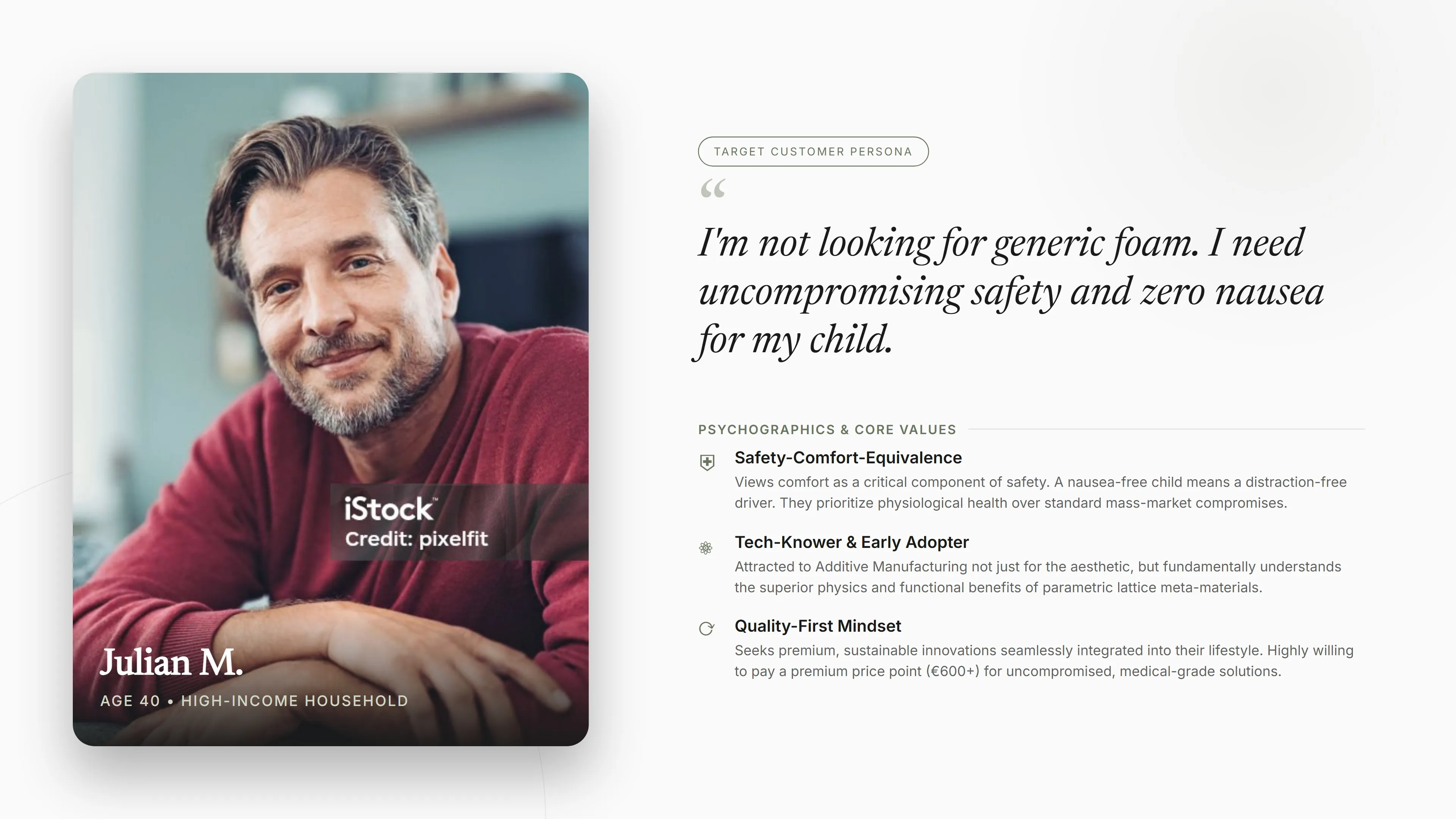
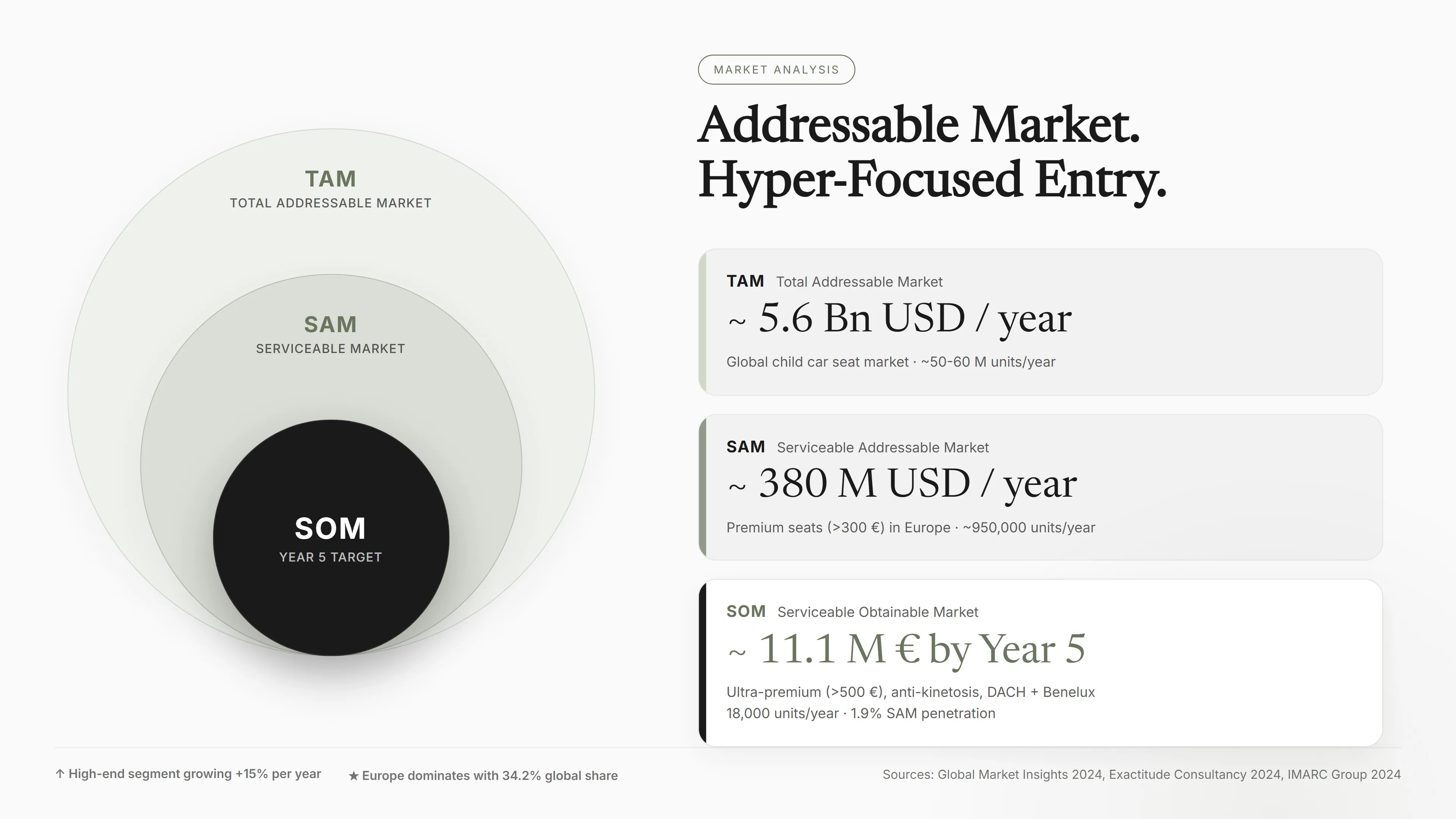
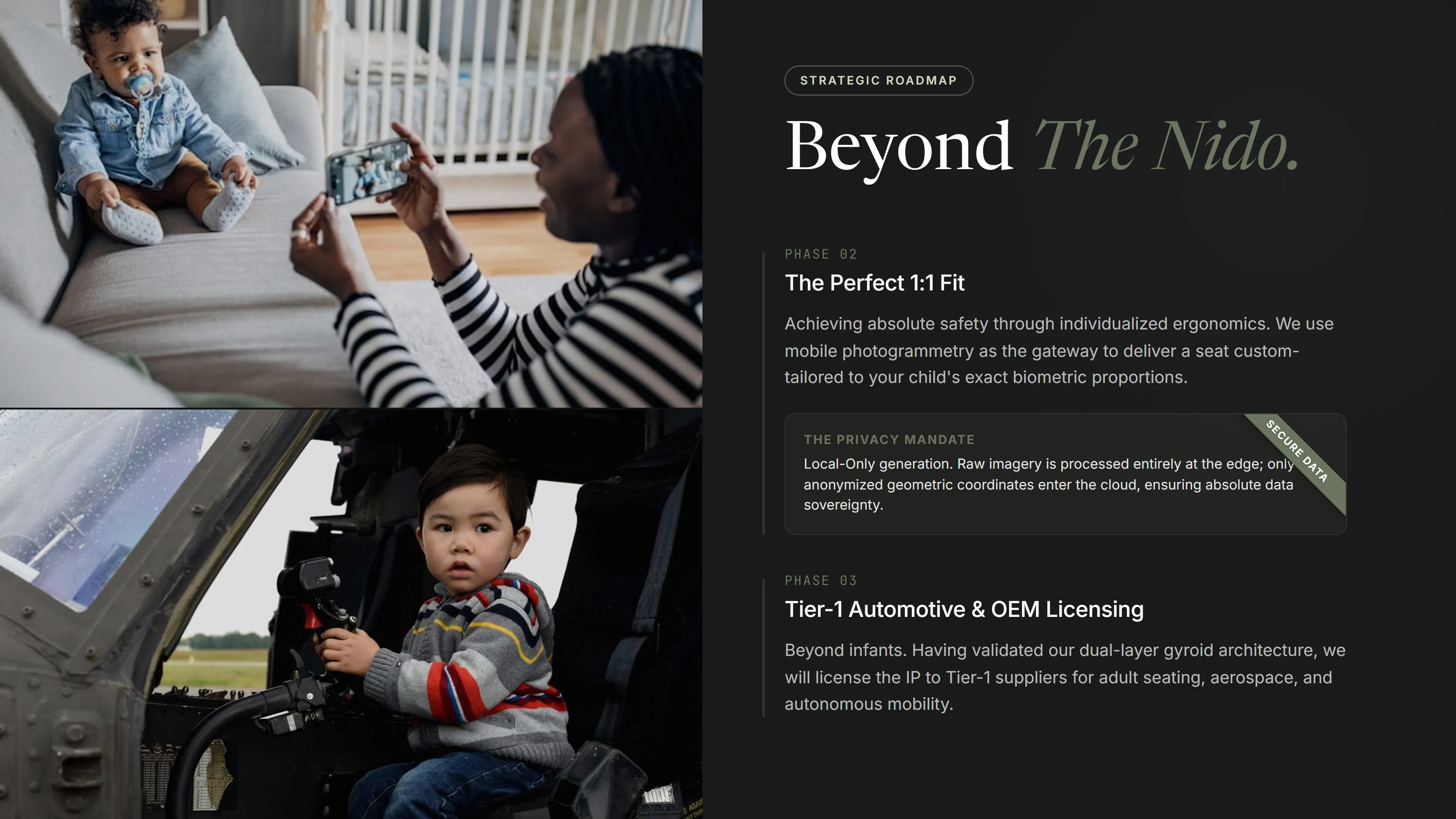
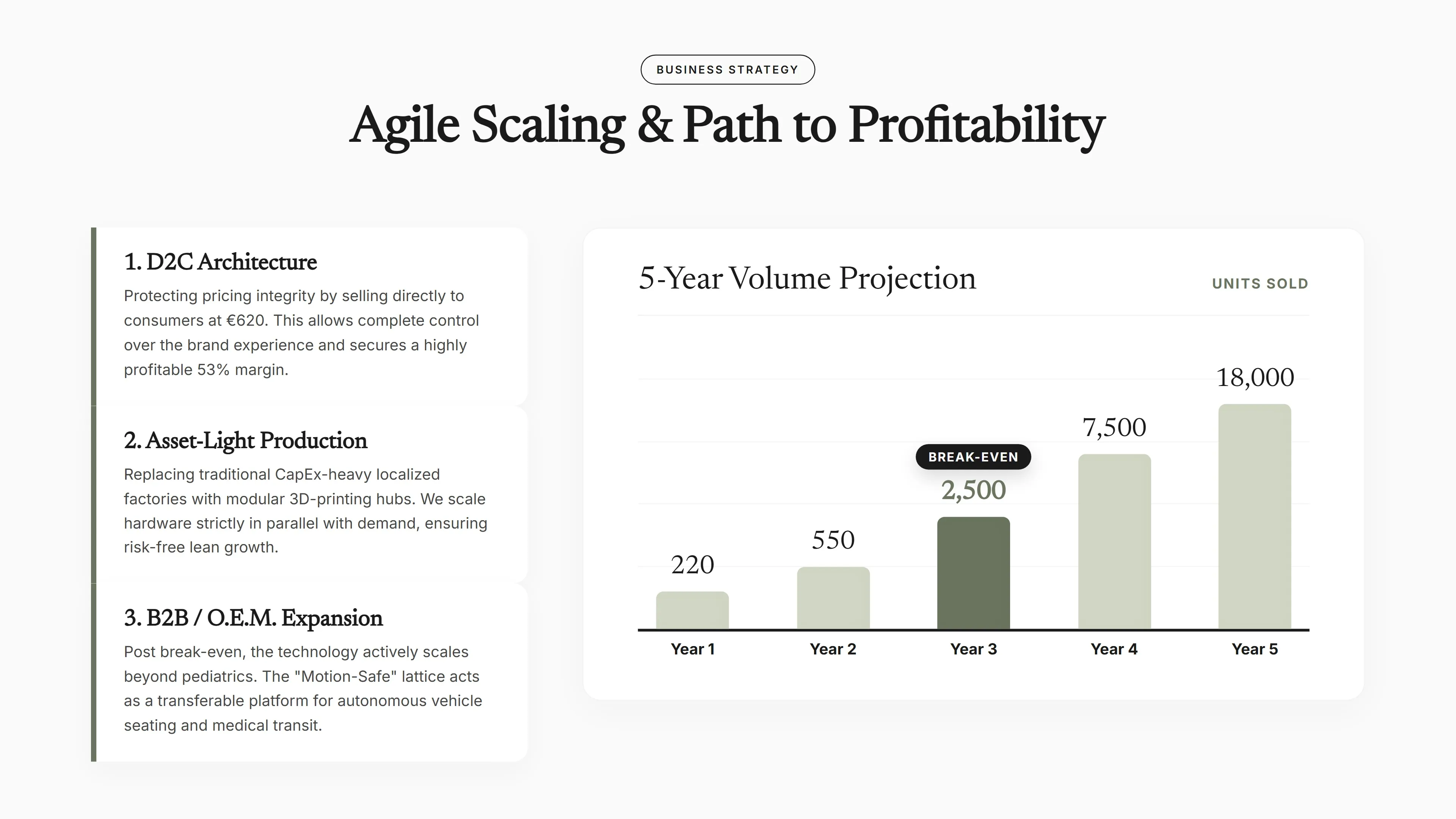
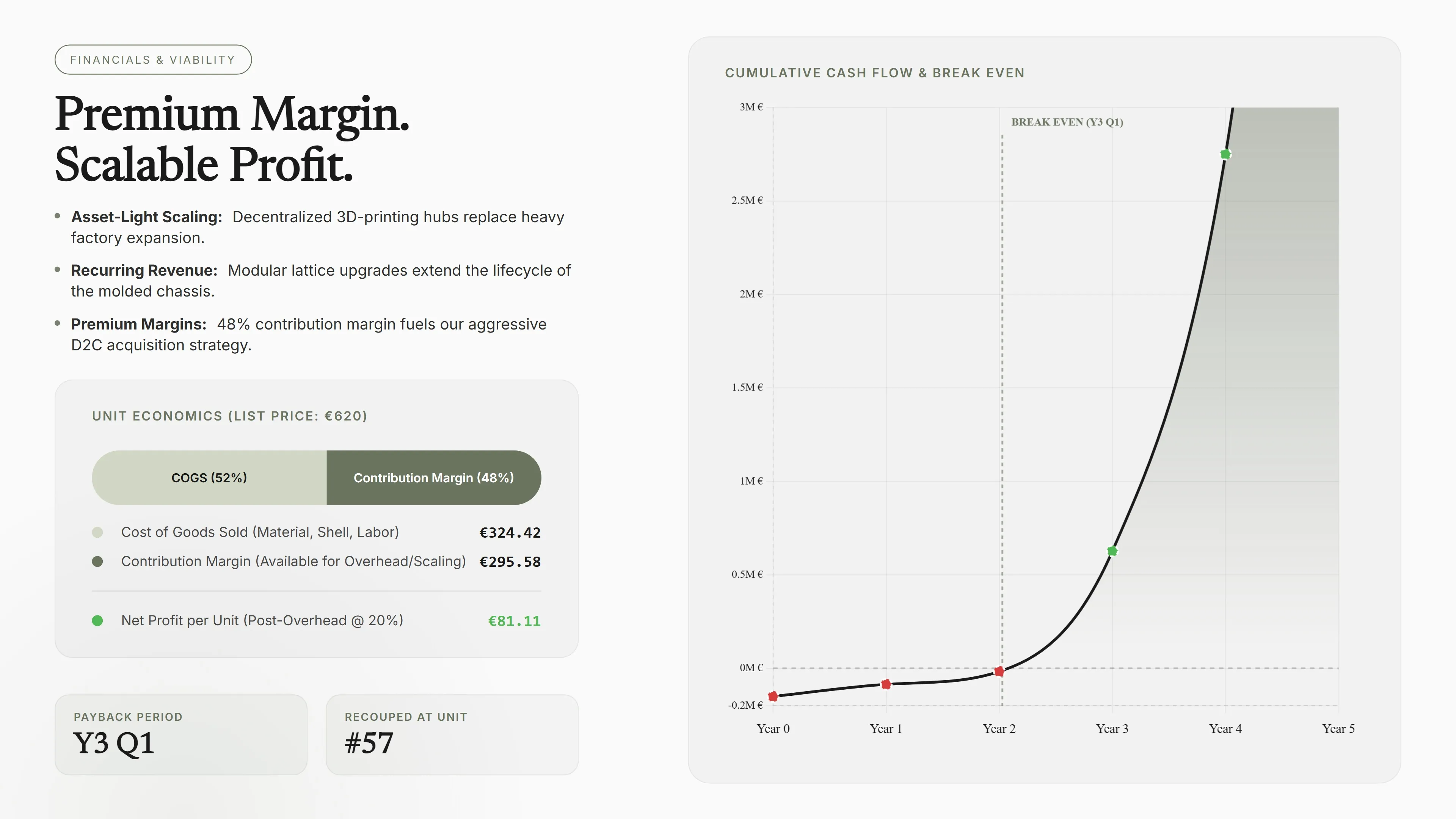
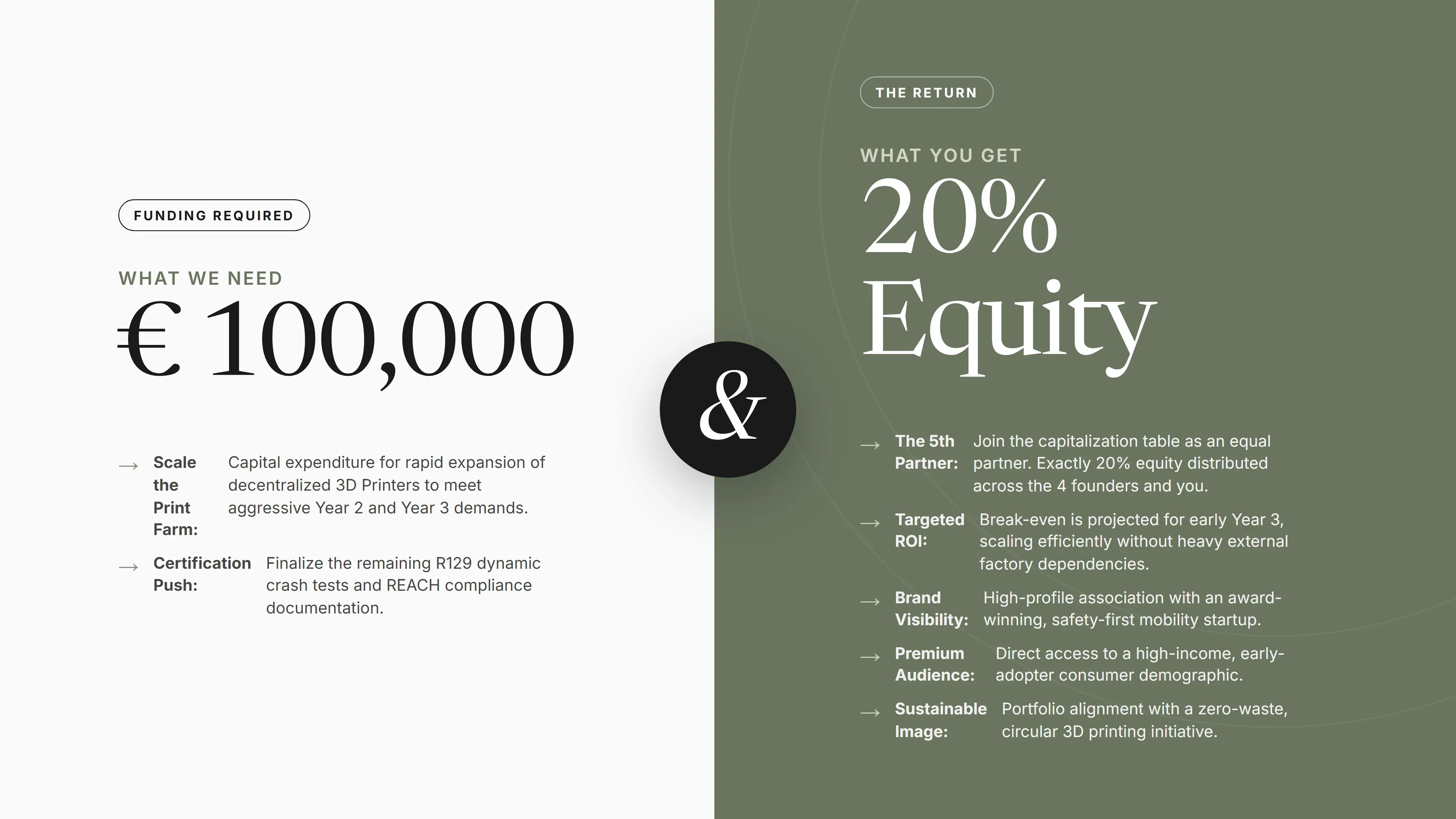
Printed in PLA: the seat with its lattice core visible, beside the specimen that shows the cell size. Julian M., 40, high-income household, not looking for generic foam. He wants uncompromising safety and zero motion sickness for his child, and he'll happily pay above €600 for something that reads as medical-grade. 5.6 Bn USD total market, 380 M USD in the premium segment above €300, an 11.1 M € target by Year 5. The segment is growing 15% a year; Europe alone holds 34% of it. Phase 2: a seat fitted to each child's biometrics, captured by phone through photogrammetry and processed locally. Phase 3: licensing the dual-layer gyroid architecture to Tier-1 suppliers, well beyond the child seat.
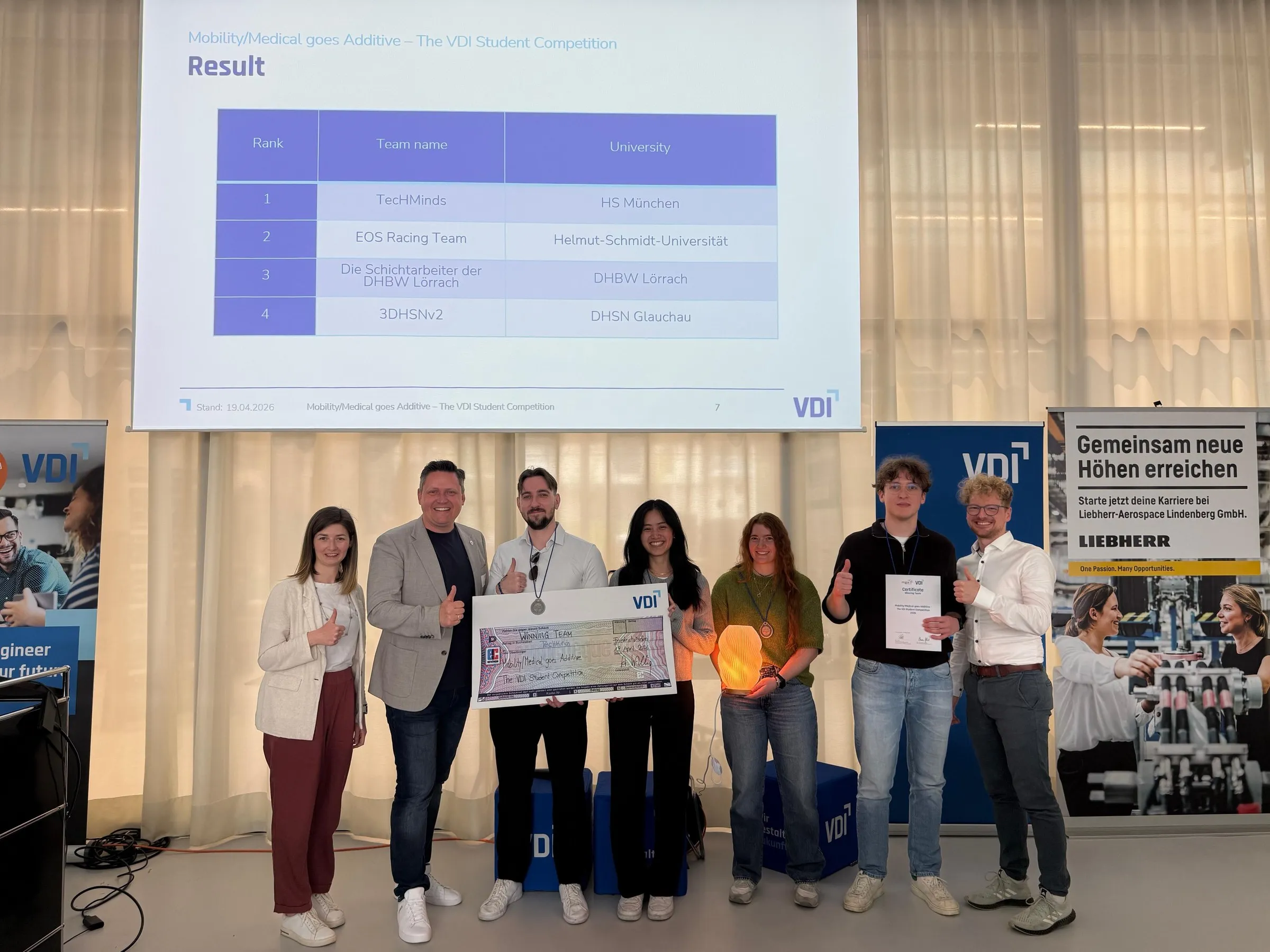
Seven minutes of pitch, three of questions before the jury, then first place as team TecHMinds against 15 others. The result wasn't the point. The pace was: concept, manufacturing route and cost plan in 48 hours.
The first draft was too weak and ran too hot.
Actuator design, Munich University of Applied Sciences, Winter 2025/26 · 3 months
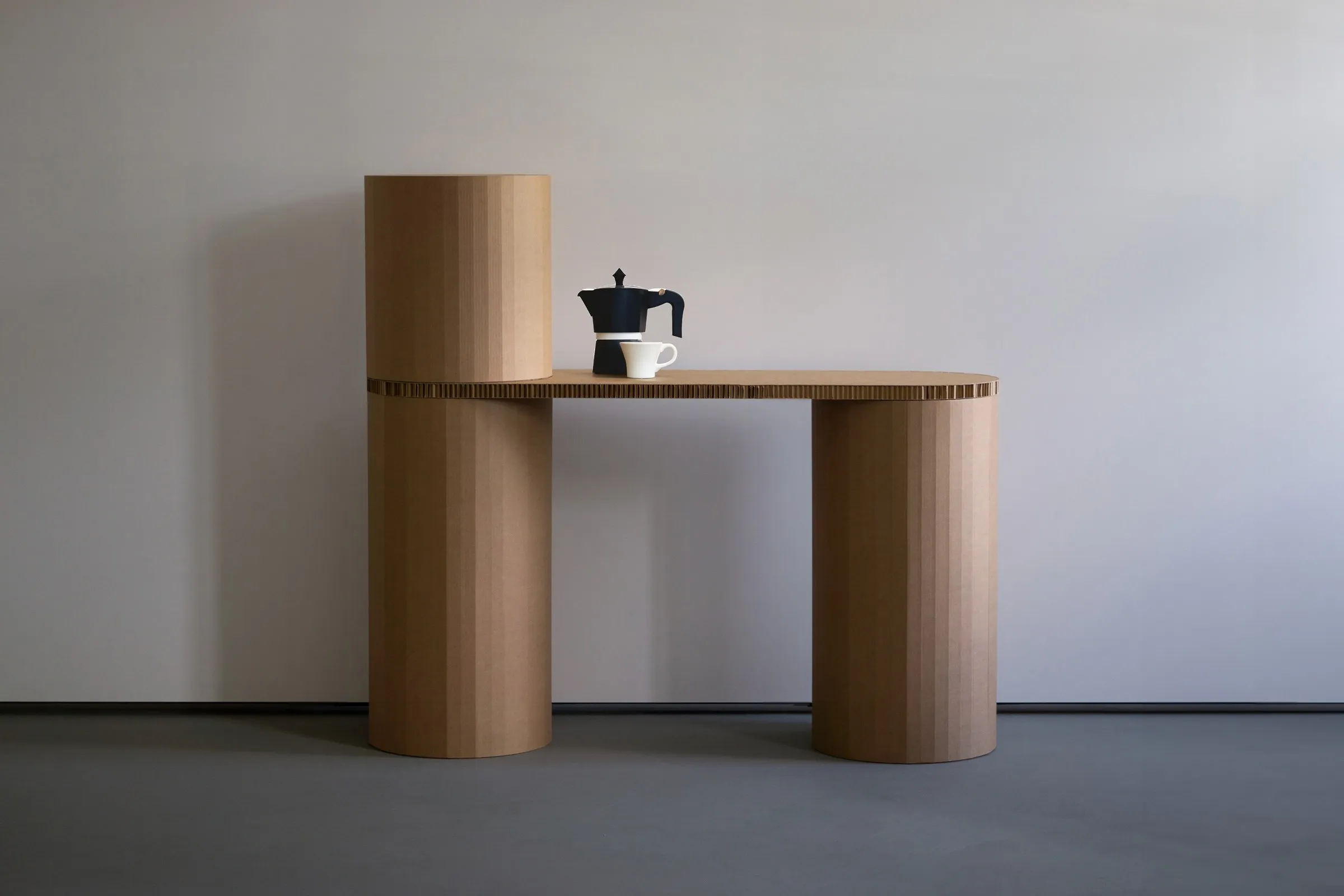
A trade fair stand lives for three days.
Semester project with a packaging manufacturer, Summer 2023 · 3 months
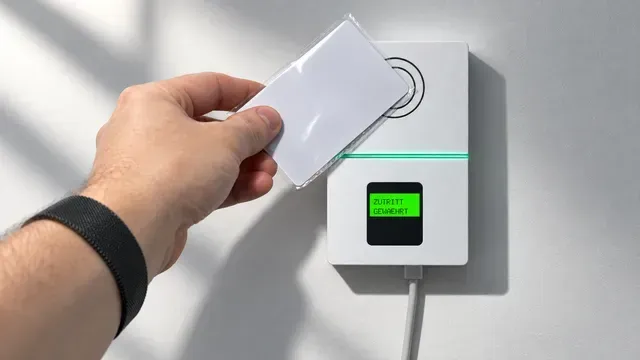
The interesting part starts when the network drops.
Data communication, Munich University of Applied Sciences, Winter 2025/26 · 3 months
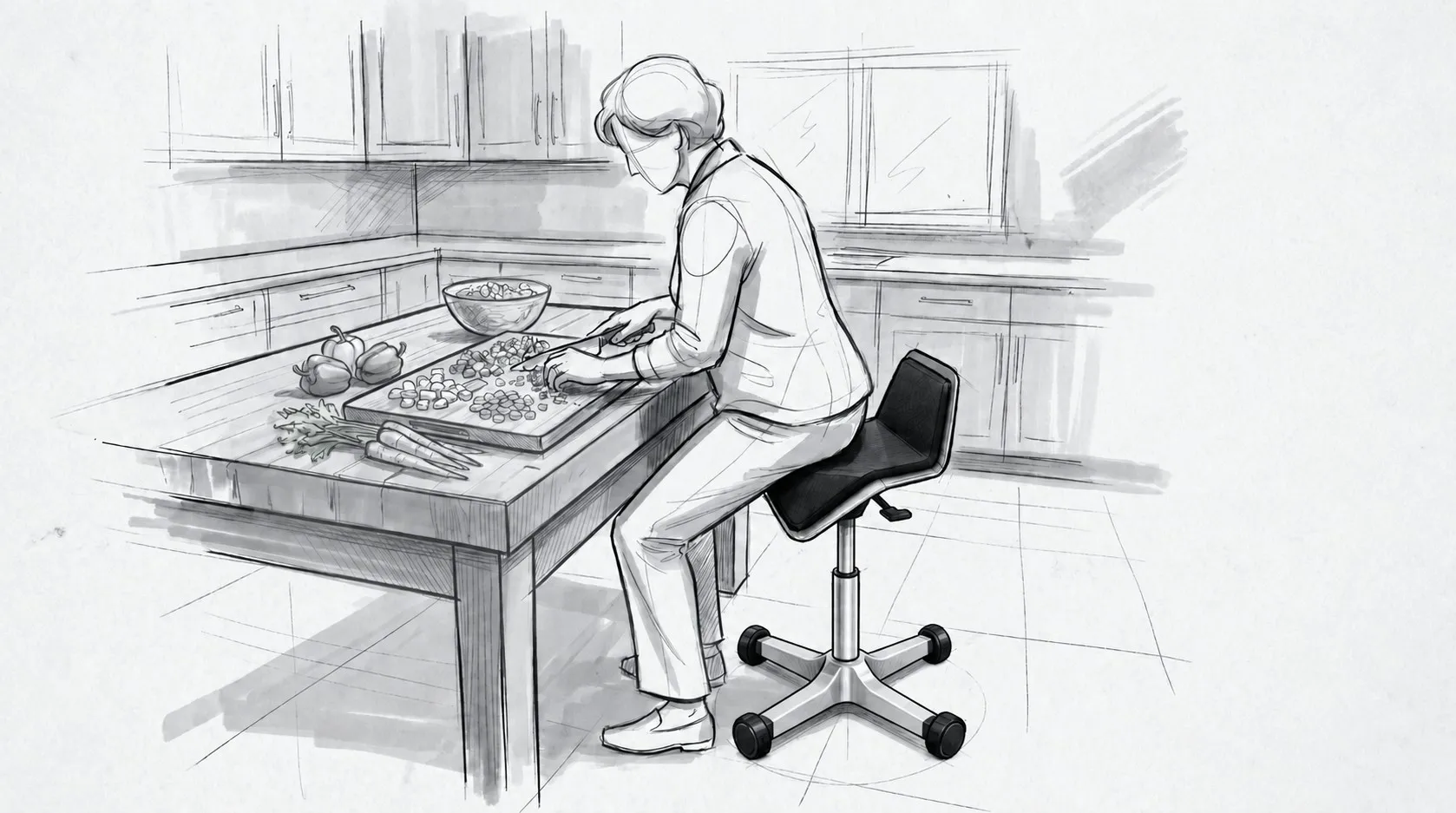
Two real quotes for the same part, more than double apart.
Mechatronic Product Development, Munich University of Applied Sciences, Winter 2025/26 · 3 months
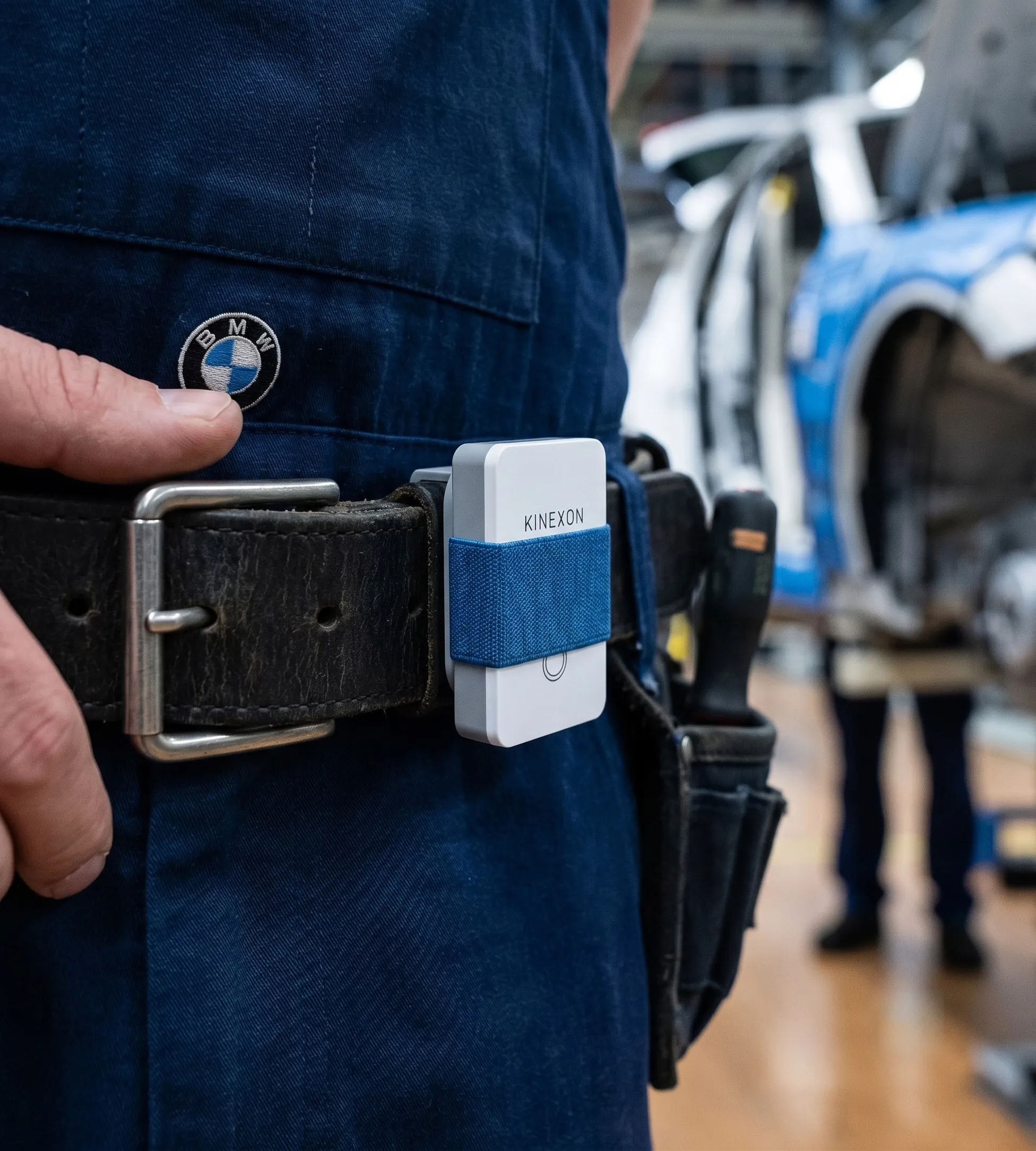
A safety sensor that hung like a forgotten ID badge.
Design cooperation with BMW, module TD5, THD, Winter 2023/24 · 3 months
Ansys proposes a shape, then gives up.
Simulation, Munich University of Applied Sciences, Summer 2026 · 3 months
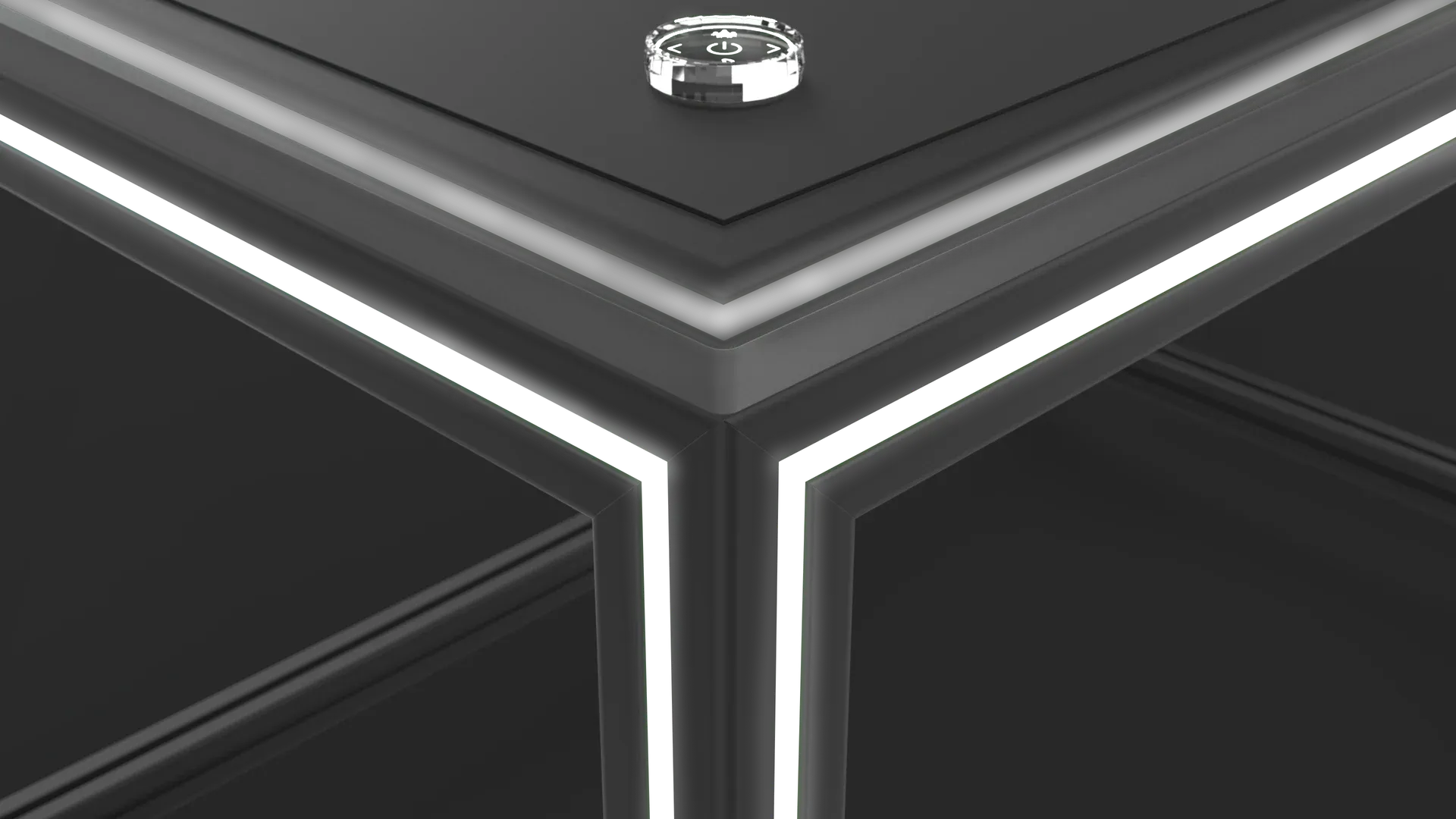
A new plant needs furniture for the shift briefing.
Cooperation project with BMW, Summer 2023 · 3 months
The simulation returns tables. It never says where the bottleneck is.
Built alongside the course, Summer 2026 · 3 months

One curve does the handle, the rim and the stacking.
Semester project, Summer 2022 · 3 months
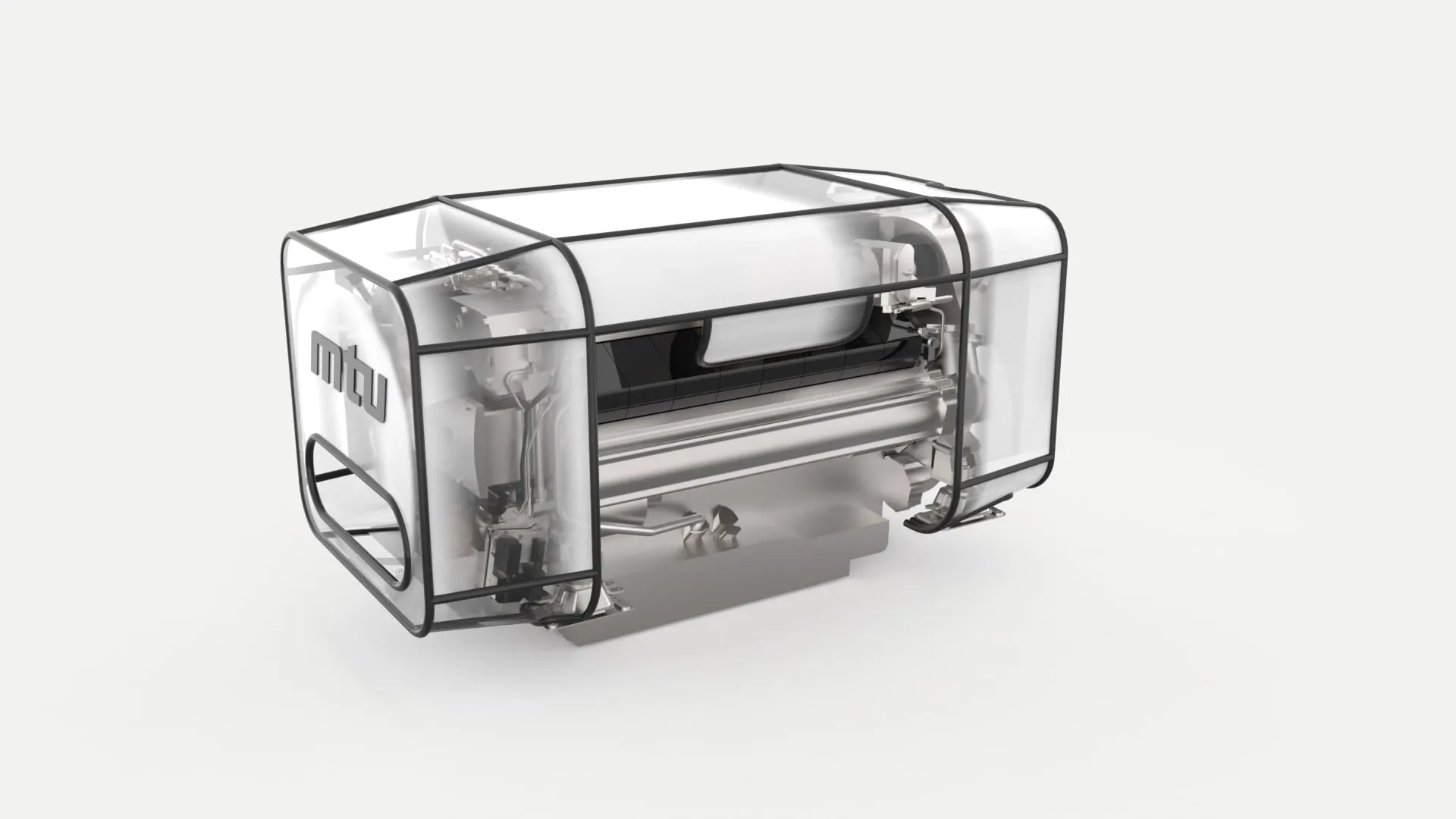
An industrial engine looks like what it is: a machine.
Collaboration with mtu / Rolls-Royce Power Systems, Winter 2022/23 · 3 months
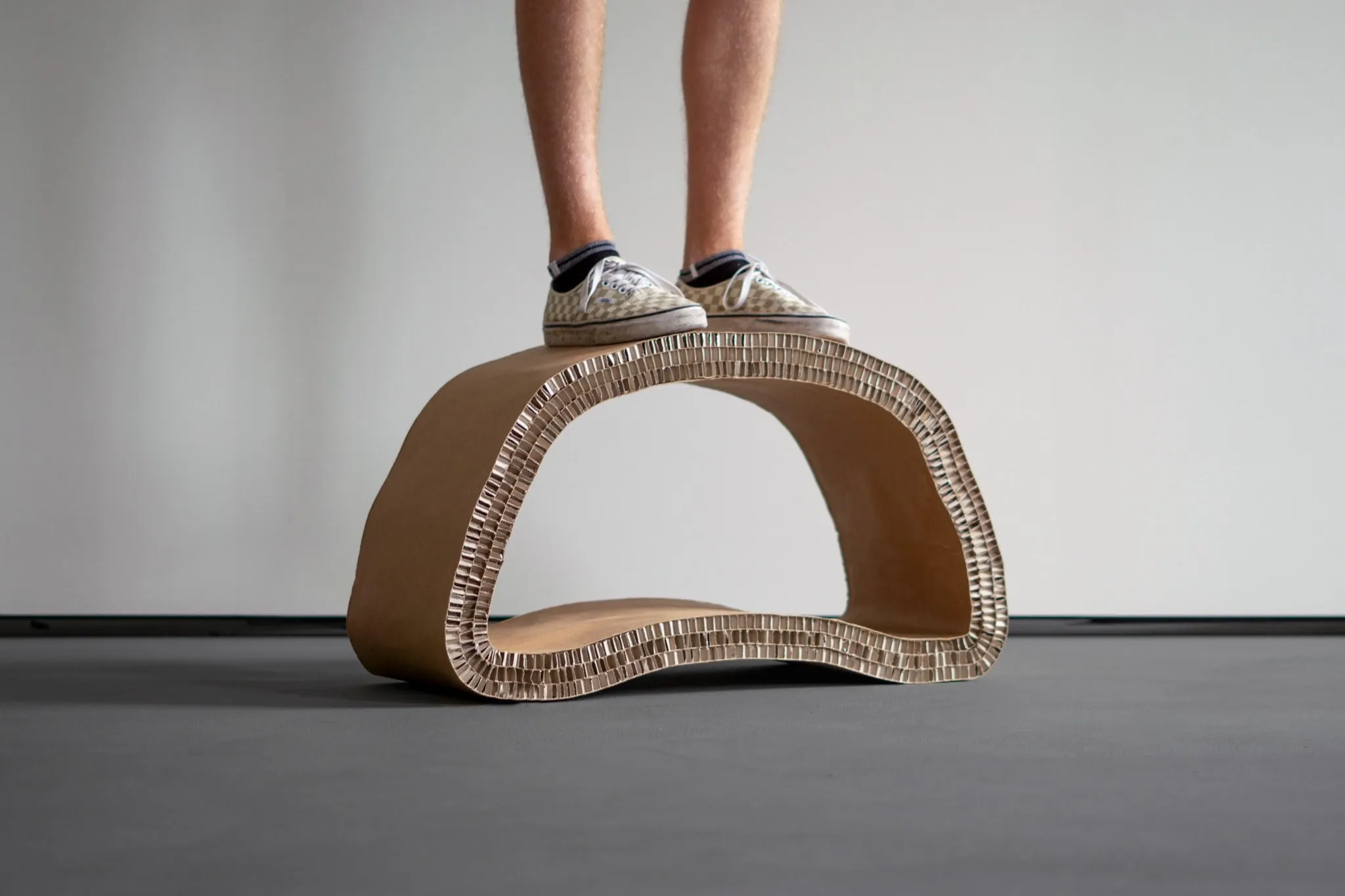
Open, the board bends in your hands.
Semester project with a packaging manufacturer, Summer 2023 · 3 months
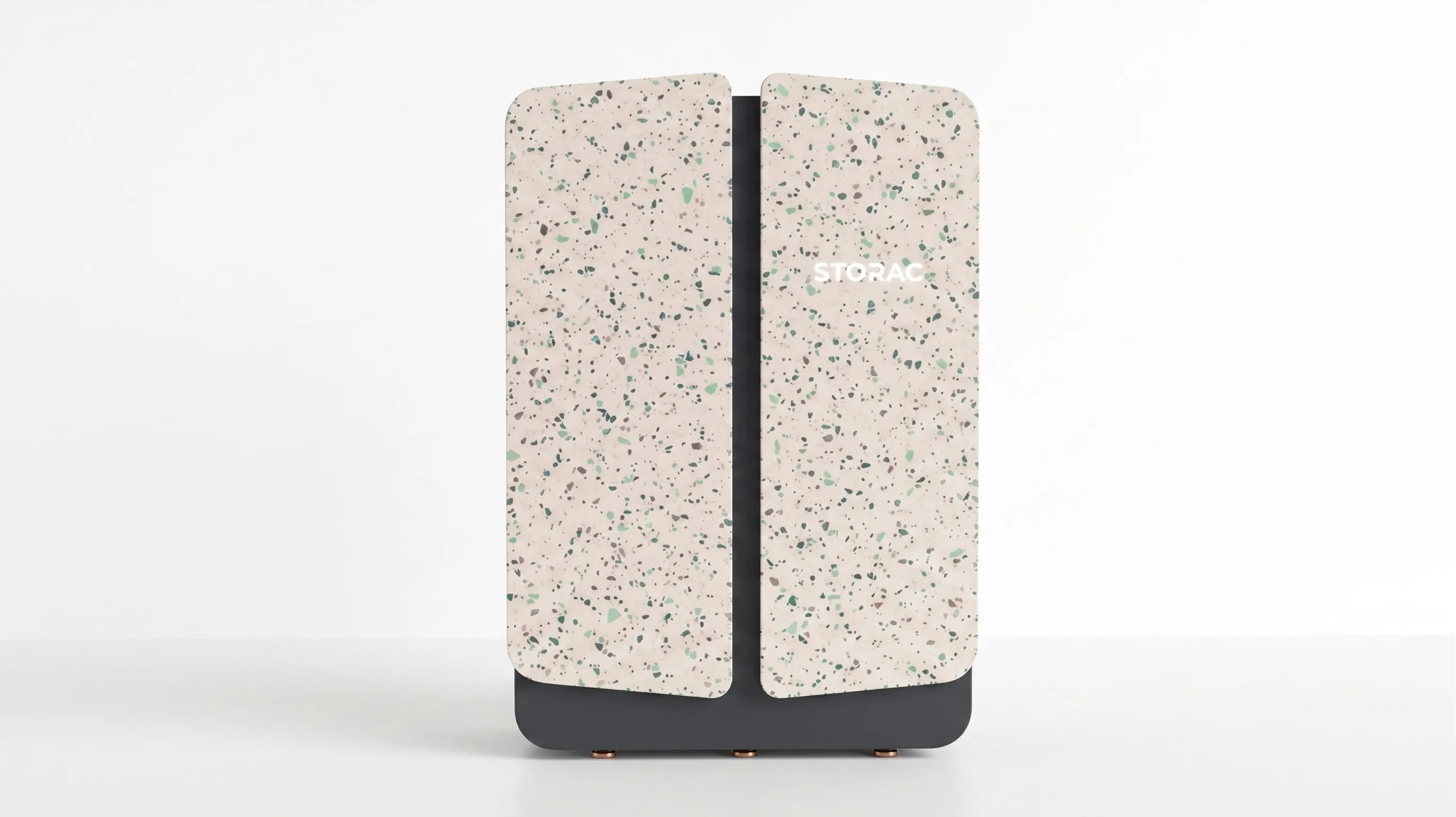
A home battery that looked like a switch cabinet.
Design cooperation with Prolux Solutions, THD, Mar–Jul 2023 · roughly 3.5 months
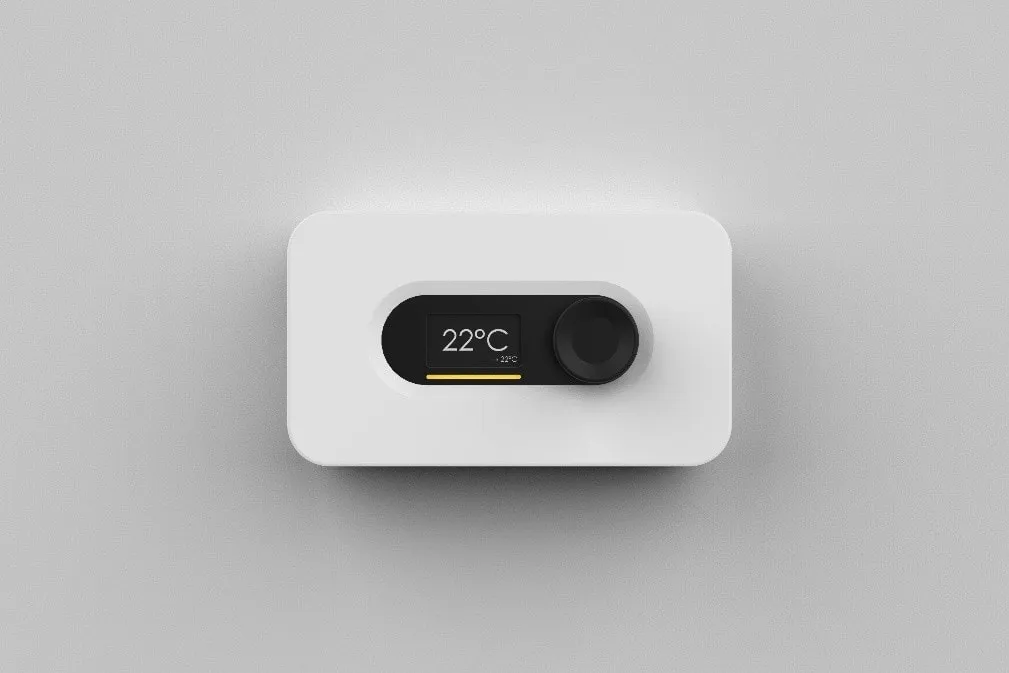
The university had the electronics and no enclosure.
Commissioned work for the university, Winter 2024/25 · 3 months
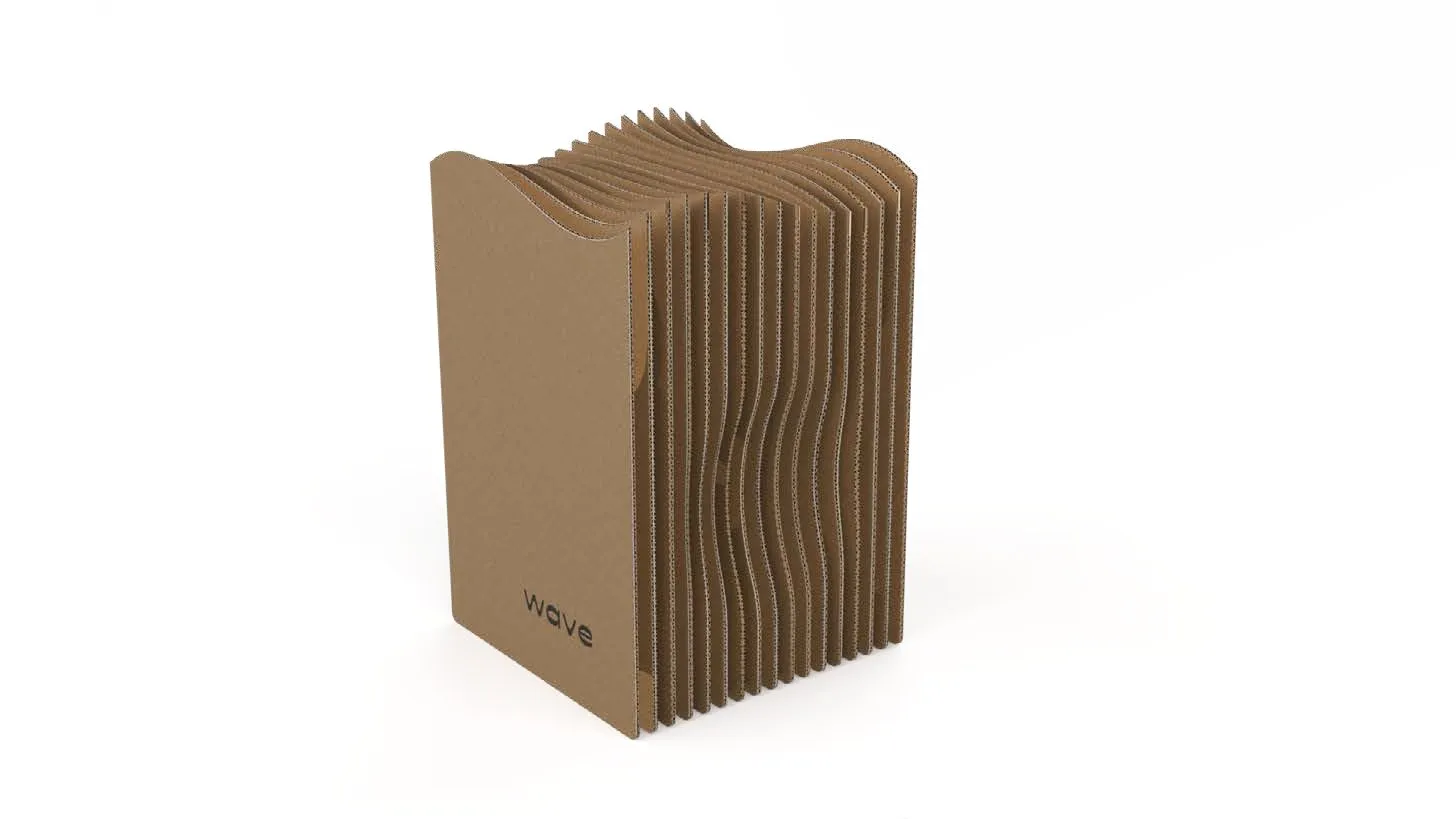
A cardboard box that makes a speaker louder without adding a single watt.
Material workshop, THD, 29 Apr – 7 May 2023 · one week