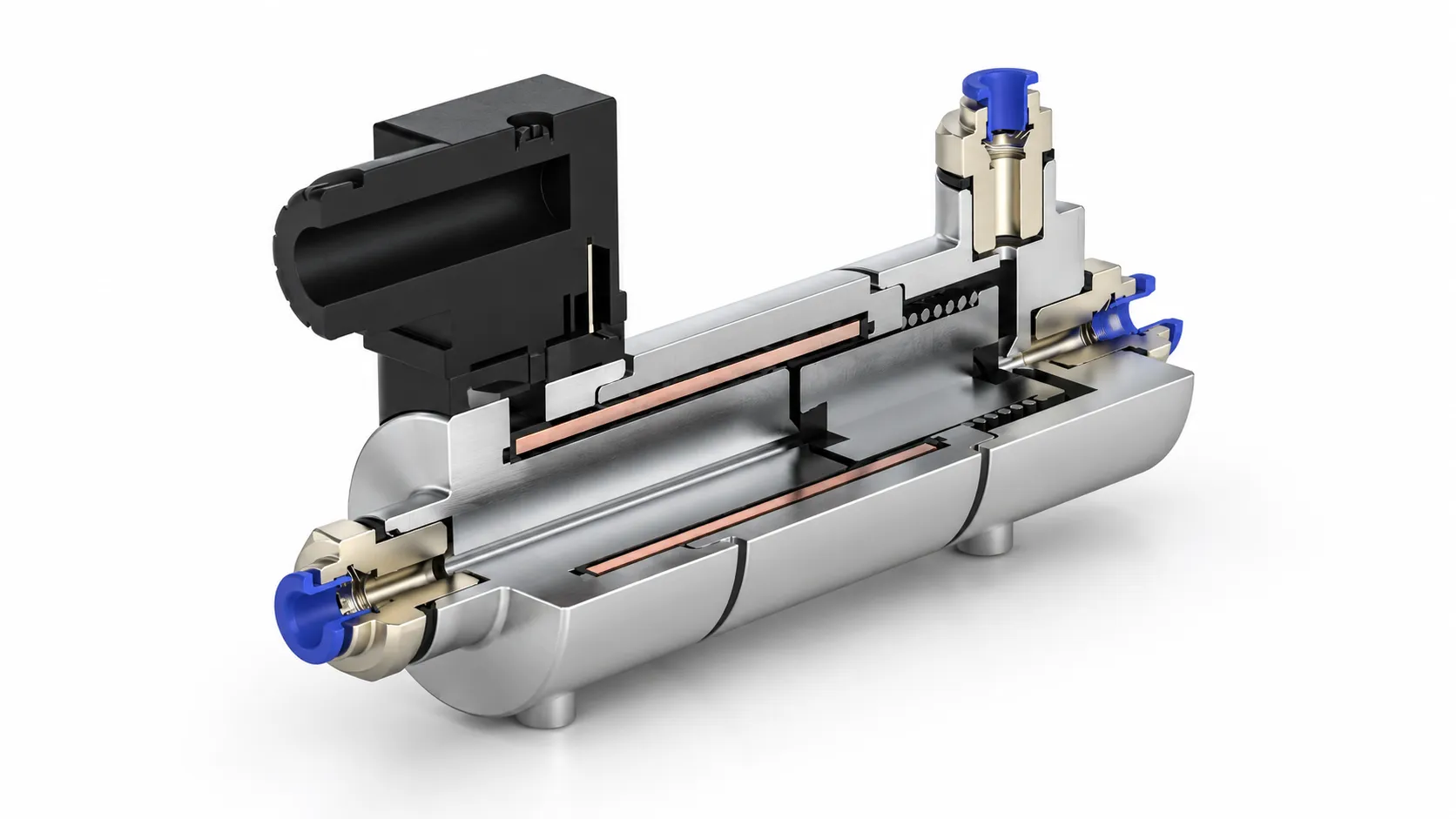
Electromagnetic Pneumatic Valve
The first draft was too weak and ran too hot.
Actuator design, Munich University of Applied Sciences, Winter 2025/26 · 3 months
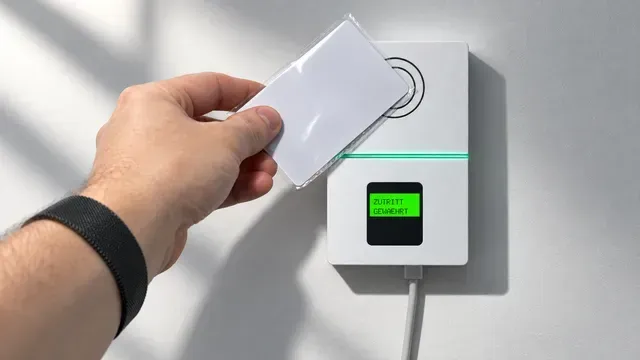
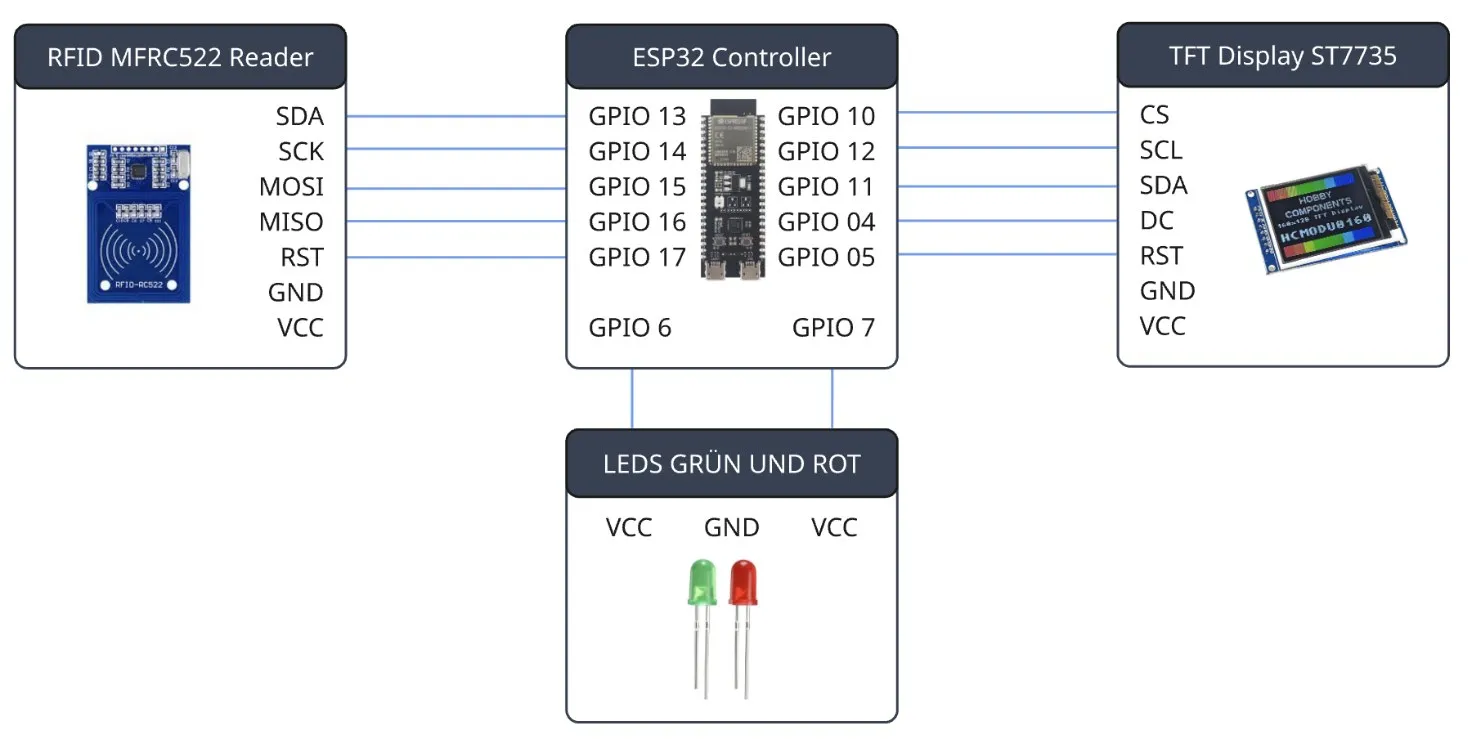
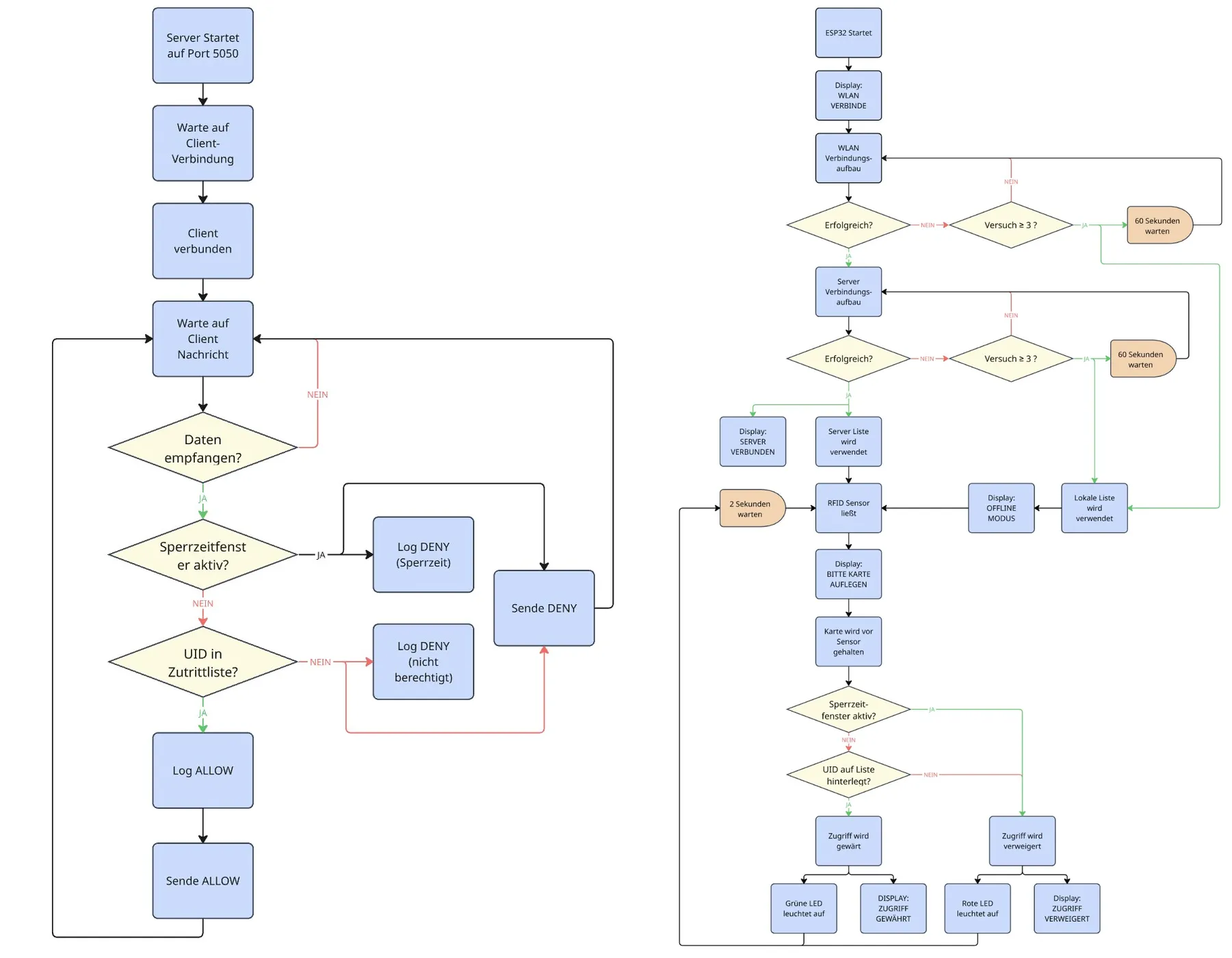
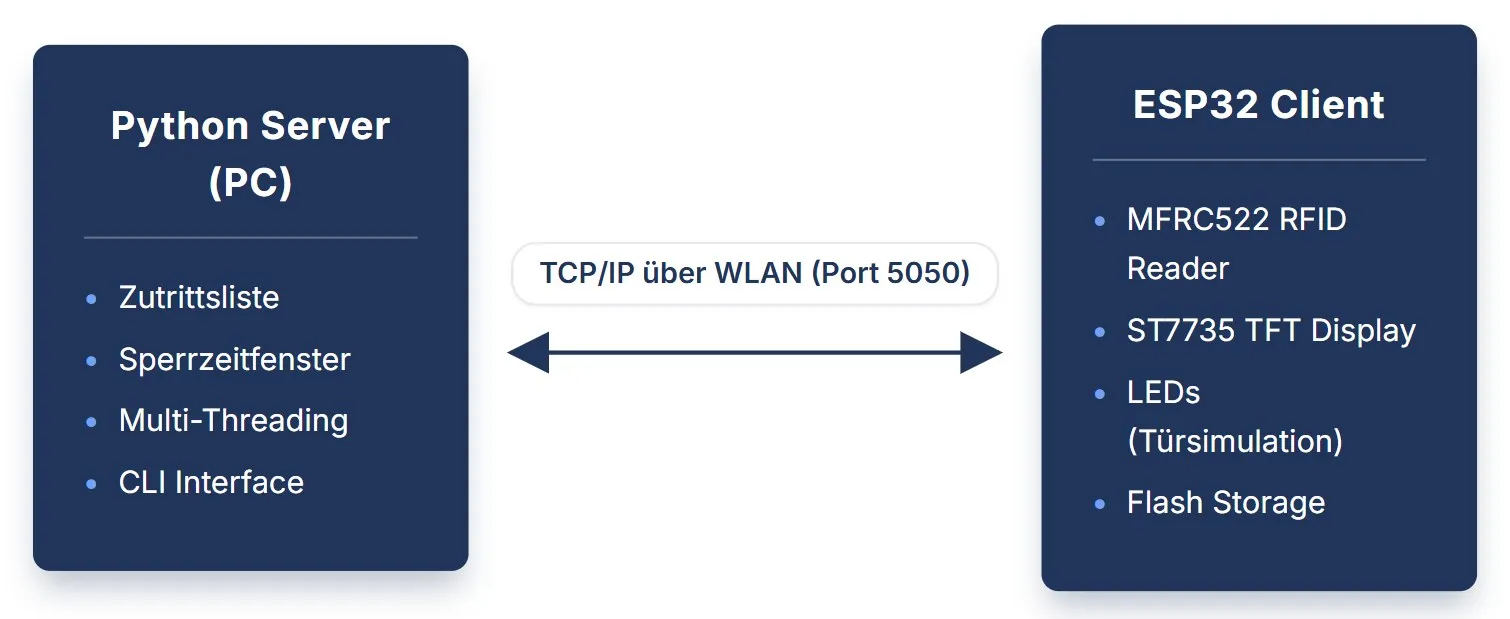
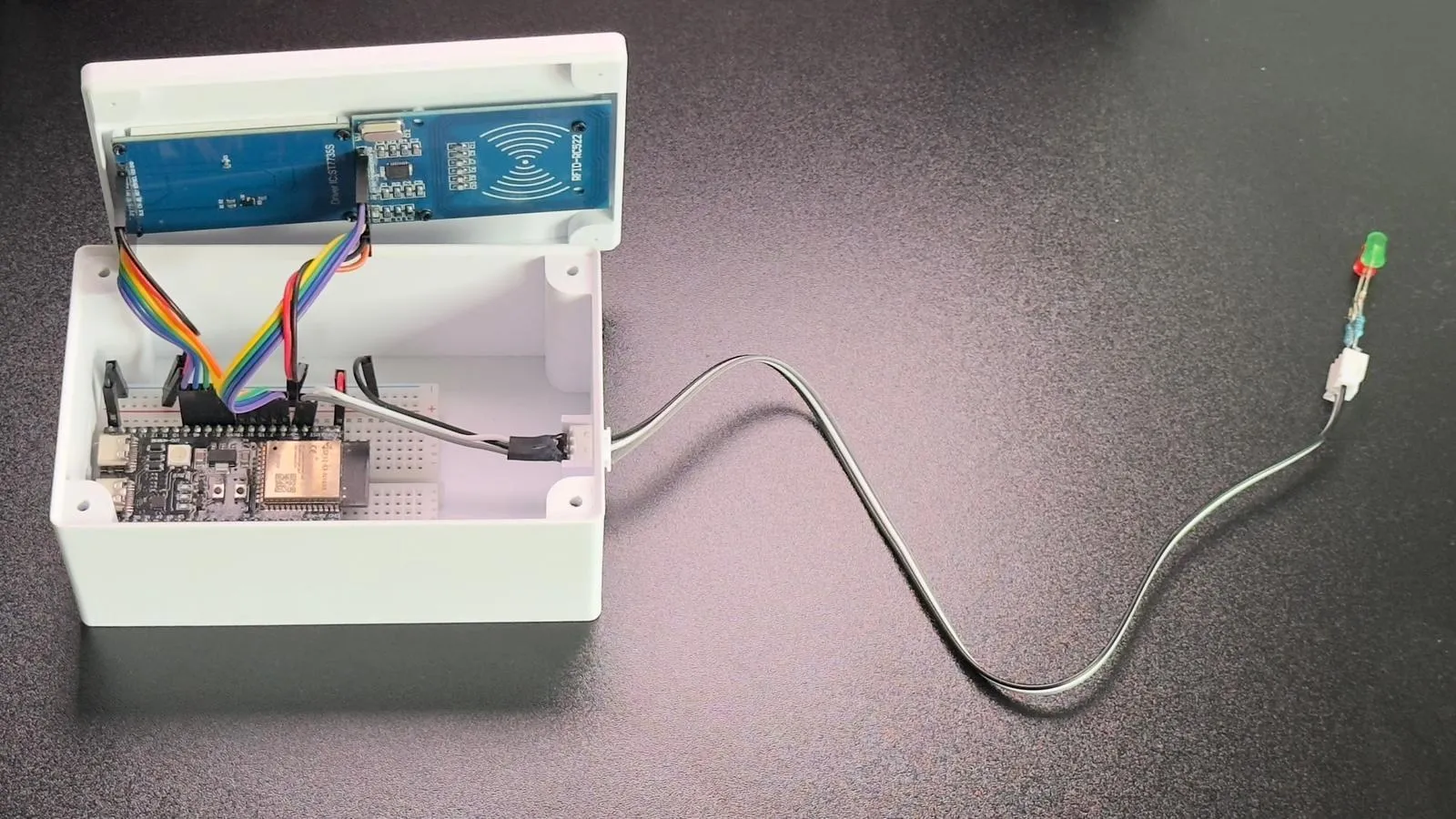
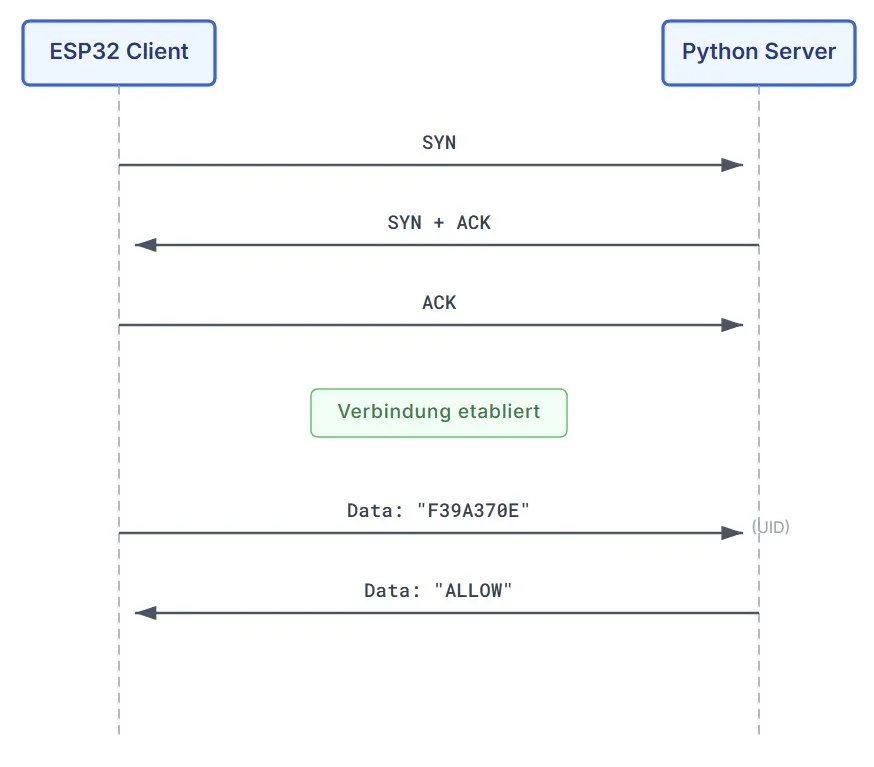
SPI to the reader, TCP/IP over WLAN to the server, with a lean text protocol on TCP in between: the client reports the UID it read, the server answers with the decision, and the display and status LEDs mirror it straight away. In normal operation the server decides: the client sends the UID, the answer comes back as ALLOW or DENY, readable in the terminal on the left. Take that connection away and it becomes the only genuinely interesting question in the project.
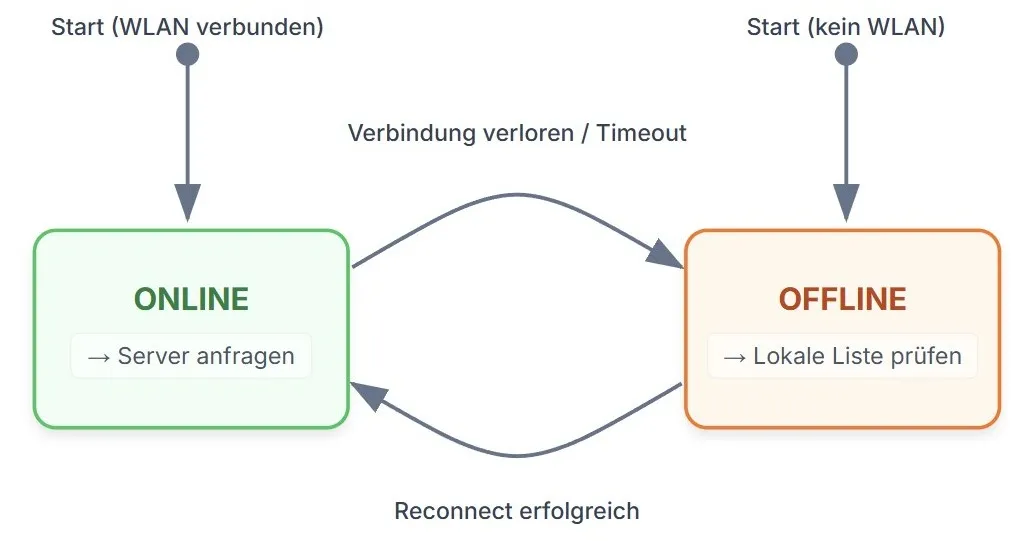
The server (left) checks the lockout window and access list and logs every decision; the ESP32 client (right) tries WLAN and the server first, and only falls back to the local list once that fails. On connection loss the client falls back to OFFLINE, checks a list in its own flash and retries the connection in the background, which makes ONLINE and OFFLINE two operating states with automatic reconnect. A lock that stops working without a network isn't a lock, even though that costs a deliberately accepted inconsistency: a permission revoked moments earlier can still be honoured offline. It isn't a security system either, since a MIFARE card's UID clones trivially and the link stays unencrypted. It's finished all the same, an exercise in system integration from bus through network and state logic to the enclosure.
A ten-minute walkthrough recorded for the supervising professor, stepping through every feature the system handles.
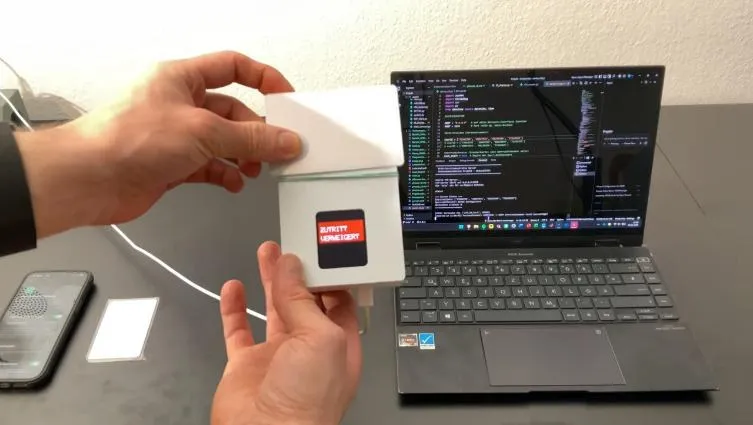
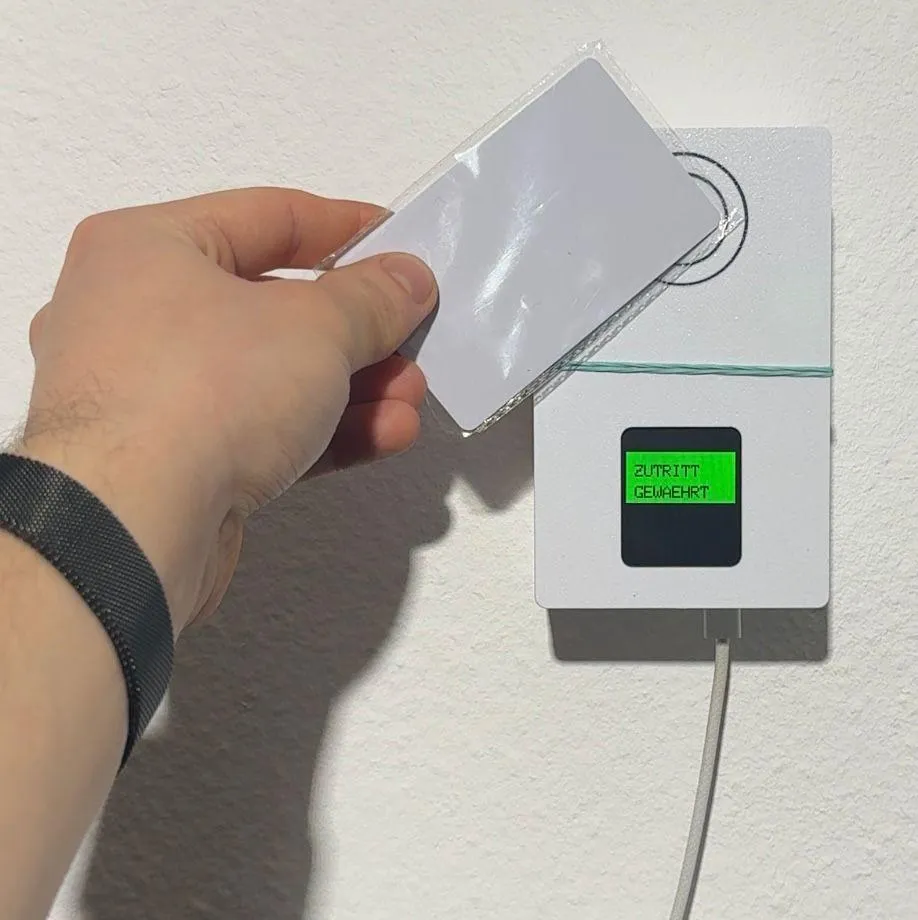
A browser recreation of the real unit and the real server console: drag a card onto the ring, or tap it, and watch the exact log line it produces. Flip the WLAN switch and the client falls back to its own list in flash, last synced a while ago. Try 20047935 once offline: it was added after that sync, so it works online and gets rejected locally, same as the real device would.
The first draft was too weak and ran too hot.
Actuator design, Munich University of Applied Sciences, Winter 2025/26 · 3 months
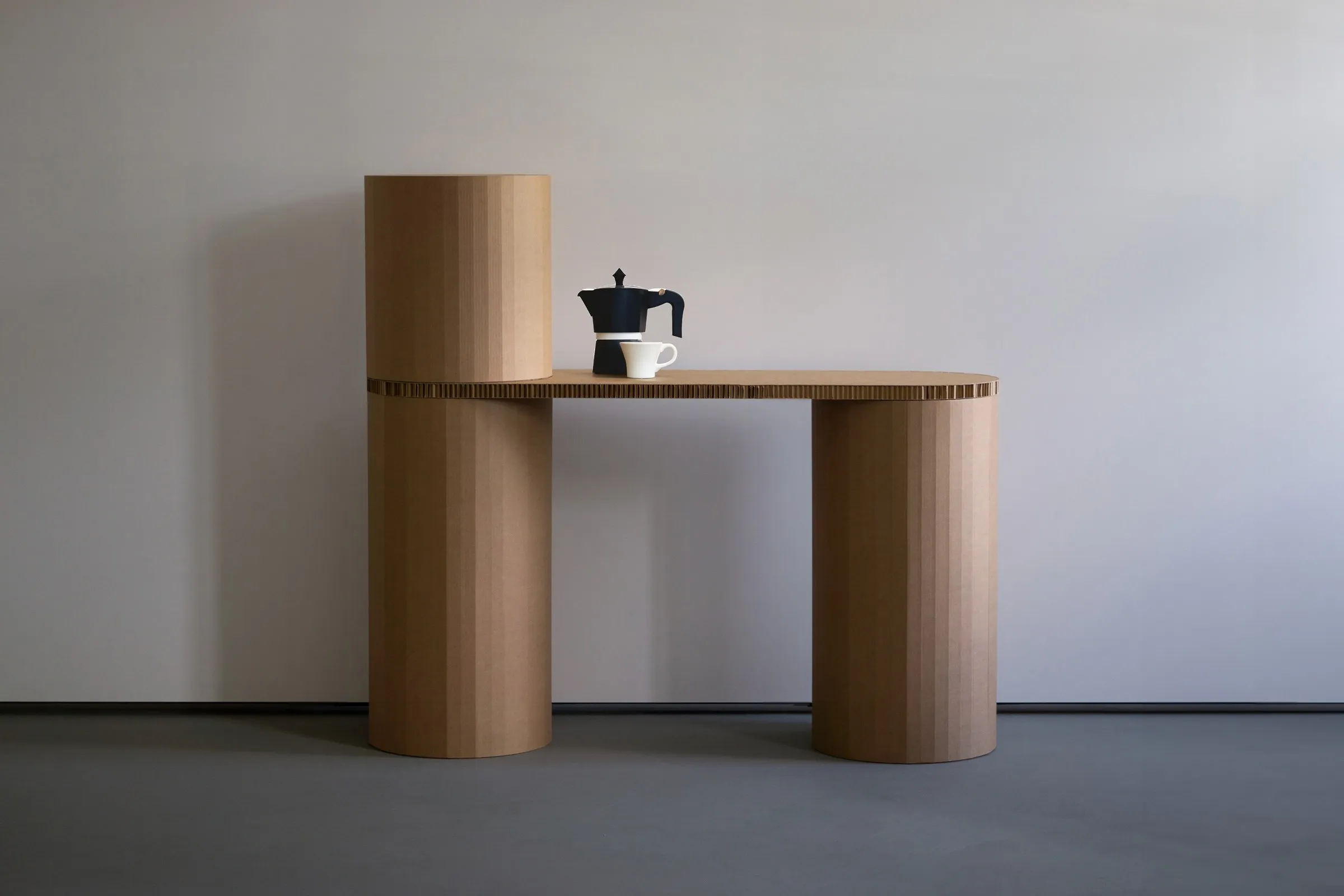
A trade fair stand lives for three days.
Semester project with a packaging manufacturer, Summer 2023 · 3 months
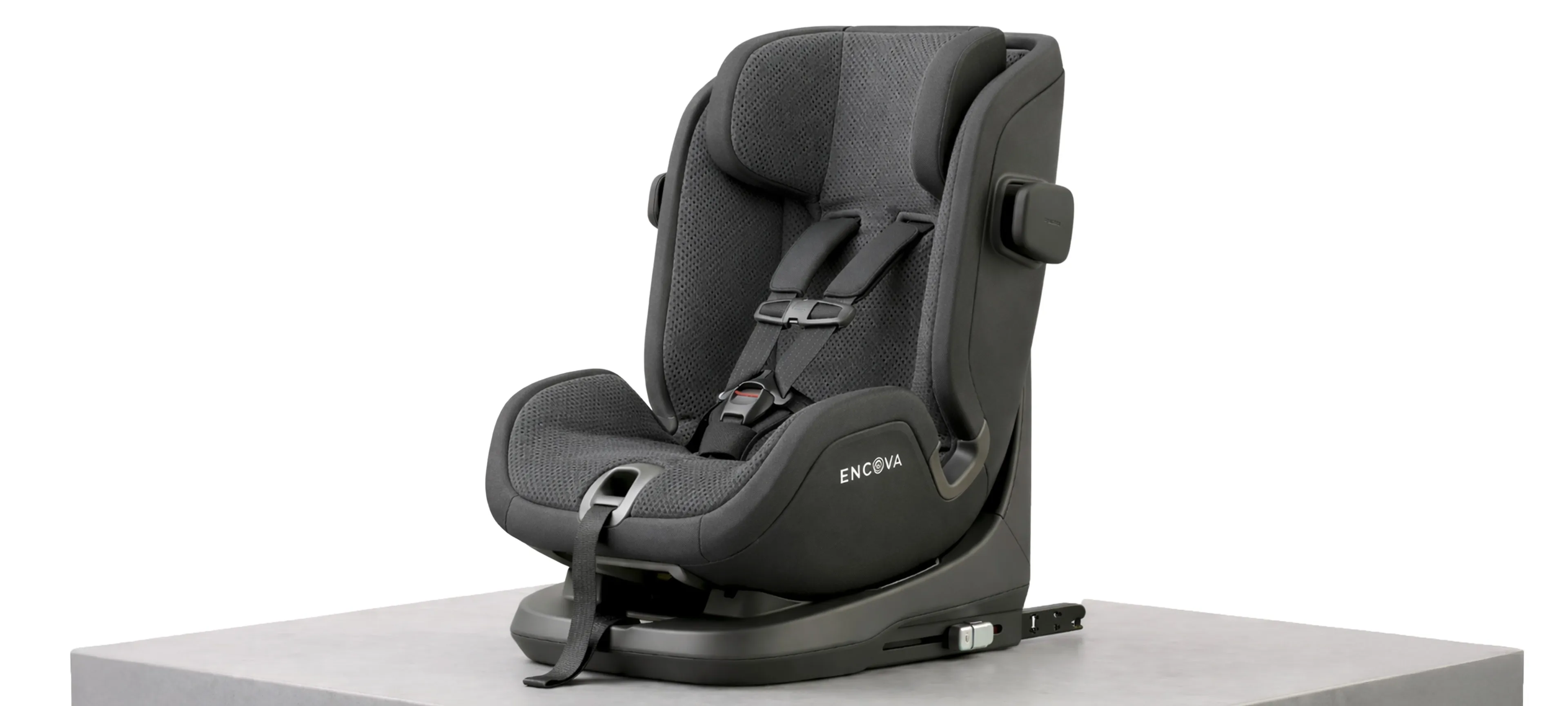
Friday morning, an open brief. Sunday at nine, hand-in.
VDI student competition “Mobility goes Additive”, Friedrichshafen, 17–19 April 2026 · 3 days
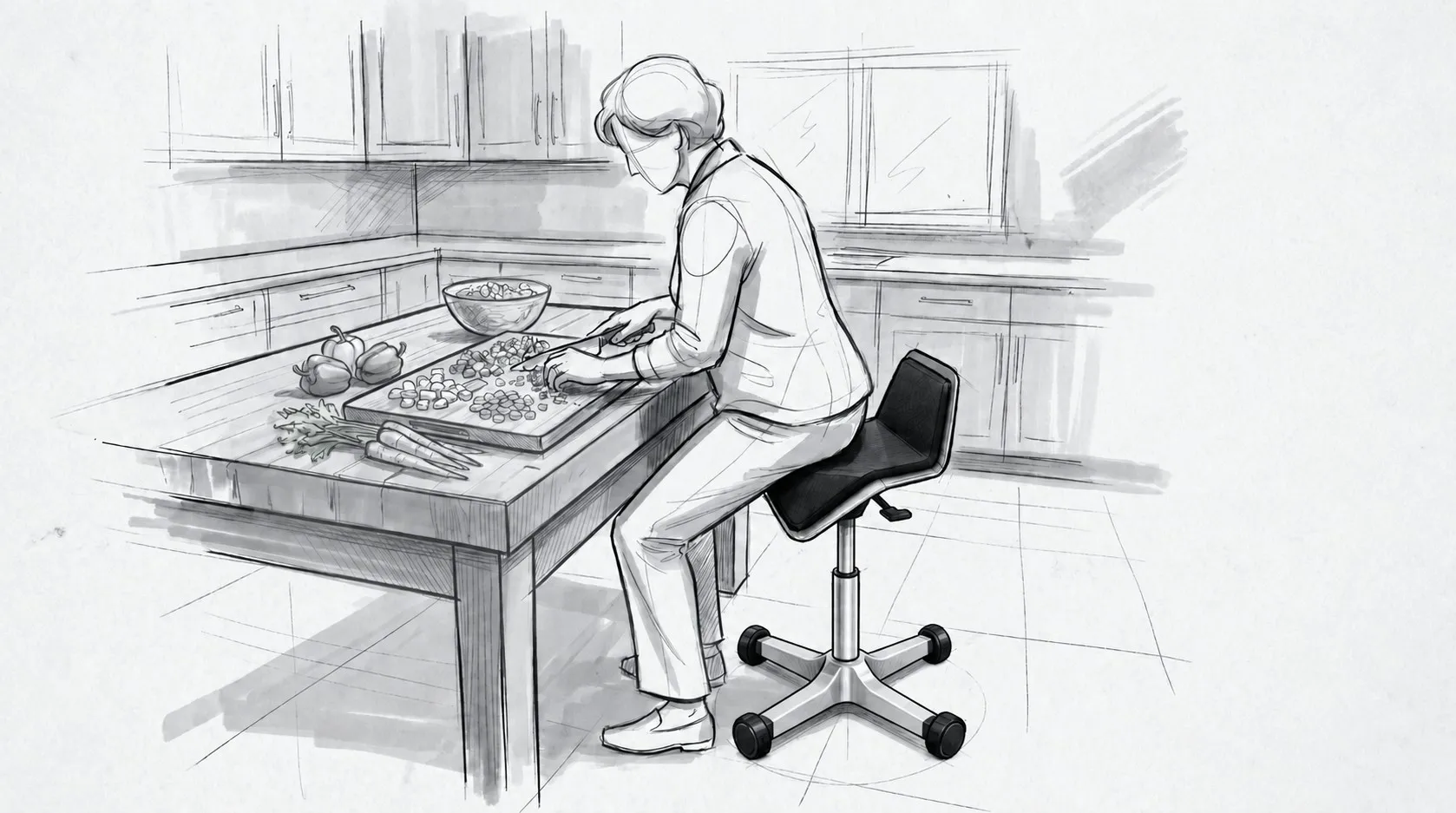
Two real quotes for the same part, more than double apart.
Mechatronic Product Development, Munich University of Applied Sciences, Winter 2025/26 · 3 months
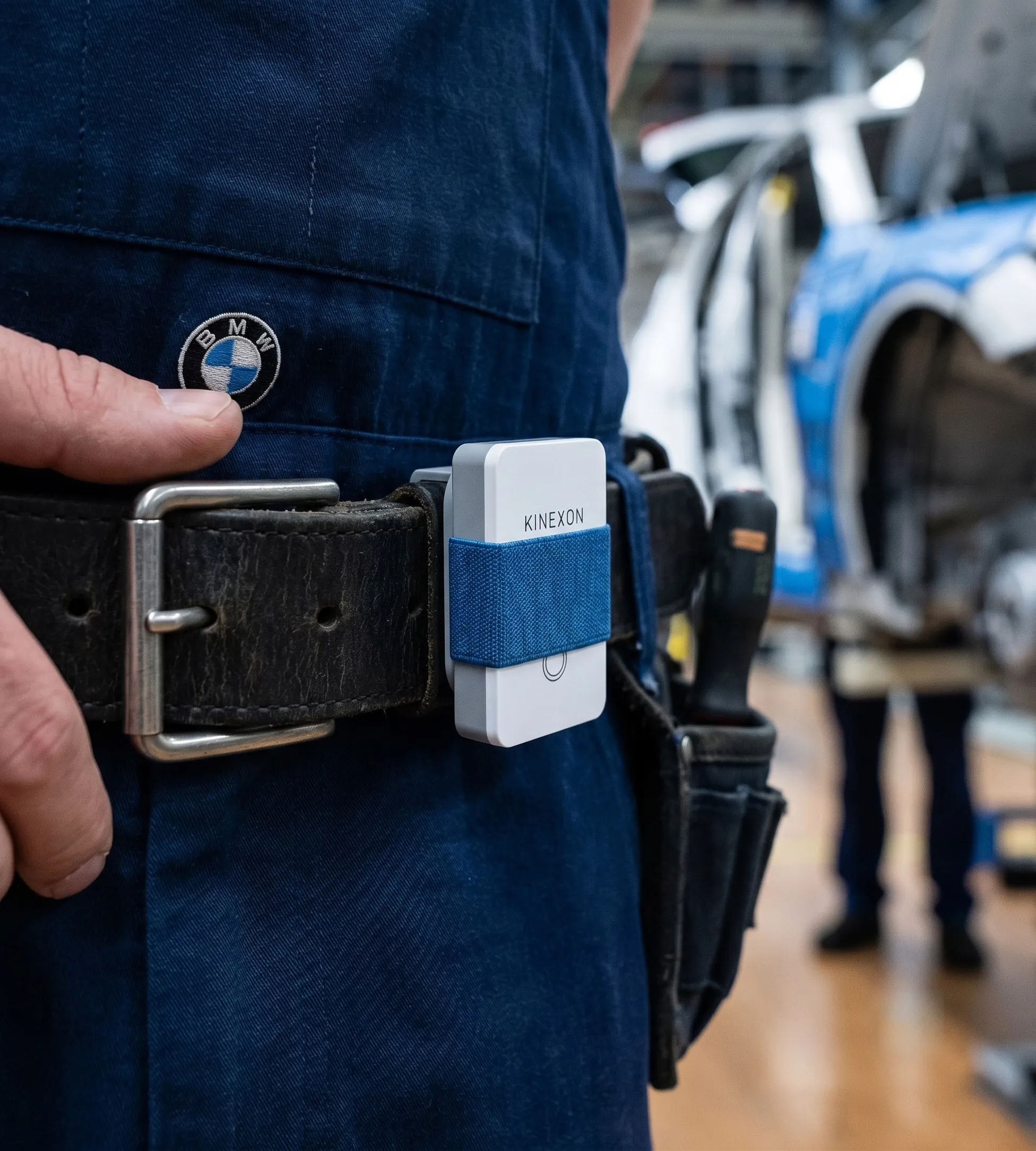
A safety sensor that hung like a forgotten ID badge.
Design cooperation with BMW, module TD5, THD, Winter 2023/24 · 3 months
Ansys proposes a shape, then gives up.
Simulation, Munich University of Applied Sciences, Summer 2026 · 3 months
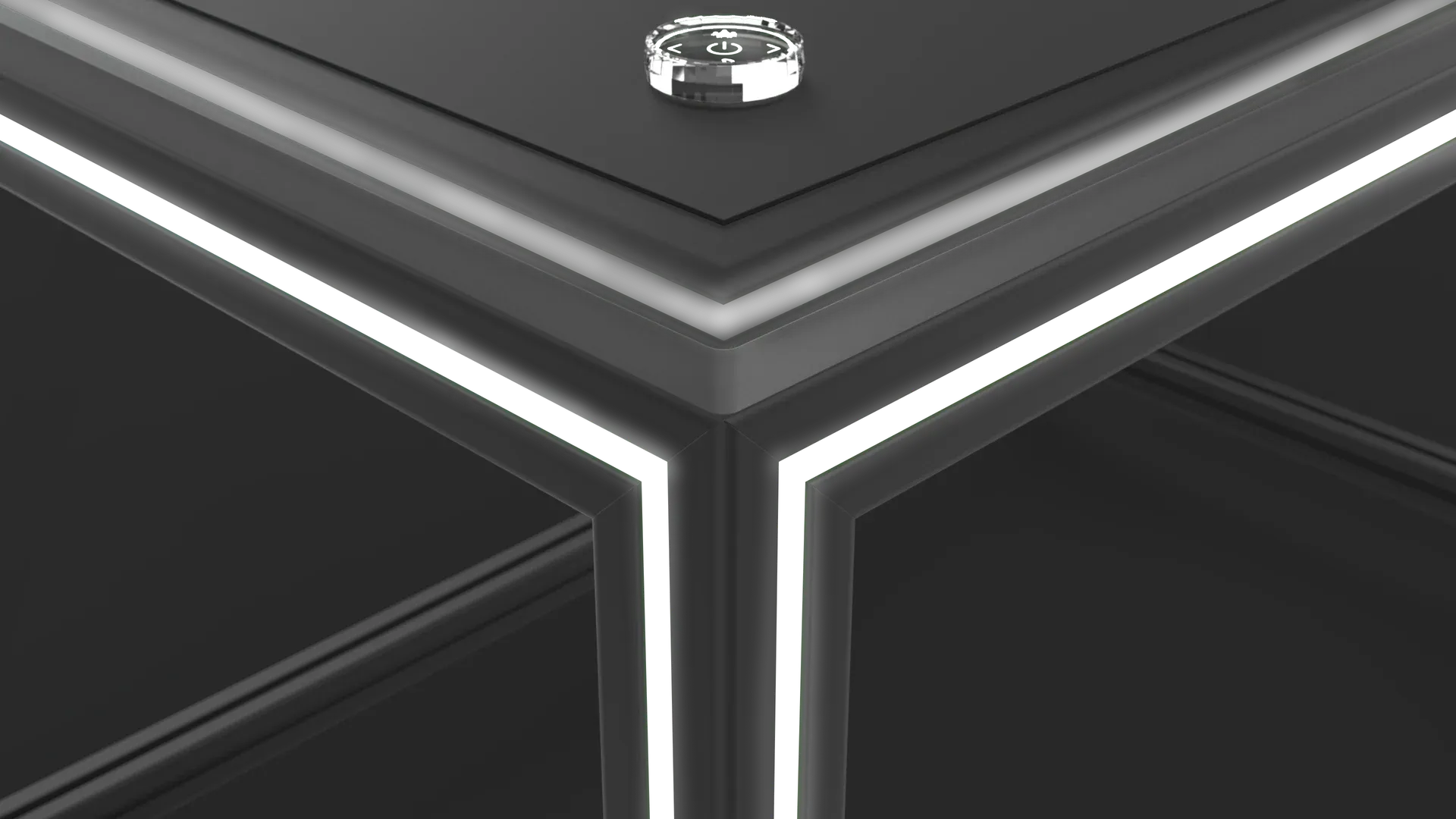
A new plant needs furniture for the shift briefing.
Cooperation project with BMW, Summer 2023 · 3 months
The simulation returns tables. It never says where the bottleneck is.
Built alongside the course, Summer 2026 · 3 months
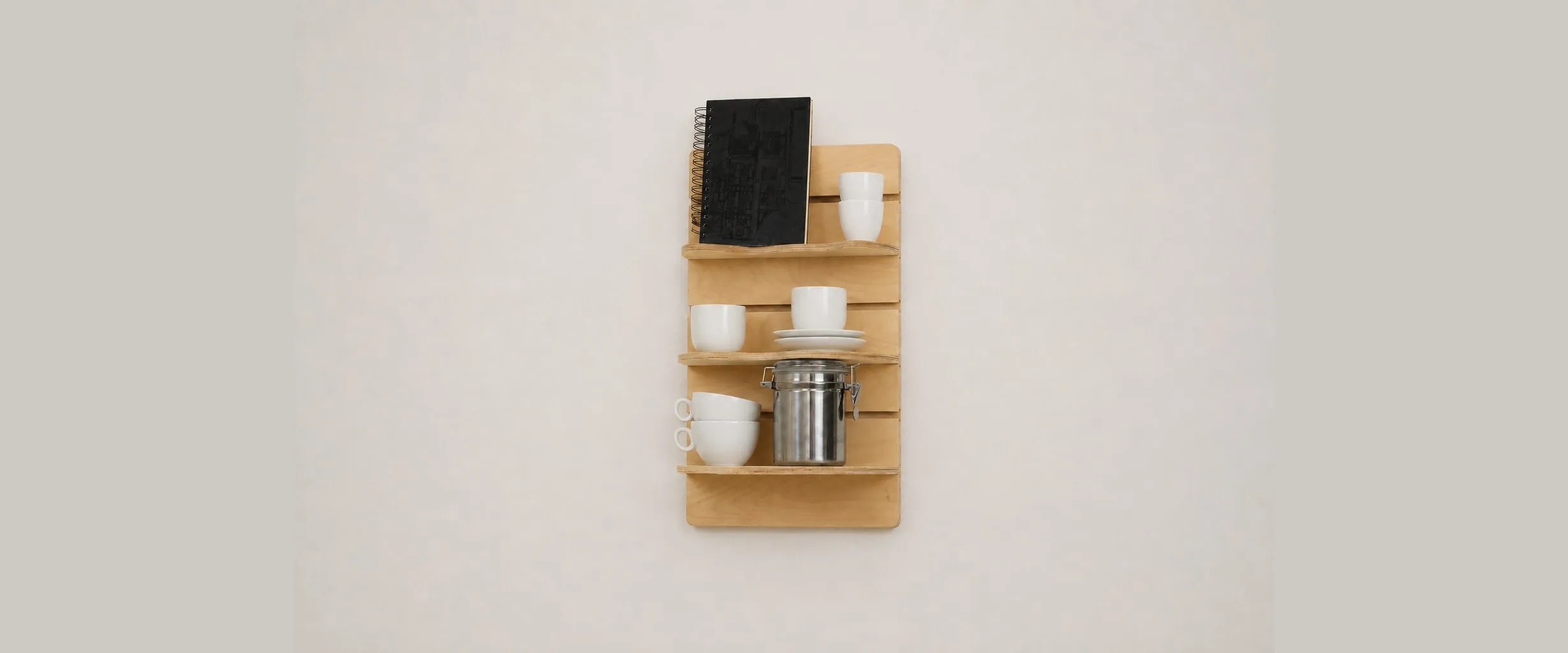
One curve does the handle, the rim and the stacking.
Semester project, Summer 2022 · 3 months
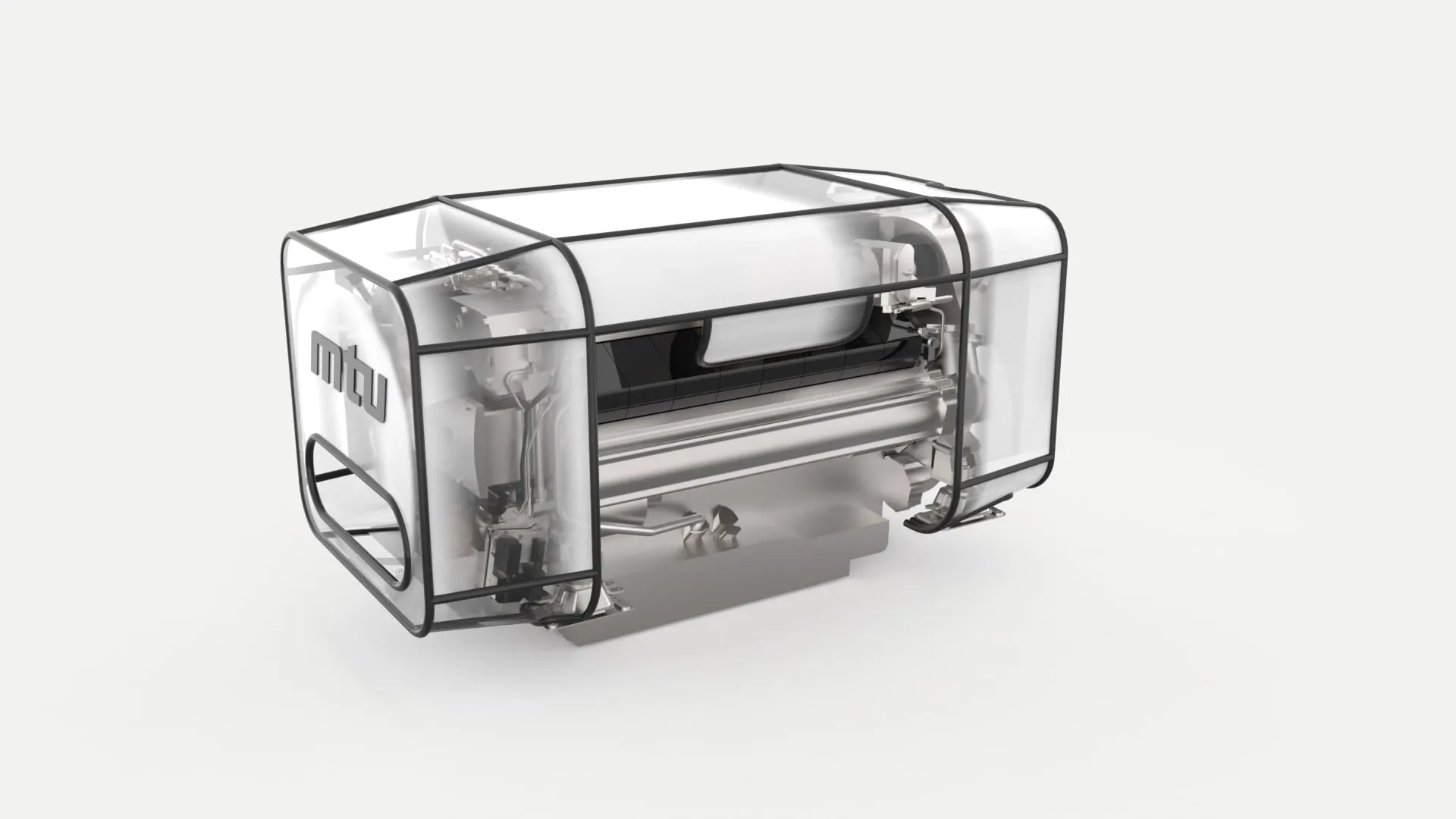
An industrial engine looks like what it is: a machine.
Collaboration with mtu / Rolls-Royce Power Systems, Winter 2022/23 · 3 months
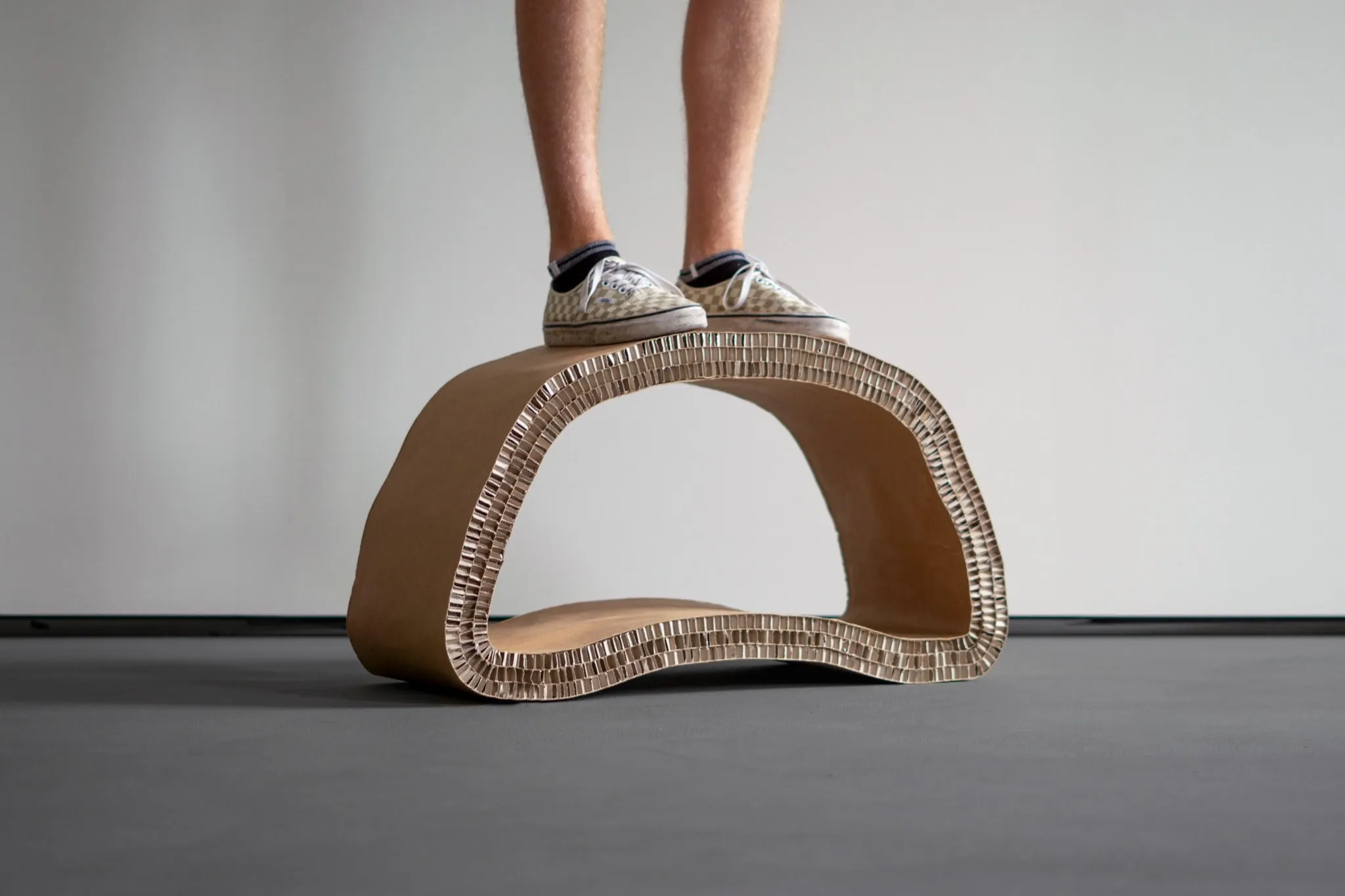
Open, the board bends in your hands.
Semester project with a packaging manufacturer, Summer 2023 · 3 months
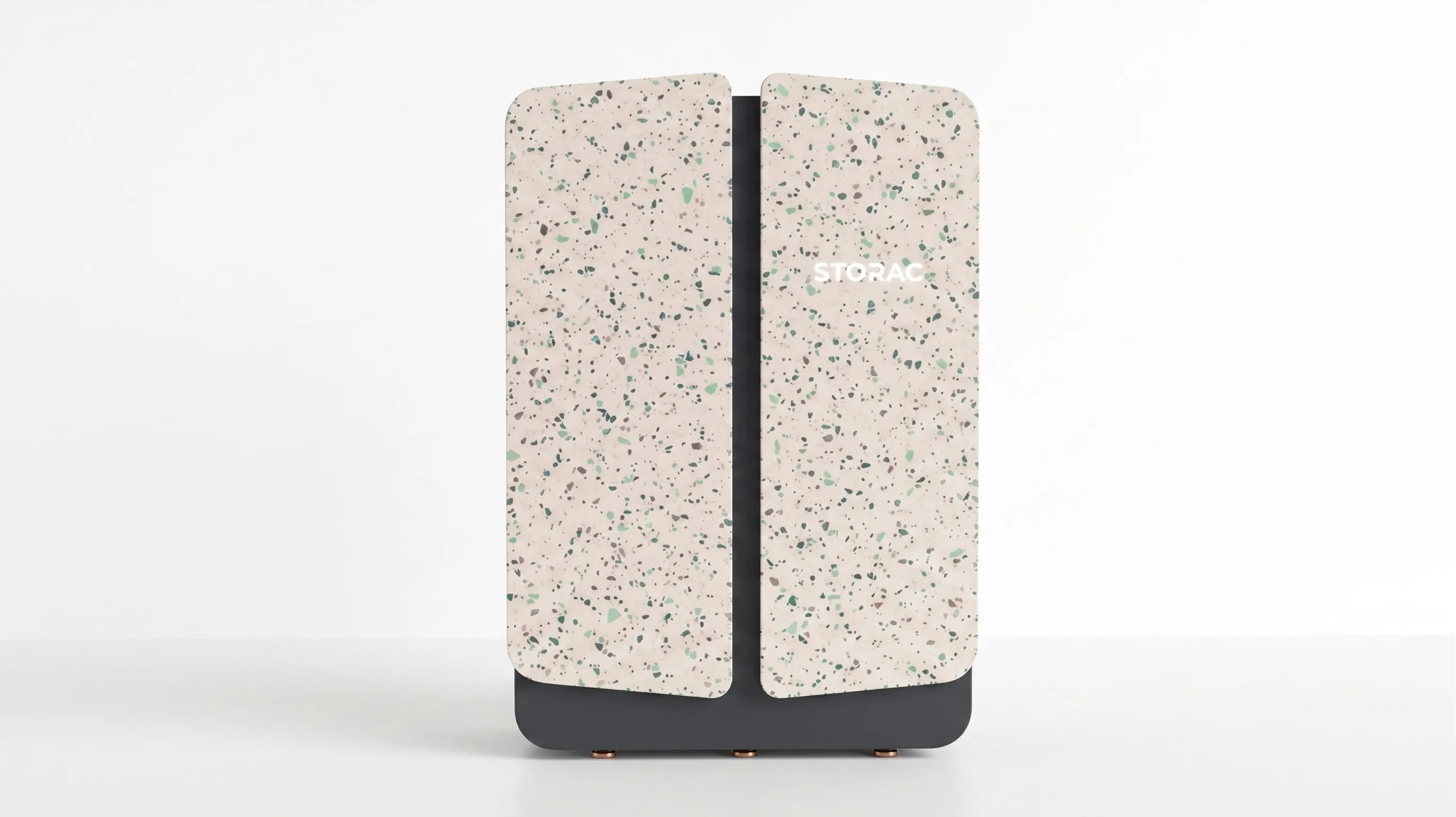
A home battery that looked like a switch cabinet.
Design cooperation with Prolux Solutions, THD, Mar–Jul 2023 · roughly 3.5 months
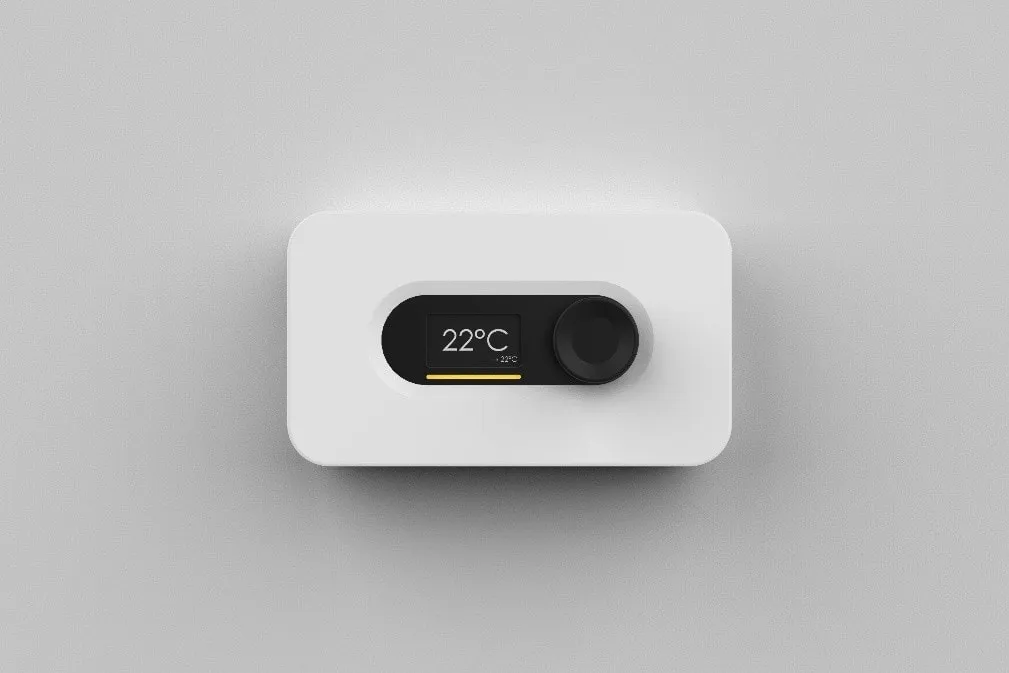
The university had the electronics and no enclosure.
Commissioned work for the university, Winter 2024/25 · 3 months
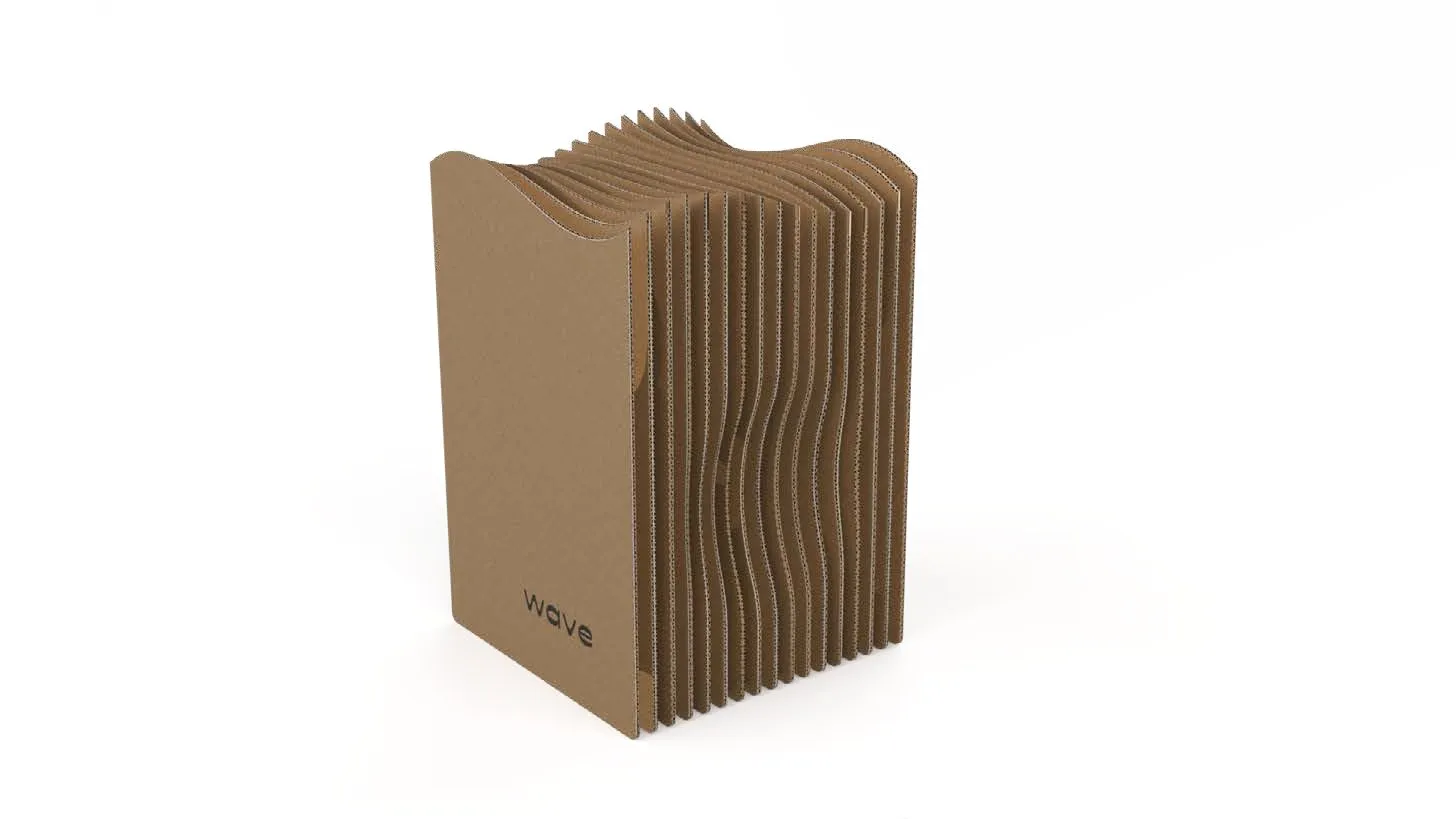
A cardboard box that makes a speaker louder without adding a single watt.
Material workshop, THD, 29 Apr – 7 May 2023 · one week