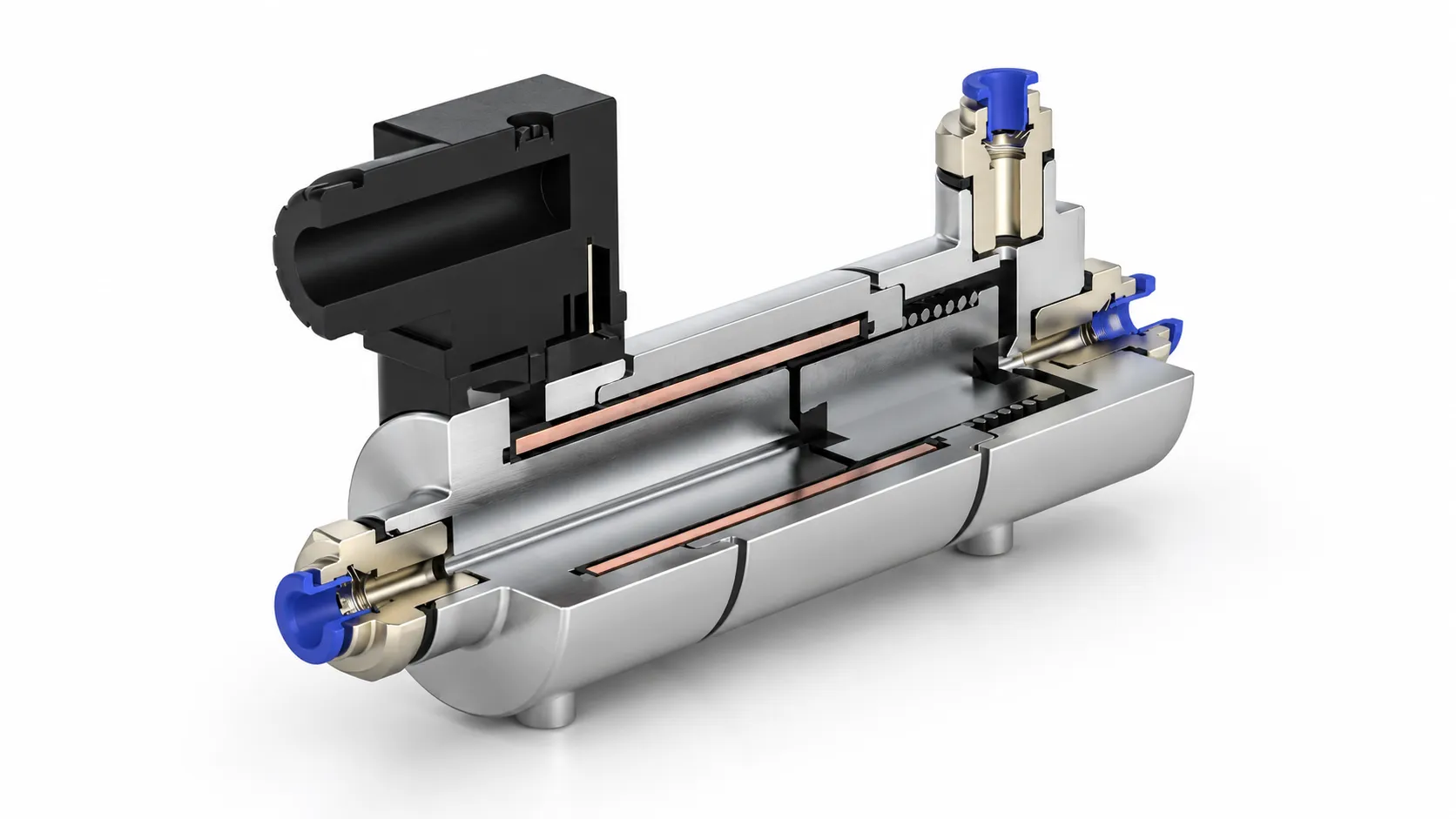
Electromagnetic Pneumatic Valve
The first draft was too weak and ran too hot.
Actuator design, Munich University of Applied Sciences, Winter 2025/26 · 3 months
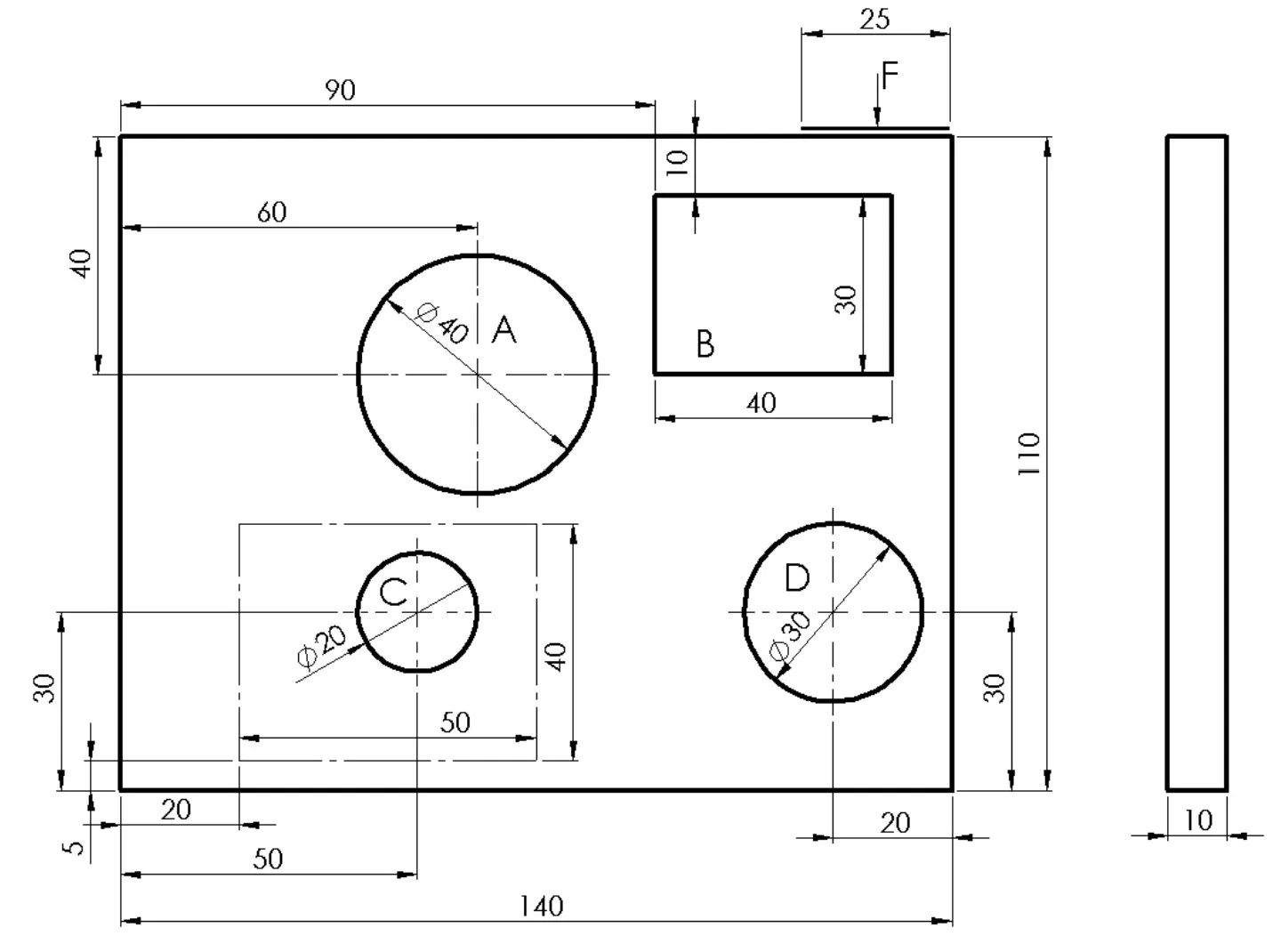
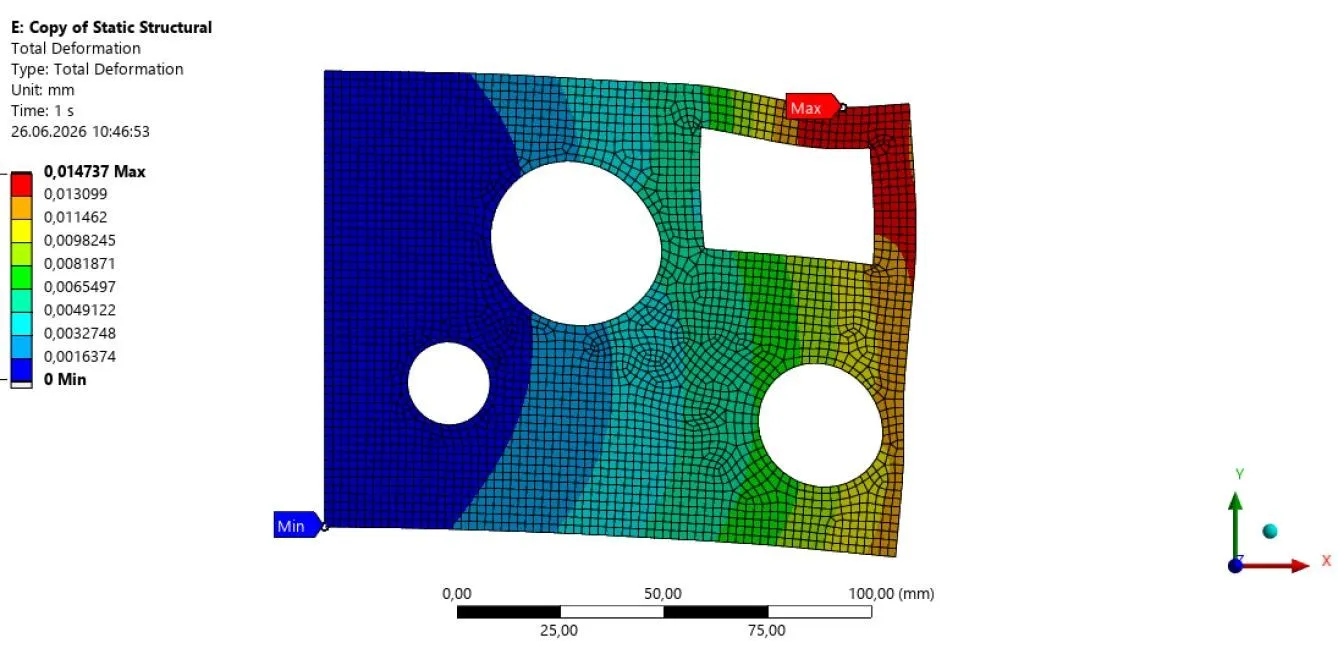
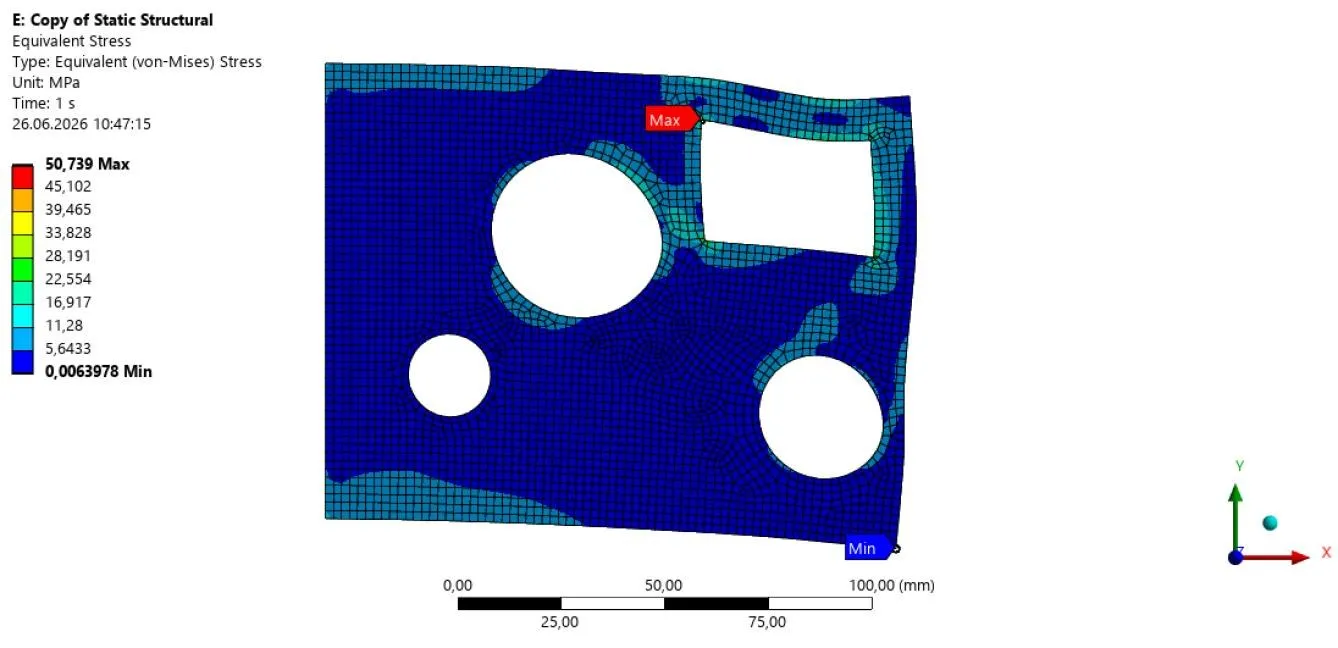
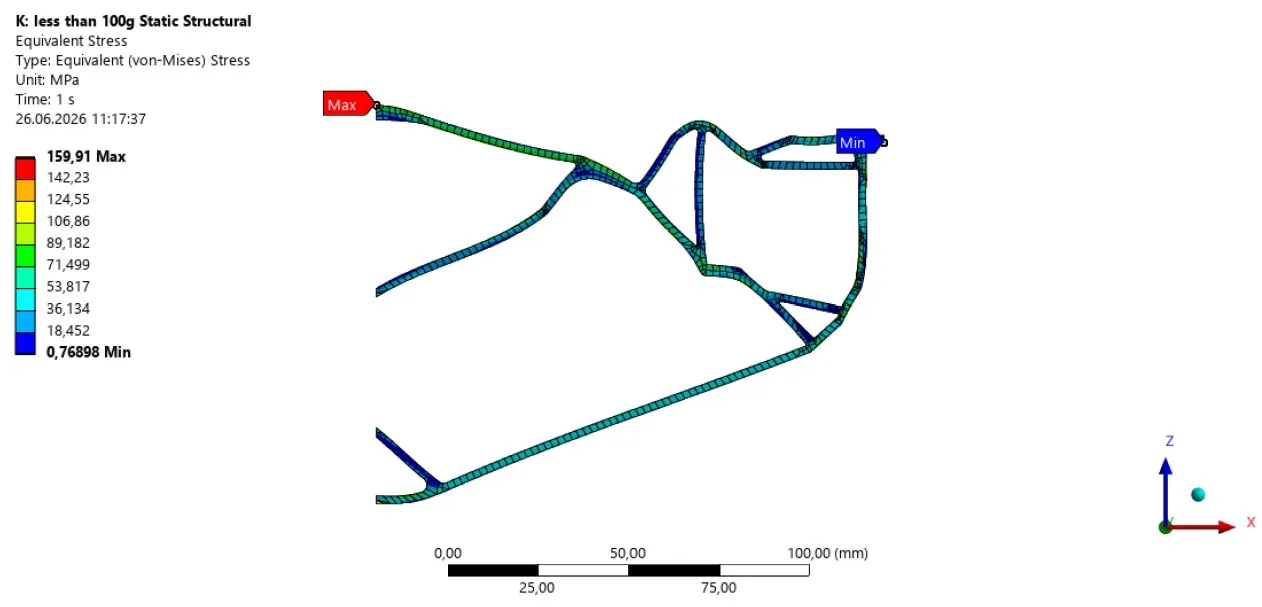
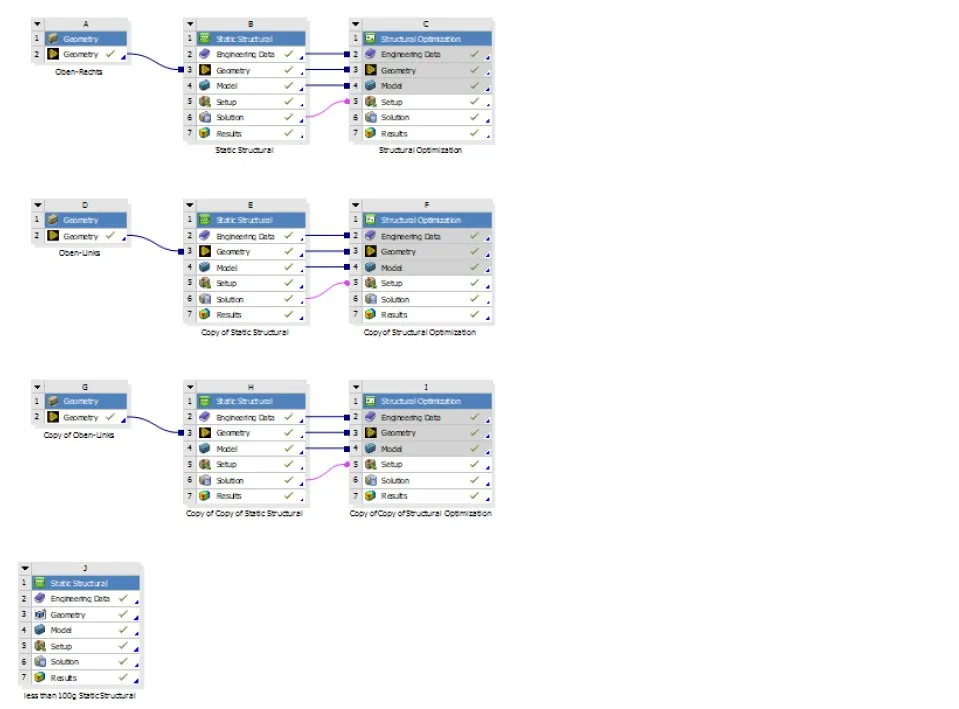
A steel plate, fixed on the left, load on the outermost 25 mm at the right. 160 MPa and 0.5 mm of deflection are allowed, and the target mass sits under 100 grams against roughly 1000 grams to start. First the base part, meshed and solved for deflection and equivalent stress, so there's something to compare against later.
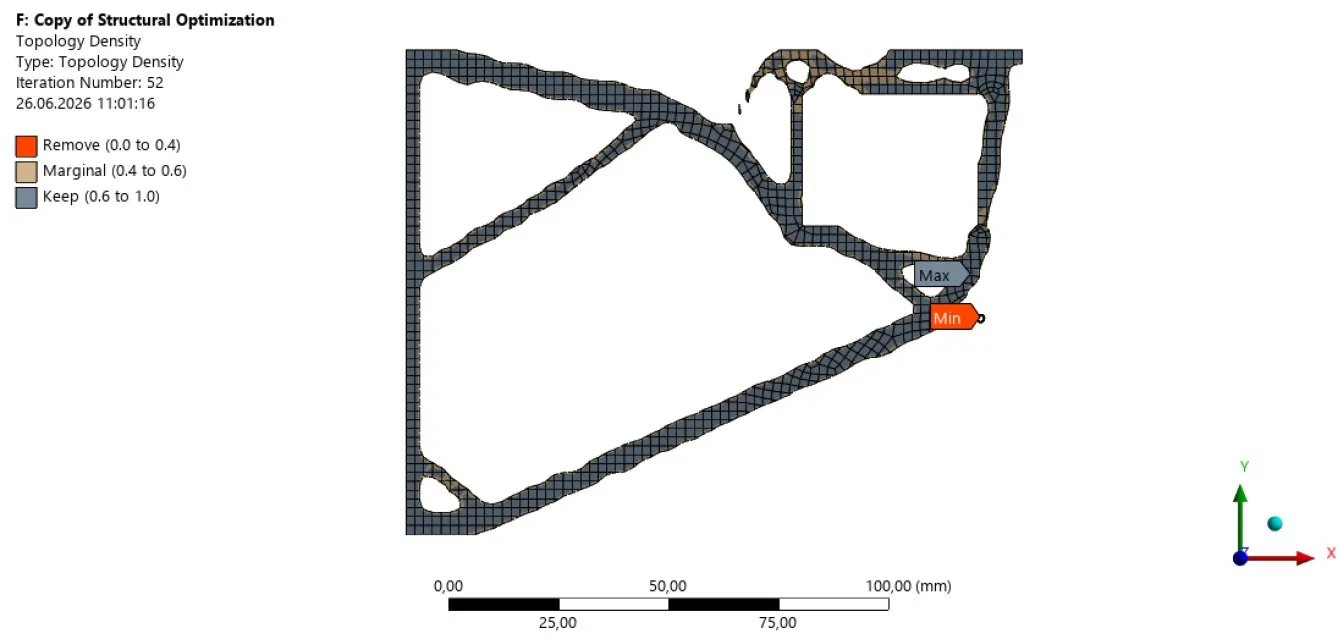
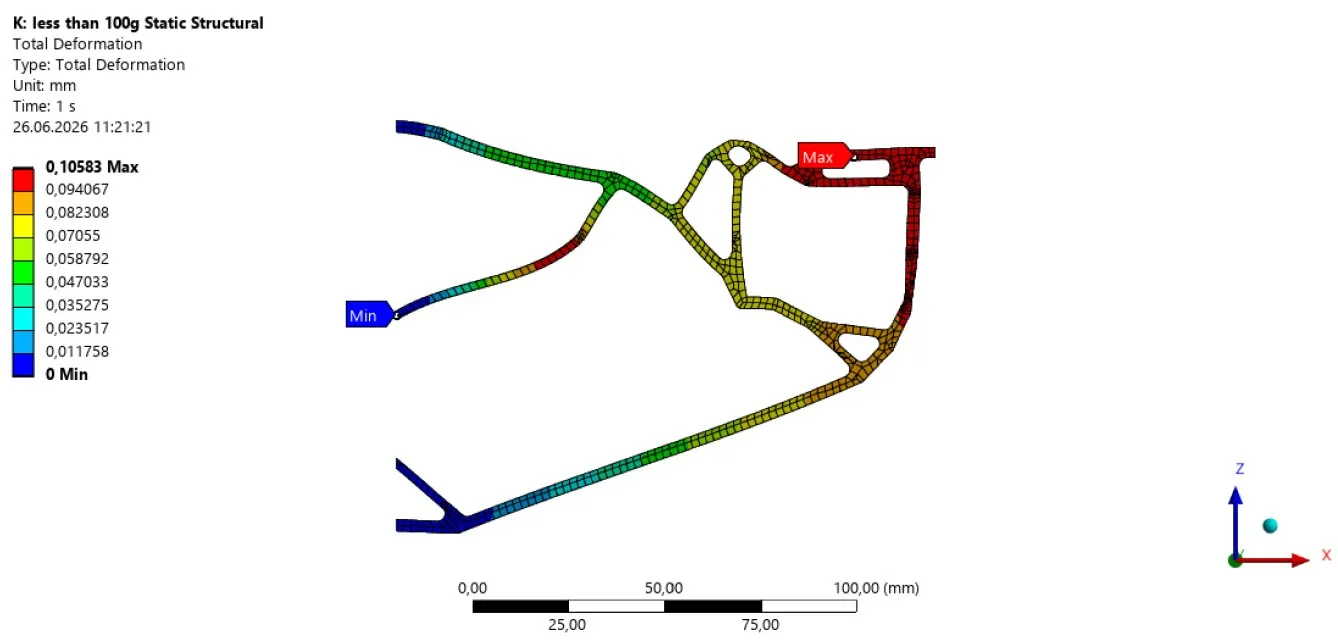
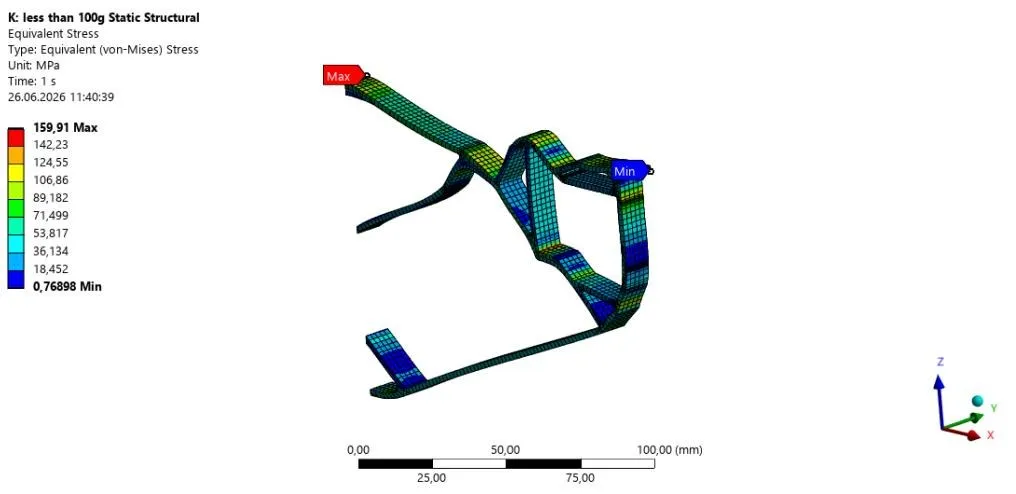
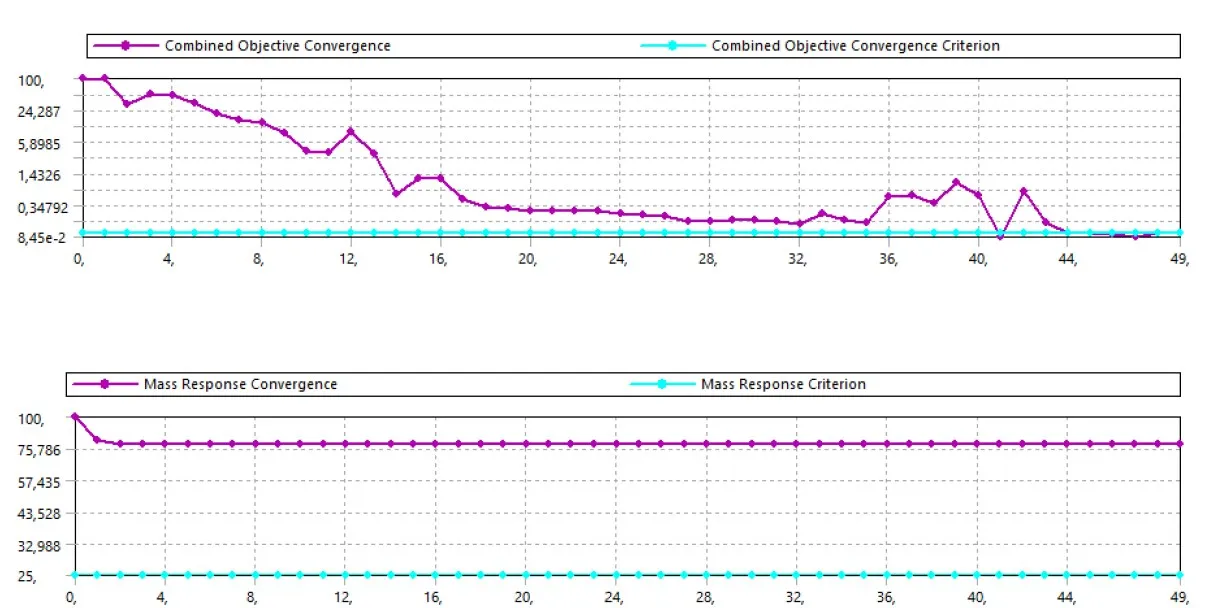
Up to 75% mass reduction, Ansys' topology optimisation returns a usable skeleton; past that it stops converging and produces floating islands. Translating the result back into manufacturable geometry was always going to be manual work, since that's the part optimisation itself won't hand you. Version 1 weighed 125 grams and blew the stress limit at 196 MPa, so the fixture was split from one continuous bar into four separate supports. Most of the 48 states died right there, in that translation back to manufacturable geometry, not in the computation.
Version 48 lands at 99 grams and 159.9 MPa, a tenth of a megapascal under the limit, after 48 CAD states, each exported, meshed and solved again. Whether that's still engineering or already luck is a fair question.
The first draft was too weak and ran too hot.
Actuator design, Munich University of Applied Sciences, Winter 2025/26 · 3 months
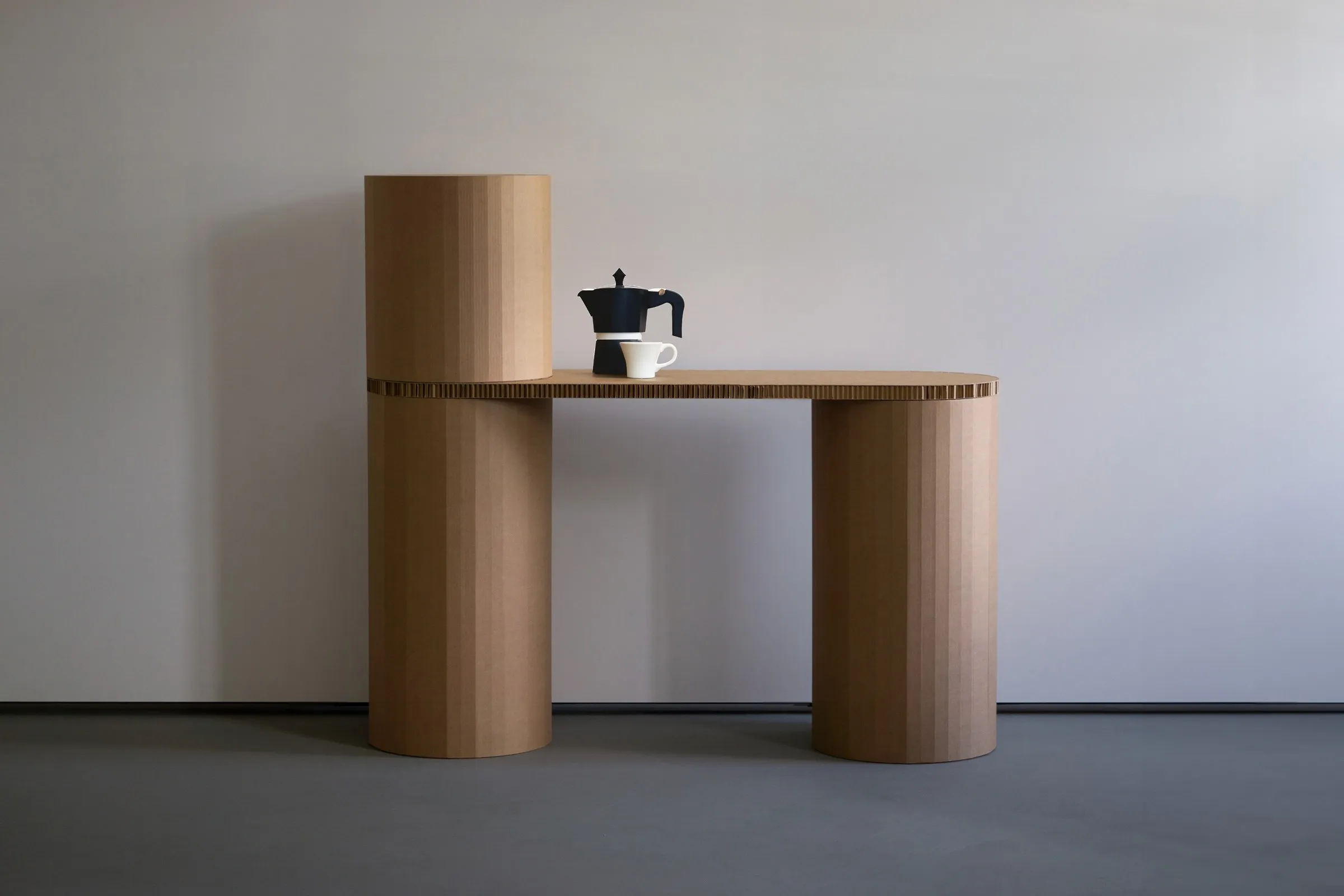
A trade fair stand lives for three days.
Semester project with a packaging manufacturer, Summer 2023 · 3 months
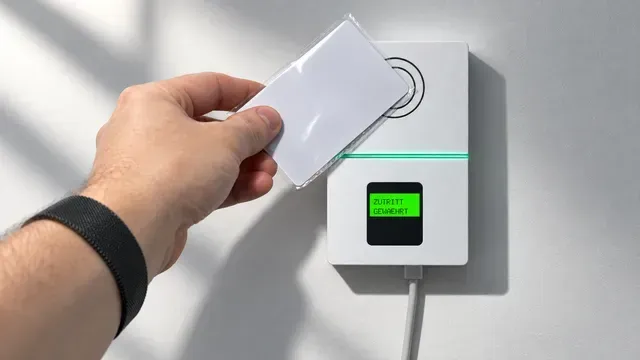
The interesting part starts when the network drops.
Data communication, Munich University of Applied Sciences, Winter 2025/26 · 3 months
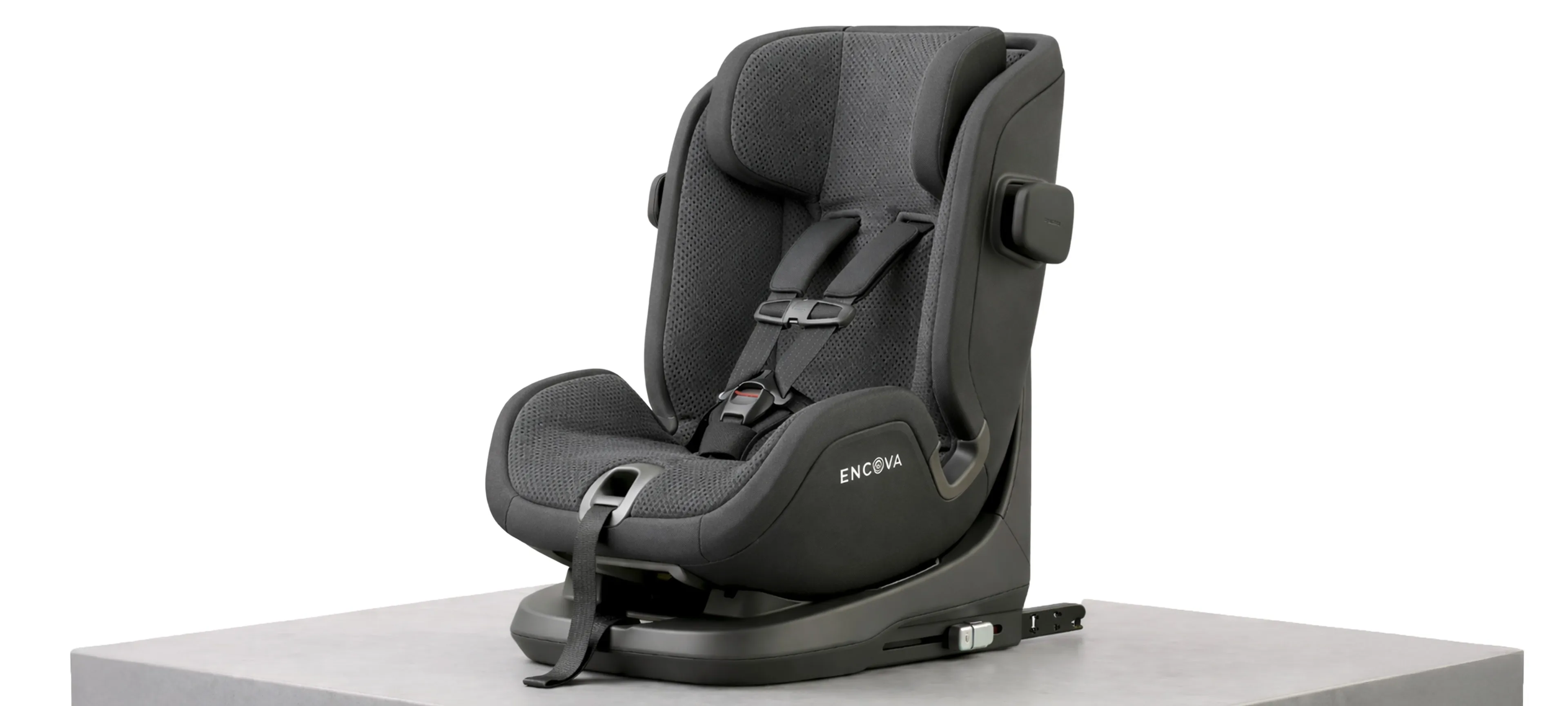
Friday morning, an open brief. Sunday at nine, hand-in.
VDI student competition “Mobility goes Additive”, Friedrichshafen, 17–19 April 2026 · 3 days
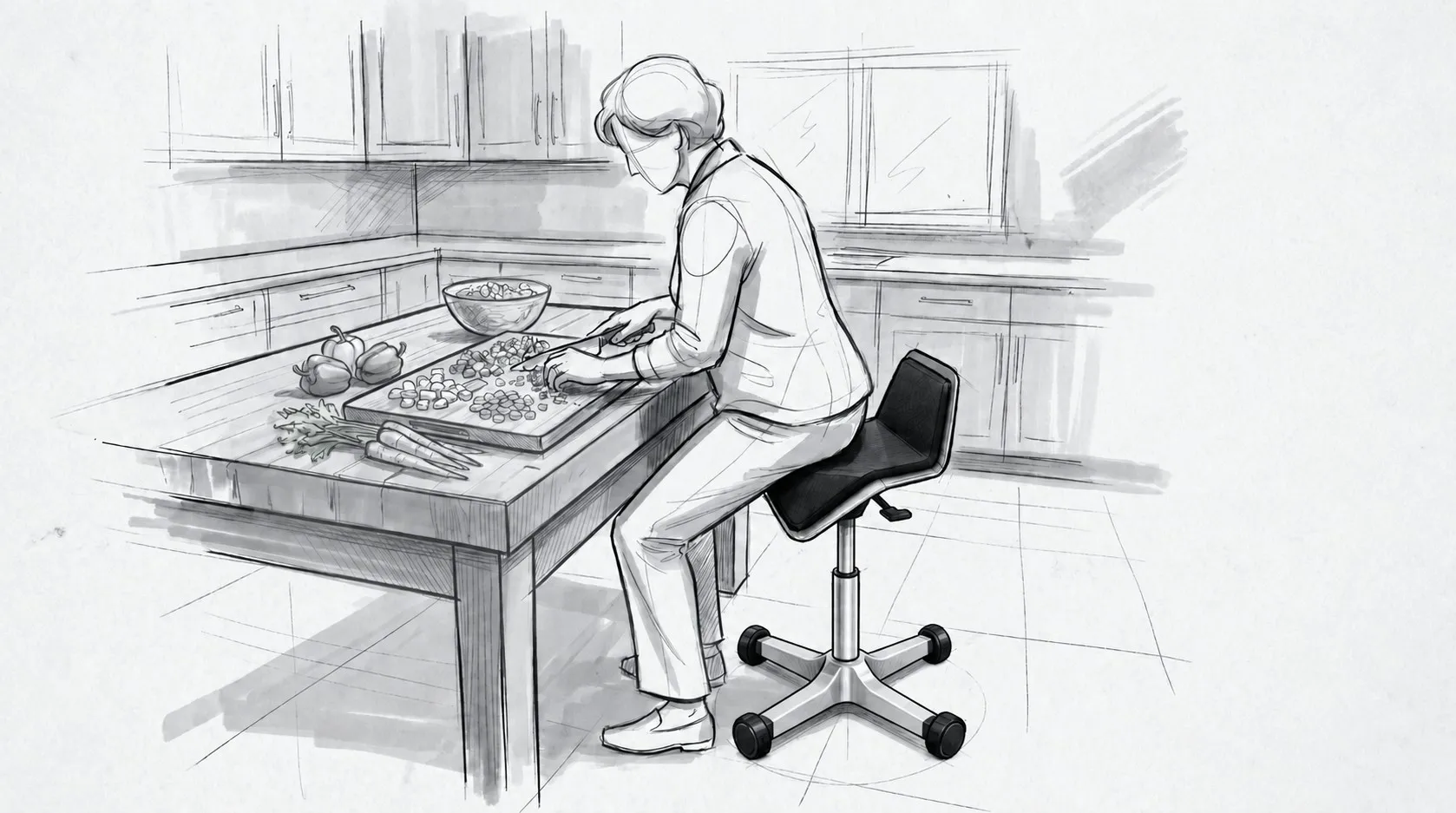
Two real quotes for the same part, more than double apart.
Mechatronic Product Development, Munich University of Applied Sciences, Winter 2025/26 · 3 months
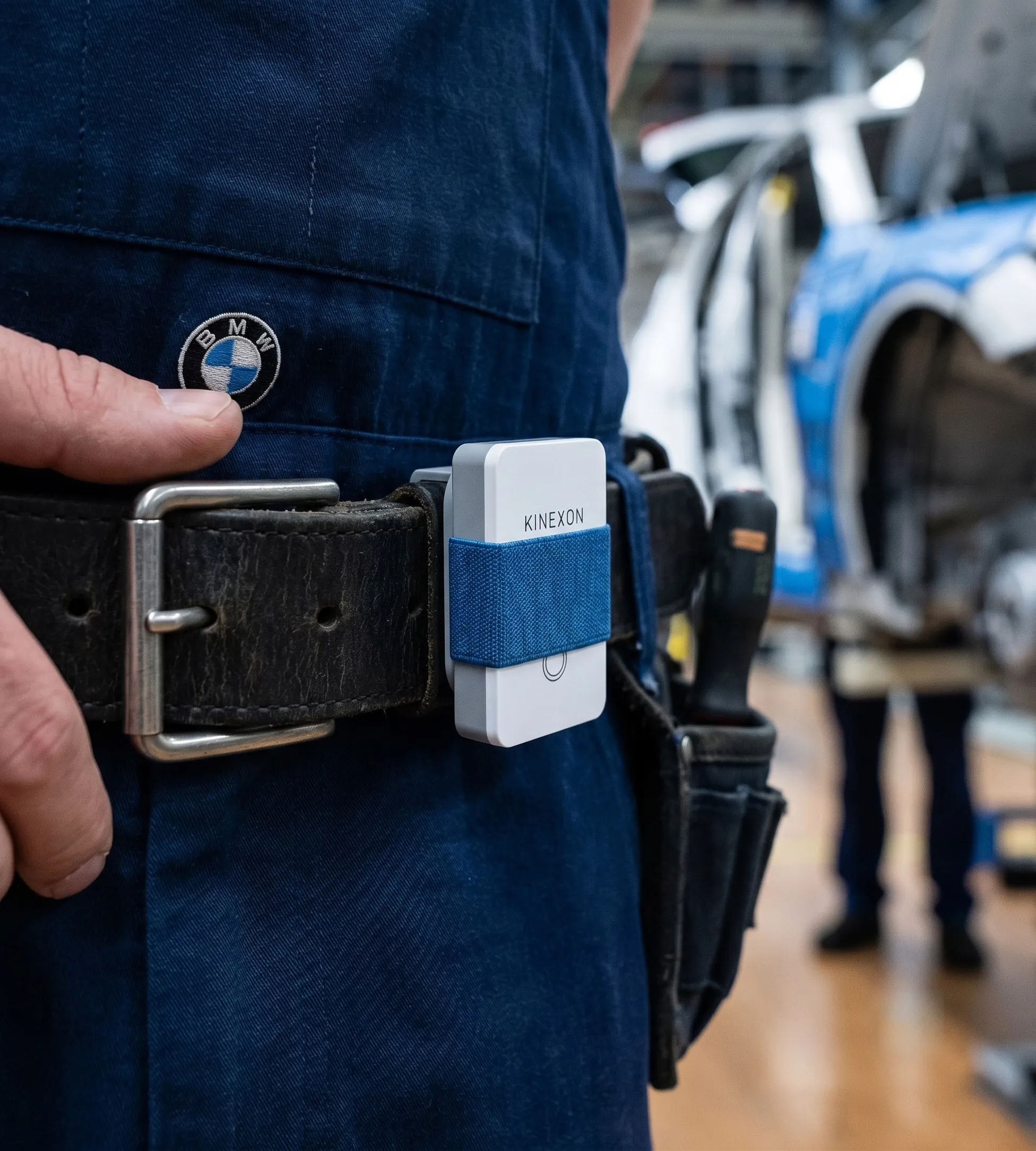
A safety sensor that hung like a forgotten ID badge.
Design cooperation with BMW, module TD5, THD, Winter 2023/24 · 3 months
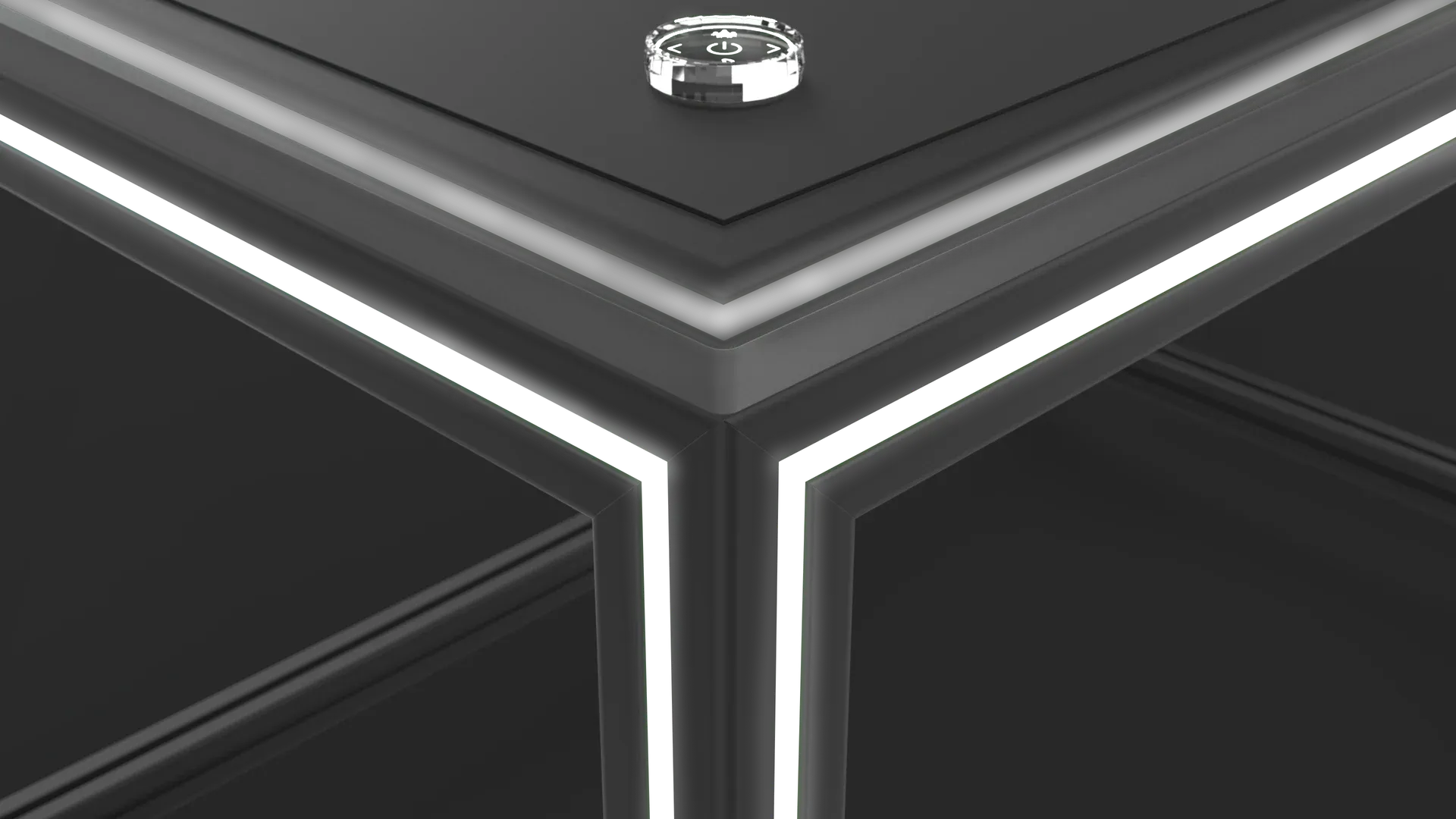
A new plant needs furniture for the shift briefing.
Cooperation project with BMW, Summer 2023 · 3 months
The simulation returns tables. It never says where the bottleneck is.
Built alongside the course, Summer 2026 · 3 months
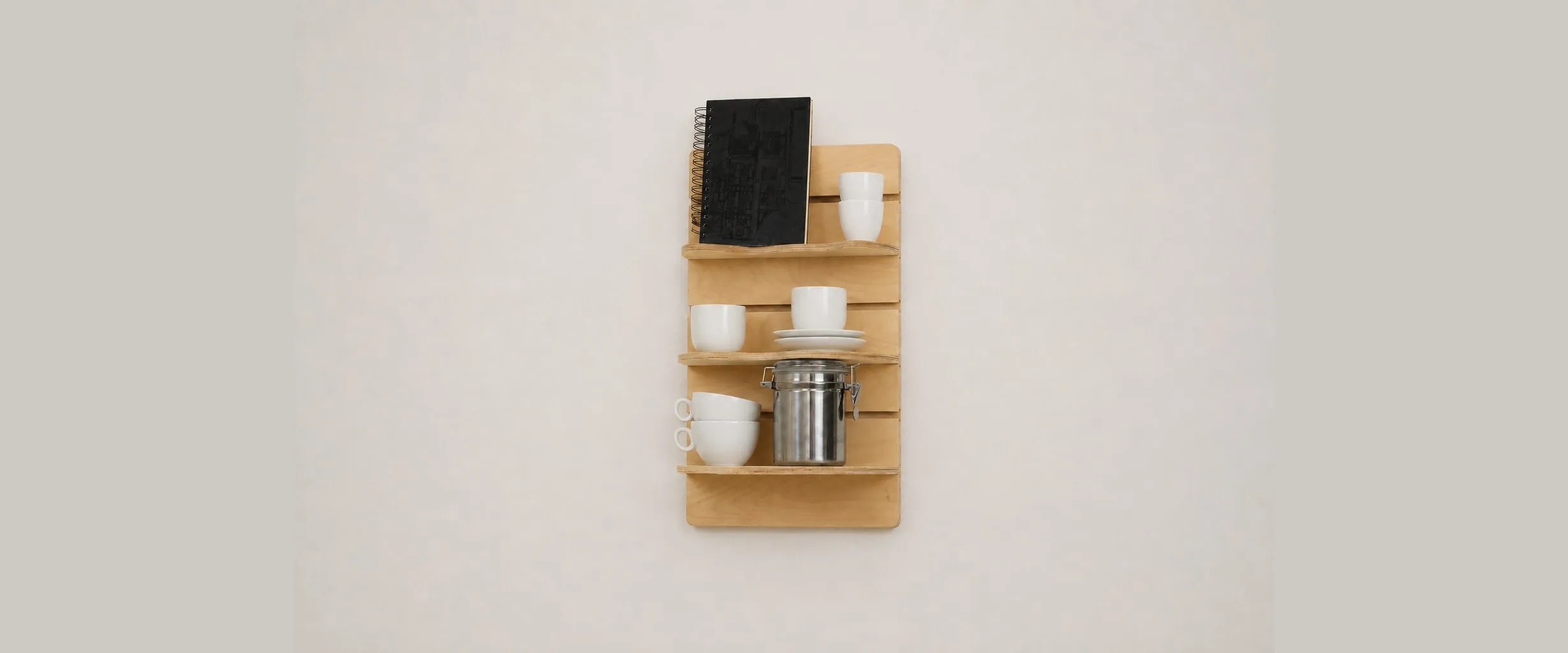
One curve does the handle, the rim and the stacking.
Semester project, Summer 2022 · 3 months
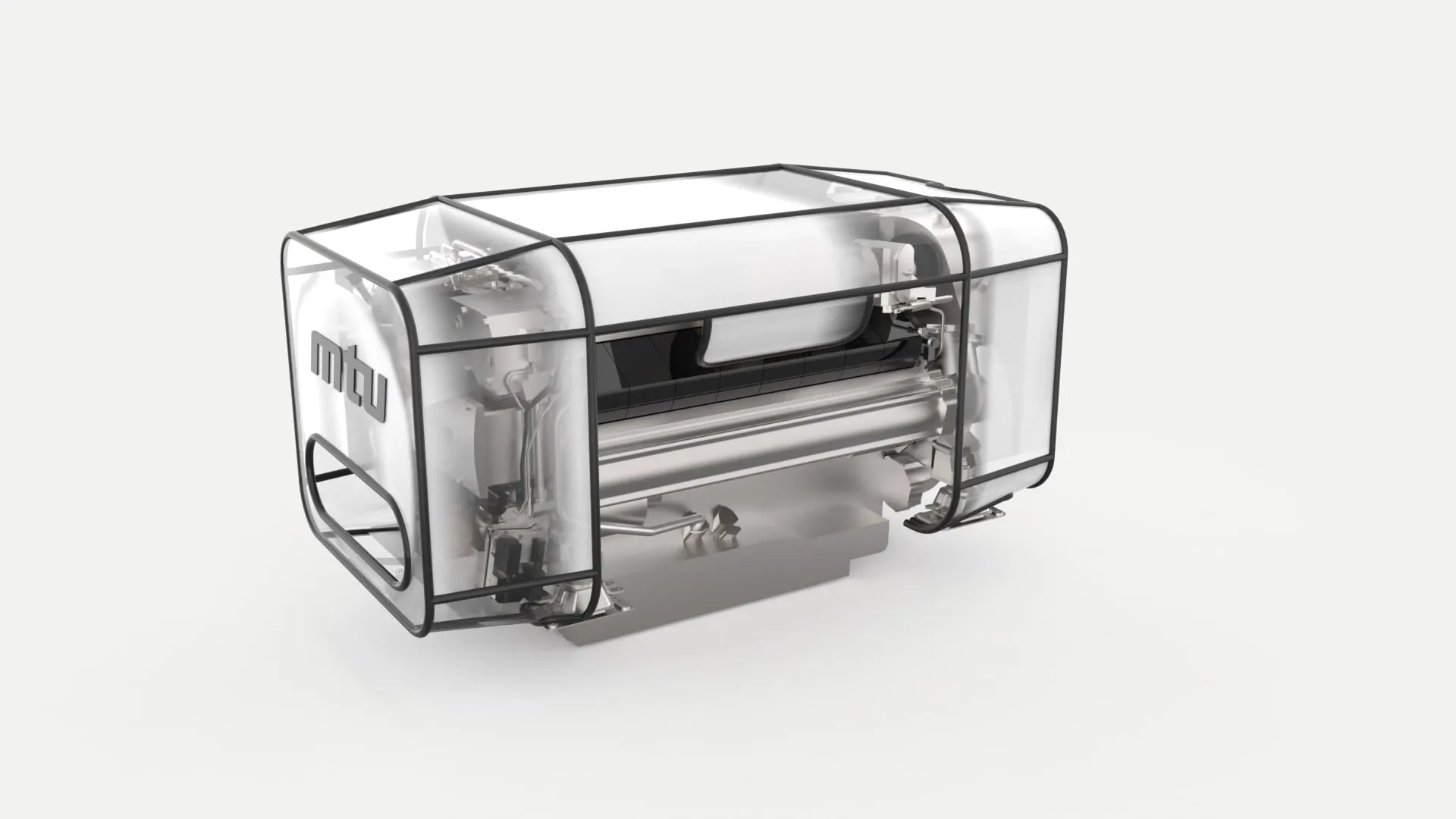
An industrial engine looks like what it is: a machine.
Collaboration with mtu / Rolls-Royce Power Systems, Winter 2022/23 · 3 months
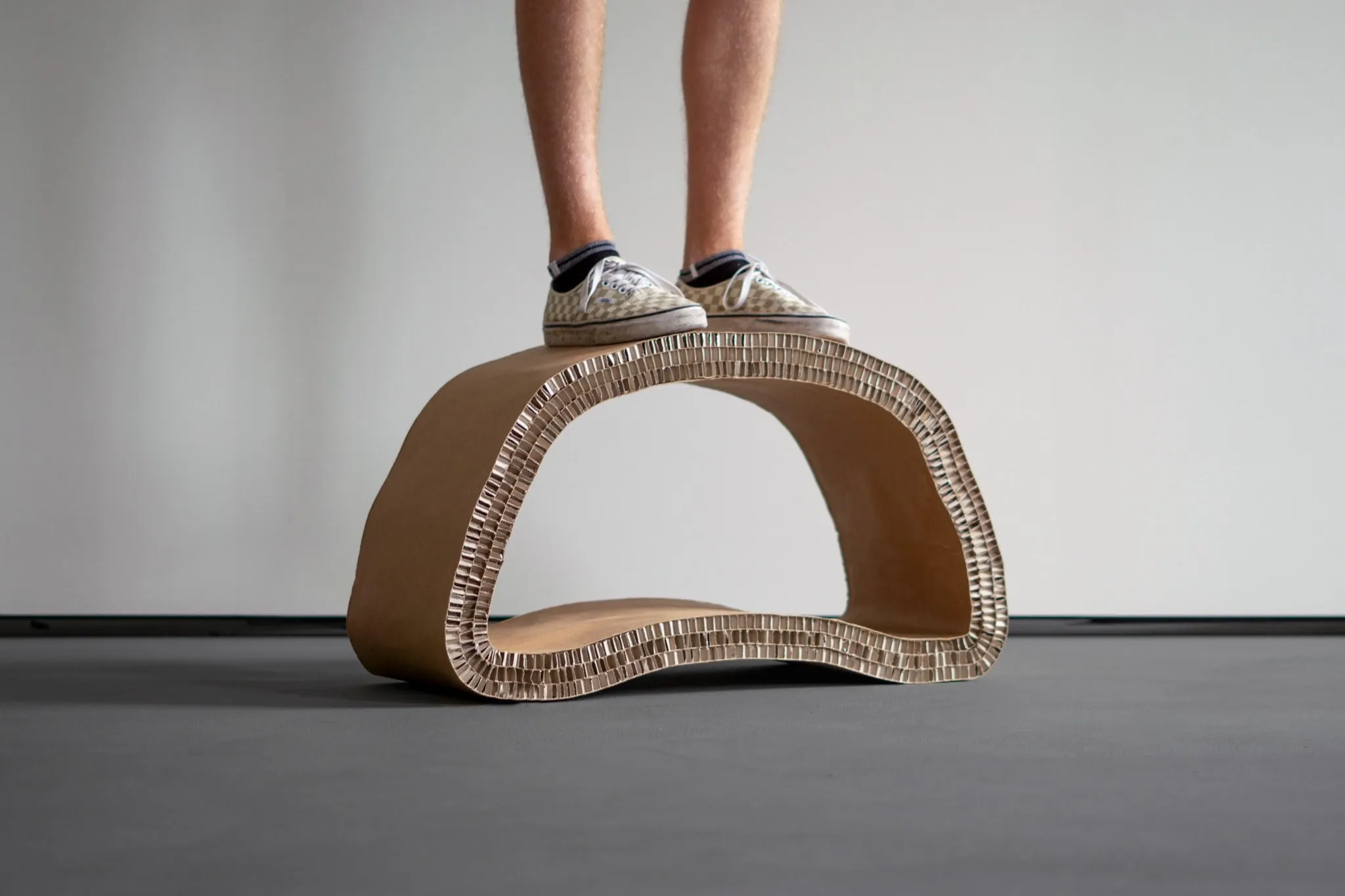
Open, the board bends in your hands.
Semester project with a packaging manufacturer, Summer 2023 · 3 months
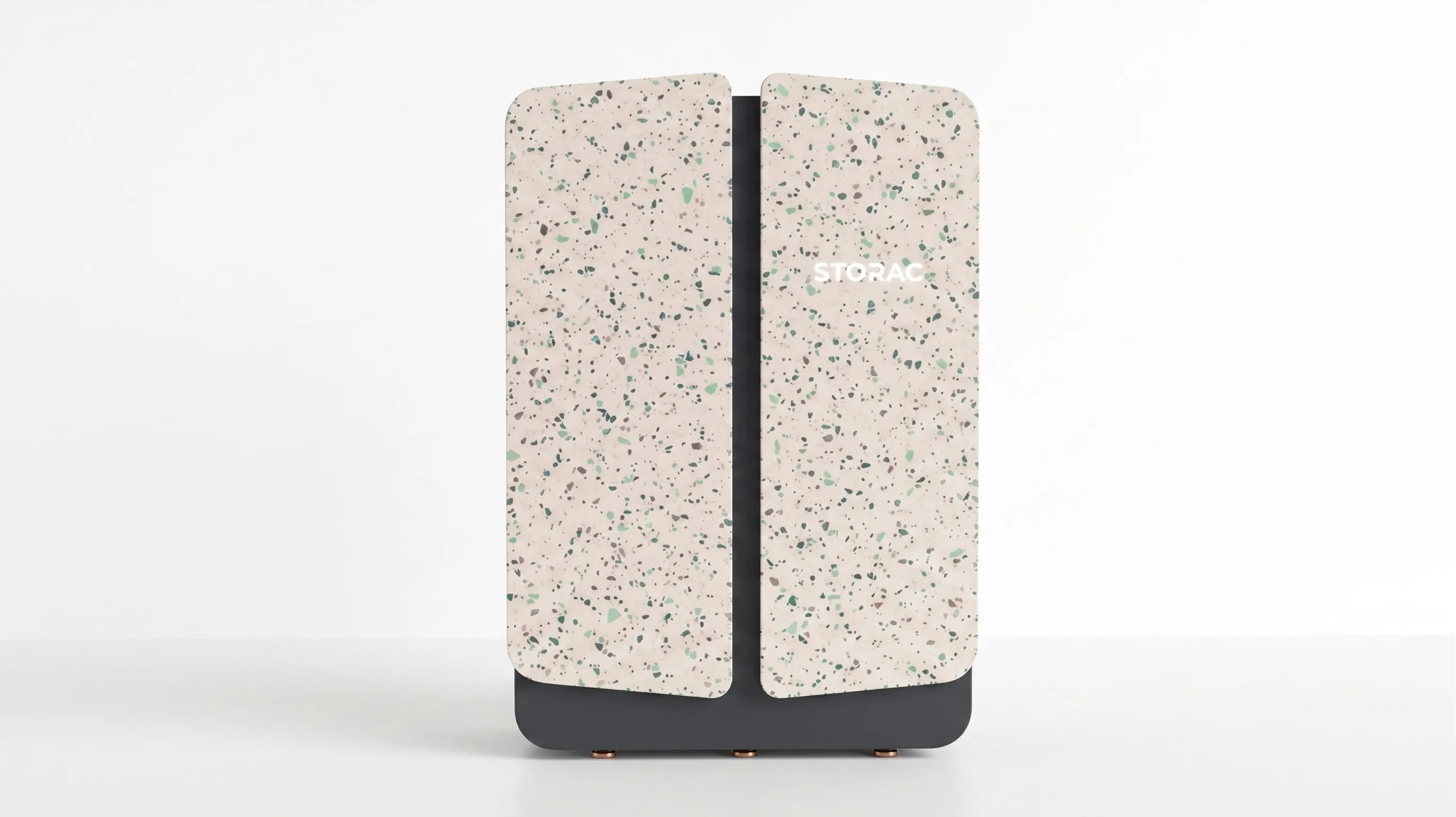
A home battery that looked like a switch cabinet.
Design cooperation with Prolux Solutions, THD, Mar–Jul 2023 · roughly 3.5 months
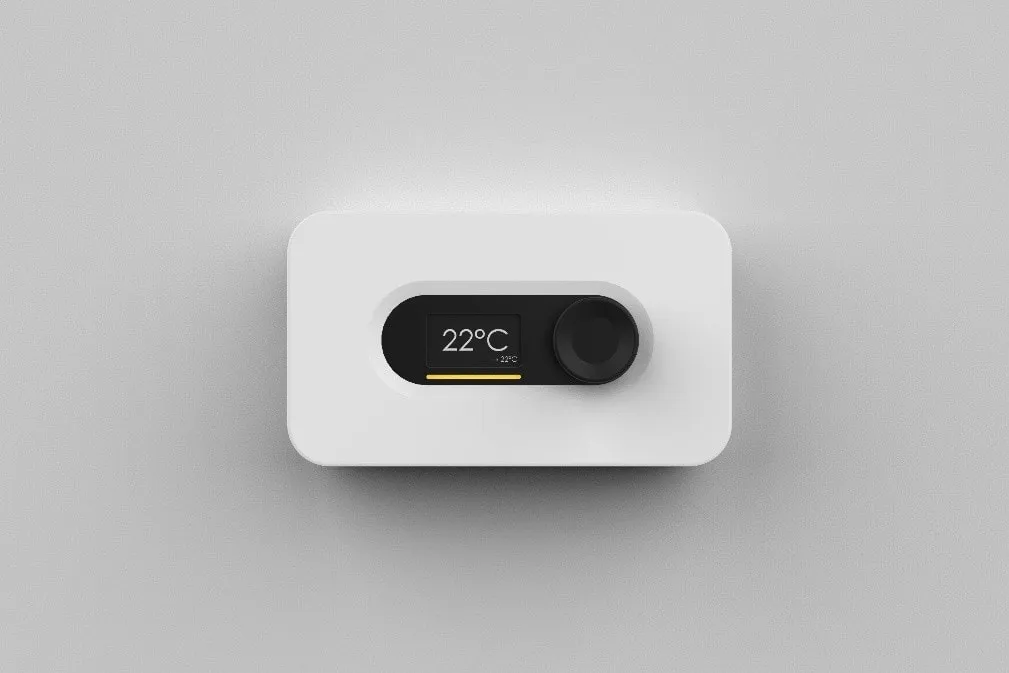
The university had the electronics and no enclosure.
Commissioned work for the university, Winter 2024/25 · 3 months
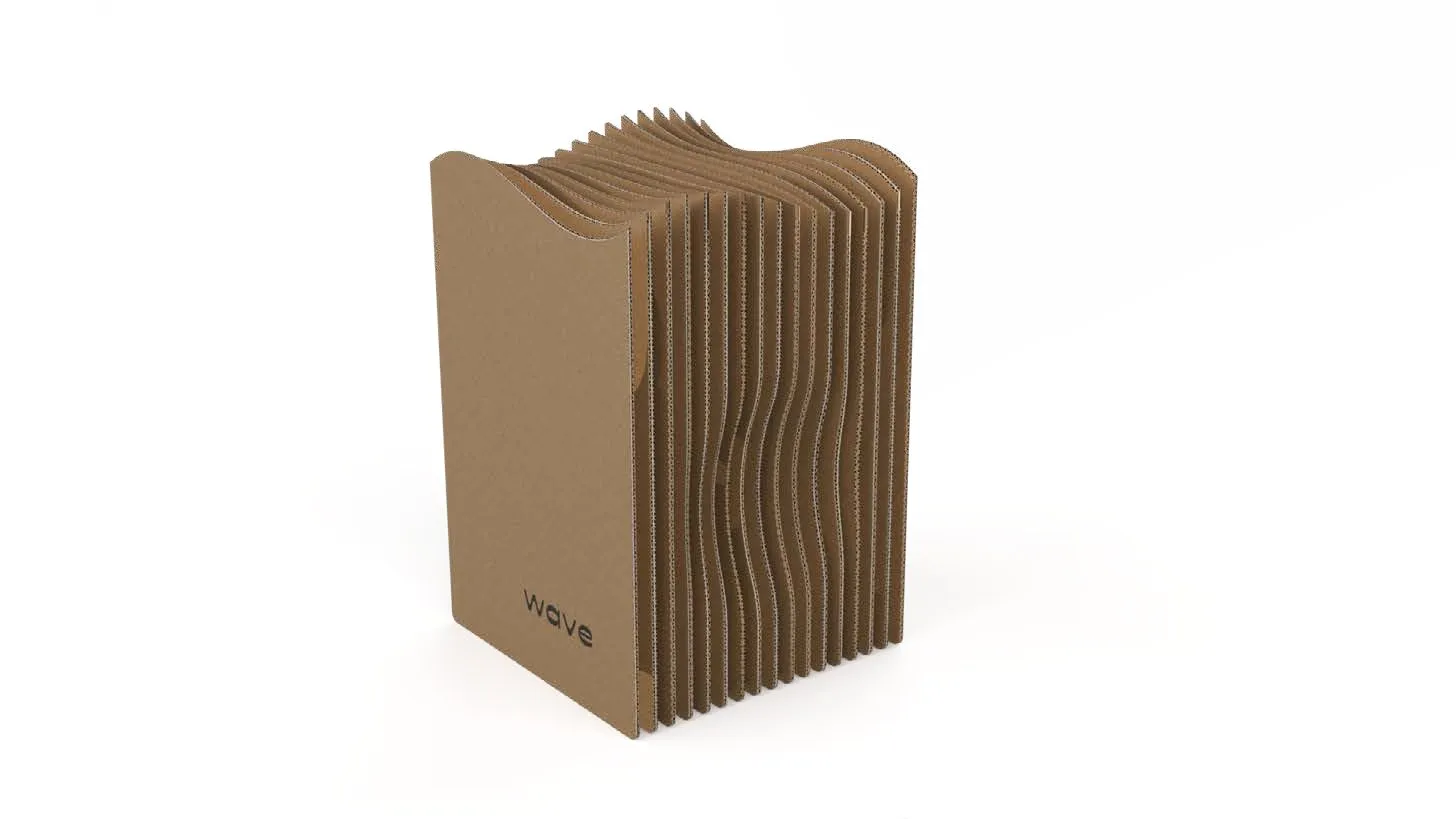
A cardboard box that makes a speaker louder without adding a single watt.
Material workshop, THD, 29 Apr – 7 May 2023 · one week